
Book the swap before debris passes the rim
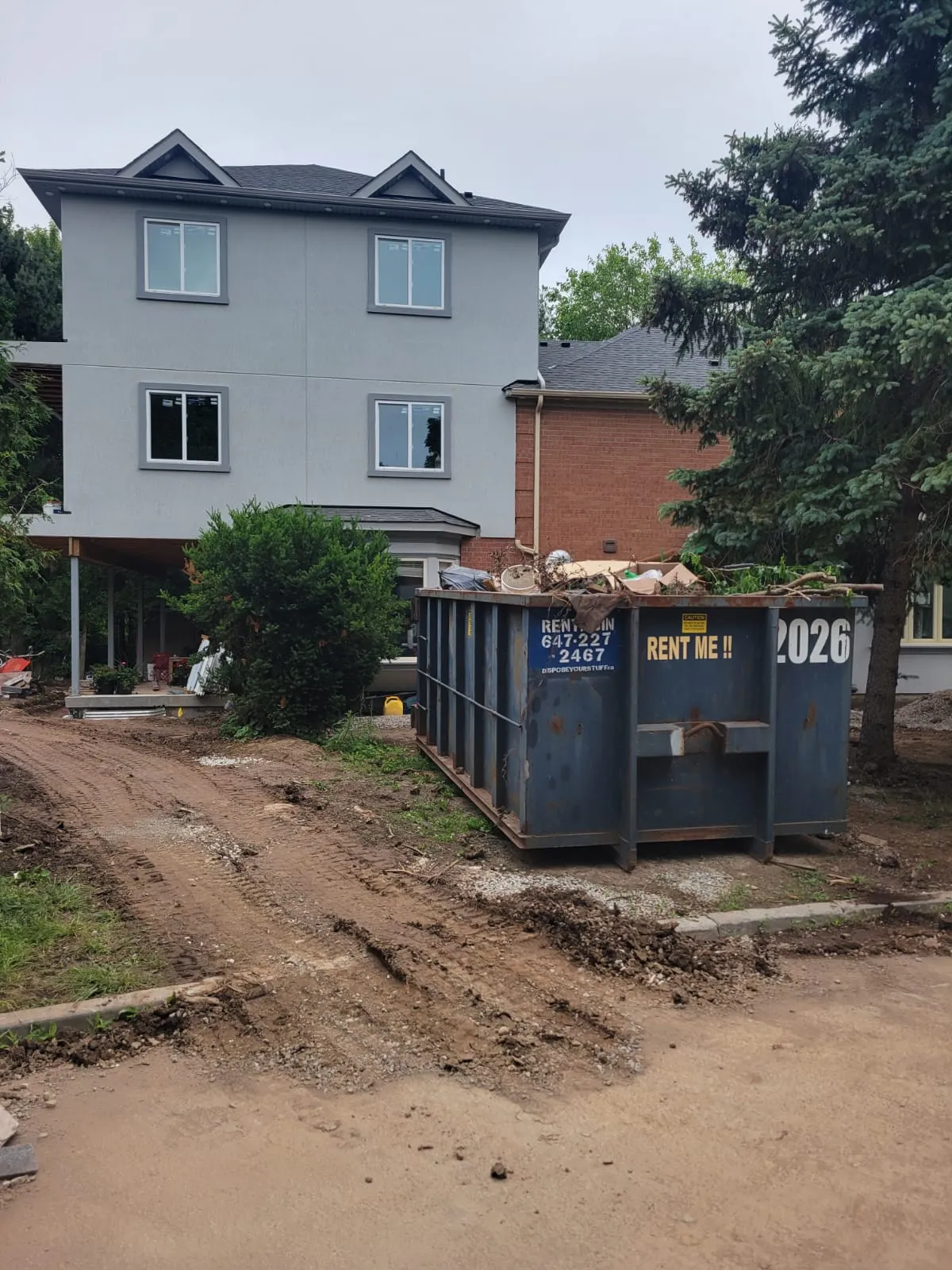
Before you ask for a swap, you need a full bin whose load still sits below the rim and a rough sense of how heavy that load has become. At Dispose Your Stuff, contents must not surpass bin height, and an overloaded bin that is unsafe to lift or carry is levelled off before it leaves, with the excess material left behind at the client's expense. The time to request the exchange is when debris nears the top edge, while the crew can still stop loading.
Weight is the second limit, and it applies even when the volume looks fine. Any weight beyond the flat rate limit is charged per metric ton plus HST to the client's credit card, along with Visa or Mastercard processing fees, and the published per-ton figures differ, so confirm the overage rate for your bin size when booking. The company's FAQ puts the processing fee for credit card payment at 3%, so an overage costs slightly more than the per-ton charge alone.
Contamination turns a routine exchange into a second trip. The company reserves the right to empty a bin on site if it holds contaminants or hazardous waste, and when a disposal facility rejects a load, the bin comes back to the property and the client pays for both the return trip and the re-sorting, charges that sit on top of whatever the replacement bin costs.
Delivery timing, fees and extension charges
A specific delivery date is guaranteed only when the order goes in at least a week ahead. Same-day and next-day delivery runs across the western GTA, and a bin can be requested the day before or the day of, but the schedule may already be booked, so a swap timed to a demolition milestone belongs on the calendar a full week out.
Operators are usually driving by 9:00 a.m., and deliveries usually arrive between 9:00 a.m. and 5:00 p.m., with some after-hours runs for special circumstances. Nobody has to be on site when the truck pulls in, so the spot for the empty bin needs to be clear and the full bin reachable before the morning run begins. That window covers deliveries only, and office and service hours are worth confirming when booking.
Cancelling carries no fee unless the notice is very short, such as the morning of the rental, but turning the bin away once it arrives triggers a $150 service fee for any reason. Payment is due on delivery by cash, e-transfer, debit or credit card, and paying in advance means calling the office. A fuel surcharge applies based on delivery mileage, and how the second bin in a swap is priced is worth confirming when you book.
A half-full bin near the end of its cycle usually calls for an extension instead of a swap. Each cycle runs 30 days and can be shorter, and extra days after day 30 cost $15 per day or $100 per week on the 10, 14, 20 and 40 yard bins, or $10 per day or $100 per week on the 4 yard, which makes a slow-filling bin a matter of weighing those charges against a fresh rental.
- Mark where the empty bin should sit, apart from the full one
- Move vehicles, pallets and stacked materials off that spot the night before
- Leave the truck a clear lane from the street to the full bin
- Stop loading once debris reaches the rim
- Note the date day 30 falls on so extension charges are planned for
Road permits when the second bin goes curbside
With the driveway stacked with materials, the replacement can go on the lawn or the street, and road placement needs a permit in many areas. A street permit pulled for the first bin may run out before the second one leaves, so confirm with the city that the permit dates cover the entire swap period.
Milton shows why that check matters, because its road occupancy permit under By-law 35-2020 can take up to 30 business days to issue. A permit sought only after the first bin fills may not arrive in time for the second. The Milton permit walkthrough covers the application itself. The Town issues no permits on Regional road allowances, so a second bin at a home on a Regional road frontage needs a different placement plan.
The fee model decides whether a longer second stay costs more on the street. In Etobicoke, Toronto charges $73.89 plus HST per day for a disposal bin outside a Construction Hub, and Oakville adds $32 for each day on top of its $334 annual application fee, so every extra day of the swap shows up on the permit bill. Mississauga's $100 plus 13% HST is charged per application, and Brampton requires a Road Occupancy & Access Permit for its roads and boulevards. The Brampton permit guide explains that process.
- Confirm whether the frontage is a municipal road or a Regional one
- Compare the permit's end date with the replacement's expected pickup
- Attach proof of liability insurance to any Milton application
- Count the extra days the second bin will sit wherever a daily rate applies
- Extend or renew coverage before the first permit lapses
Choosing the replacement size for the next phase
Ordering the same size by default goes wrong once the job moves from drywall and framing to concrete, tile or soil, because the 10, 14, 20 and 40 yard bins take general waste only and aggregates loaded into them are counted by weight according to bin size. The sorting guide covers how to separate heavy debris before it reaches the next bin.
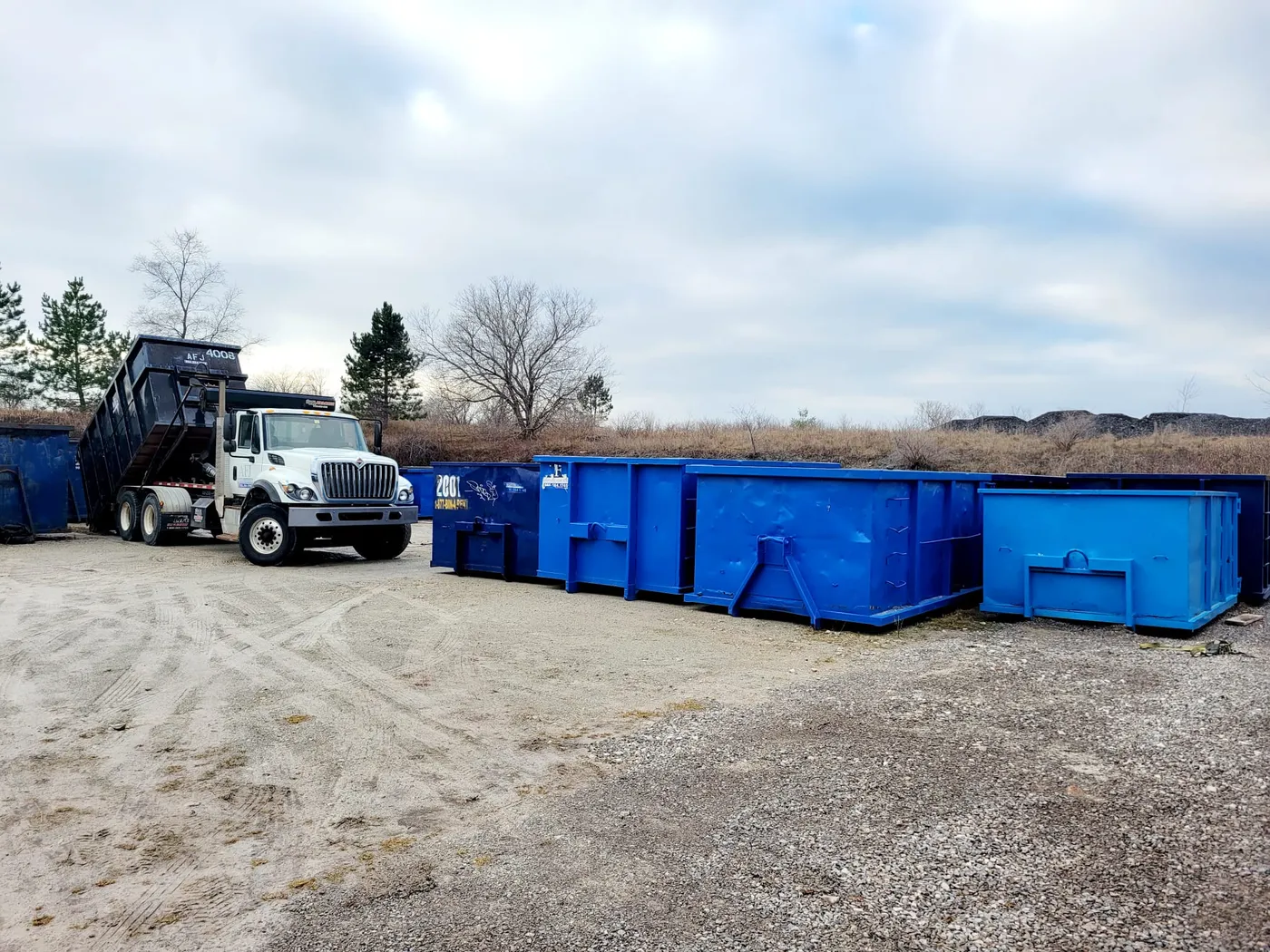
Pure aggregate goes only in the smaller bins, the 4 yard or 10 yard, by prior phone arrangement, so confirm which size will take your load when booking. The 4 yard measures 8 by 6 by 4 feet, takes clean fill or mixed waste at $350 per month and rents monthly only. Confirm its overweight rate per metric ton at the same time. Masonry-heavy tear-outs are covered on the demolition bin rentals page.
A crew ready for one final push can skip the 30-day cycle with a single-day rental, priced $50 below the flat rate on every size except the 4 yard. On a single-day rental the driver waits, helps with loading and hauls the bin away the same day. Flat rates for renovation and construction bin rentals appear on the bin sizes and pricing page, summarized below.
- 10 yard, 10.5 x 6 x 4.7 ft, $450 + tax ($400 single day)
- 14 yard, 12 x 7 x 5 ft, $550 + tax ($500 single day)
- 20 yard, 14.3 x 6 x 6 ft, the tallest of the mid sizes, $650 + tax ($600 single day)
- 40 yard, 16 x 8.2 x 7.25 ft, $1,000 + tax ($950 single day)
Clearing refused items before the pickup
Before the full bin is lifted, pull out paints, stains, solvents, cleaning chemicals, pesticides, fertilizers, propane tanks, fireworks and tires of any size. Full paint cans are refused while empty ones can stay, and the item-by-item breakdown is in our guide to what bin crews won't haul.
Anything pulled during the pre-pickup check needs a depot run before the truck arrives. Milton and Oakville households use the Halton Waste Management Site, which takes up to 10 tires a day free, and Mississauga households use the Fewster Community Recycling Centre, which takes tires and hazardous waste. Toronto's Drop-Off Depots serve Etobicoke but take no tires, so the Etobicoke tire and propane guide is the place to start there, and Brampton households can find free sites on RPRA's Where to Recycle map.
Walk the bin today, pull anything on the refused list, and check that the fill sits below the rim. Then book the exchange with Dispose Your Stuff at 647-227-2467 or through the online booking page at least a week before the empty bin is needed, the lead time that guarantees a specific delivery date.