


logo image
Disposal Bin Rental

Bin Rental in the GTA | Flat-Rate, Same-Day, Driveway-Safe

  • check icon Flexible weekly and monthly rental periods with no surprise charges
  • check icon Same-day and next-day delivery available across the western GTA
  • check icon Built for renovations, full cleanouts, and active construction sites
  • Order Your Bin order button icon View Sizes and Prices order button icon
  • Book any rental and get 1 extra day free. Limited time offer.
check icon 96%
Customer Referral Rate
check icon 5+
Bin Sizes Available
check icon 7am-11pm
Mon-Sun Availability
Excellent Google Reviews - Dispose Your Stuff

"This company must be in business for a long time because they really know how to treat their customers right. My bin was delivered the next morning and clean of any debree. Planks were used to keep the bin from touching my driveway, and measurements were taken to make sure that the bin door can swing open without hitting anything in its way. Very happy with everything."

Mahmoud H.

PRICES

Bin Sizes, Dimensions, and Flat-Rate Pricing

Every bin comes with a flat rate that covers the full rental period. No mystery charges, no fuel surcharge ambiguity, and a clear number before you book.

What sets us apart from other bin rental companies is how We offer flexible rental periods—weekly or monthly—for 4YD, 10YD, 14YD, 20YD, and 40YD bins saves you money like nothing else. No matter how long you need to rent a bin, we are the best company to work with.

See our disposal bin rental prices below, or learn more about our bin sizes and prices.

Click To View Terms Of Service +

• The rental period is 30–days per bin cycle. Of course, you can hold our bins for less time.

• A fuel surcharge will apply depending on the mileage needed to deliver your bin.

• Dispose Your Stuff bins will ONLY be used for mixed waste, construction debris, aggregates, or a mixture of all the above. Pure aggregates can ONLY go in the 4-yard or 10-yard bins.

• Disposal bin contents must not surpass bin height. Overloaded bins that are unsafe to lift and/or carry will be levelled off before leaving the property. All excess material will be left behind at the client’s expense.

• Flat Rate applies ONLY to our package pricing. If you exceed the bin flat rate limit, weight charges will be applied to the clients credit card at a rate of $120/Ton + HST along with any VISA/Mastercard processing fees.

• Dispose Your Stuff reserves the right to empty any bins on site if they contain contaminants or hazardous waste, as well as return any load rejected at a dump site.

• A service fee of $150.00 will be charged at delivery if the customer rejects the bin for any reason.

• We accept cash, e-transfers, debit, and credit cards for payment. Note: There is a 3% processing fee when paying with a credit card.

Ordering a bin from Dispose Your Stuff means agreeing to all of our Terms Of Service.

Why Bin Rental Takes More Planning Than Most People Expect

Homeowners who have rented a bin before and run into problems almost always hit the same three: wrong size for the actual weight of the debris, a prohibited material that triggers a load rejection, or a driveway situation the truck cannot navigate cleanly. All three are avoidable before the truck leaves the yard.

A 10-yard bin filled entirely with ceramic tile weighs far more than the same bin filled with drywall and cardboard, even though both fill the same cubic footage. Overweight loads trigger per-tonne charges that can meaningfully change the total cost of the rental. Check the weight allowance for your bin size before loading starts, and the flat rate stays the flat rate.

Call before booking any material that seems borderline. The two-minute conversation at booking is easier than managing a rejected load returned to your property at your expense. Paint, hazardous chemicals, and tires are refused at the gate because these materials require separate regulated processing streams that standard mixed-waste facilities cannot accommodate.

Protection boards go under the bin before it touches the driveway, and the truck needs a clean approach angle to set it down without dragging the frame across the surface. Enough clearance for the doors to swing open, and a route the truck can actually navigate, matter just as much as where the bin ultimately sits. Plan for both before booking day, not once the truck is already in the driveway.

A bin placed on the street needs a road occupancy permit from the municipality in most GTA cities before it touches the asphalt. Some bin companies coordinate that permit directly, others leave it to the property owner. Confirm which applies to your address before the truck is scheduled. A missing permit means a refused delivery or a municipal fine after the fact.

Which Bin Size Fits Your Project

Size the bin to the realistic volume and weight of what you are actually removing, with enough margin that you are not calling for a swap halfway through a project that should have been straightforward. Each size below is described in terms of the projects it handles well, what it cannot handle, and what the extension structure looks like if the timeline runs longer than expected.

4-Yard Bin for Small Cleanouts and Minor Repairs
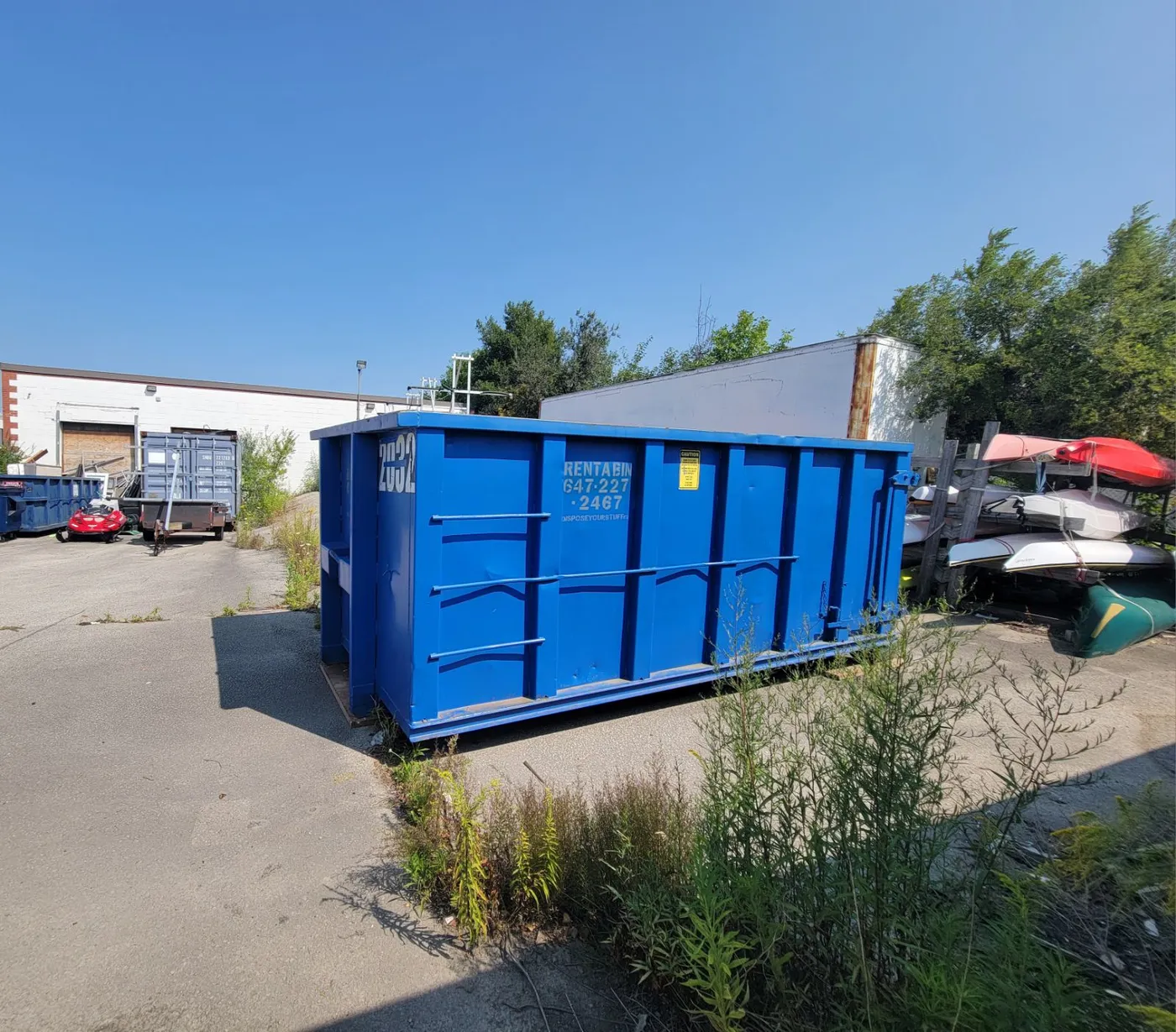
Measuring 8 feet long by 6 feet wide by 4 feet tall, this size holds roughly 60 to 70 large trash bags, or the equivalent of three to four pickup truck loads. It is priced at $350 per month and is available as a monthly rental only. This bin is well-suited to apartment declutters, minor bathroom repairs, partial garage cleanouts, and light yard debris. It is the only bin size in the fleet that can accept pure aggregate loads, including concrete, clean fill, soil, and gravel, though that arrangement requires a call ahead to confirm availability. For mixed waste projects, it handles most light residential debris without issue. Extension fees after 30 days are $10 per day or $100 per week.

10-Yard Bin for Everyday Residential Renovations

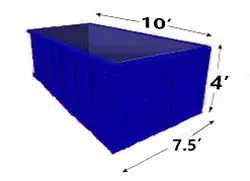
At 10.5 feet long, 6 feet wide, and 4.7 feet tall, this size holds 100 to 120 large trash bags and is the most frequently ordered residential option across the GTA. The flat rate is $450 plus HST for the full rental period. It handles bathroom renovations, full garage cleanouts, carpet and flooring removal, and small roofing debris reliably. This size accepts mixed waste only. A single-day option is available at $400 plus HST, where a driver stays on-site while the bin is loaded and takes it the same day. Extension fees after 30 days are $15 per day or $100 per week. Double doors and walk-in access are standard, so there is no lifting debris over the side wall.

14-Yard Bin for Kitchen Gut-Jobs and Multi-Room Renos

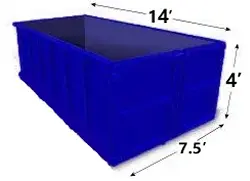
Measuring 12 feet long, 7 feet wide, and 5 feet tall, this size holds 140 to 160 large trash bags. At $550 plus HST for a flat-rate rental, it is the right choice for kitchen remodels, basement finishing projects, full wall teardowns, and multi-room flooring replacements. Projects that involve a mix of drywall, lumber, old cabinetry, and tile are exactly what this bin was sized for. It accepts mixed waste only. The same single-day option available on the 10-yard applies here at $500 plus HST. Running past the included period costs $15 per day or $100 per week in extension fees. Walk-in access via double doors is standard on this size.

20-Yard Bin for Large Renovations and Partial Demolitions

At 14.3 feet long by 6 feet wide by 6 feet tall, this size holds 200 or more large trash bags. The flat rate is $650 plus HST. This is the right bin for full home renovations, large landscaping removals including tree and shrub debris, partial structural demolitions, estate cleanouts, and commercial unit turnovers. Contractors running multi-trade projects often find this size more economical than ordering and swapping two smaller bins. Mixed waste only. Single-day option available at $600 plus HST. If the rental runs long, extensions are billed at $15 per day or $100 per week.

40-Yard Bin for Major Commercial and Industrial Projects

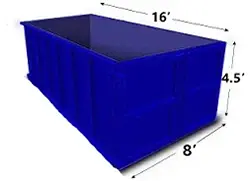
The largest bin in the fleet, this size measures 16 feet long, 8.2 feet wide, and 7.25 feet tall, with capacity for roughly 400 large trash bags. The flat rate is $1,000 plus HST, and a single-day option is available at $950 plus HST. This size is built for major commercial demolitions, large-scale construction waste, office building cleanouts, and multi-phase builds where debris volume reaches truckload scale. It accepts mixed waste only. Extensions beyond the flat-rate period run $15 per day or $100 per week. Given its footprint, placement logistics benefit from a pre-delivery site review, so confirm access and clearance before booking day.

Pricing and rental terms: Our dumpsters come with flexible rental periods and competitive pricing tailored to your project size. Contact us to get a detailed quote and rental options.

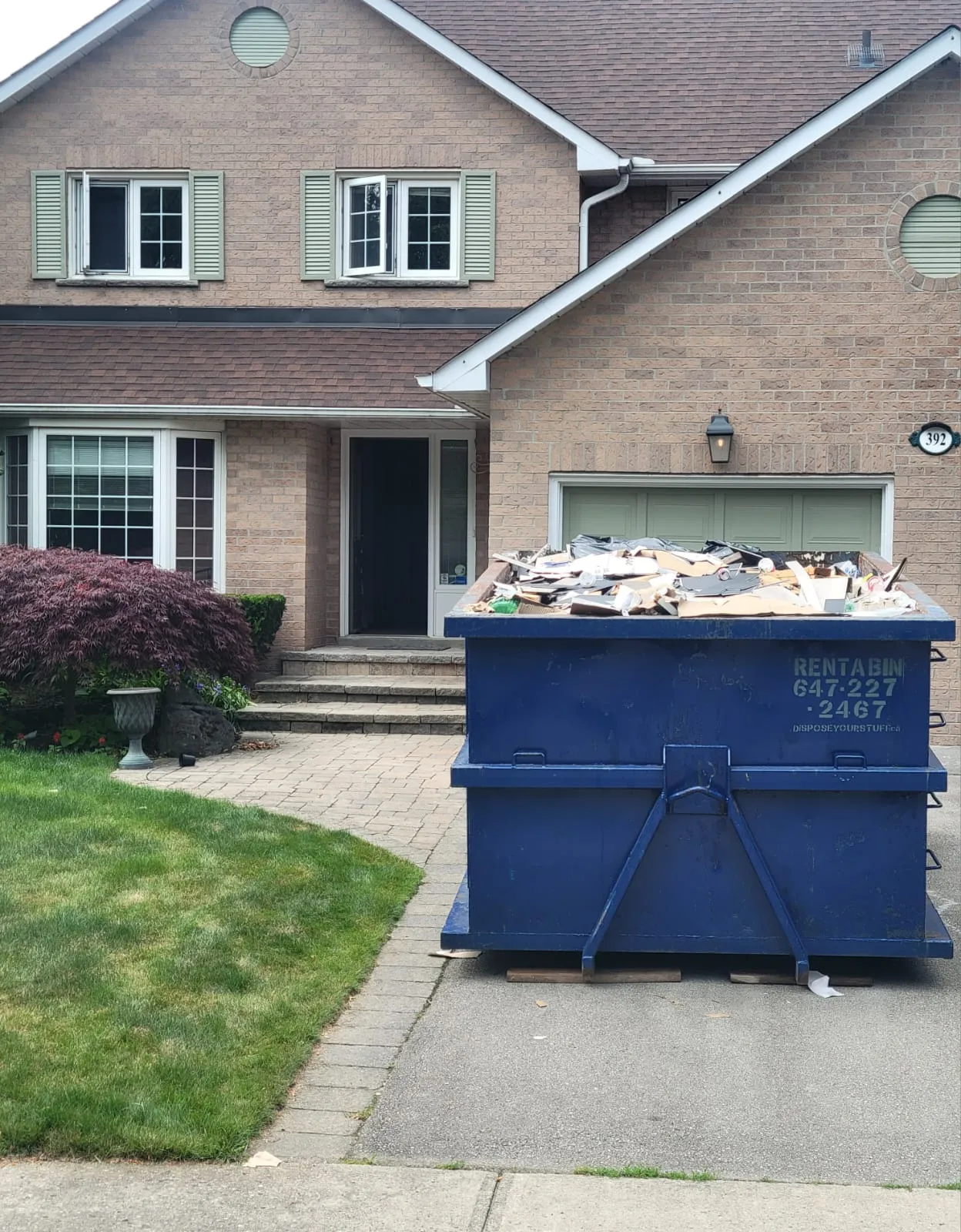
Large blue disposal bin on a residential property showing bin scale and clearance

Request Your Bin Rental

Fill in a few quick details and we will confirm your delivery window, bin size, and flat-rate price. Most bookings are confirmed within the hour.

Which Services Do You Require (select multiple)?

Rental Structures

Weekly and Monthly Rentals Compared

The two rental periods serve fundamentally different project types. Choosing the right one upfront determines whether you are paying a fair rate or accumulating extension surcharges on a schedule that was never realistic.

Weekly Rental

A defined scope of work and a genuinely short timeline are what make this structure work well. Contractors on a deadline, junk removal crews loading out a property in a day or two, and single-trade jobs like flooring or roofing that generate a known quantity of debris benefit most. The bin goes in, the work happens, and the bin comes out before the project loses momentum.

If the project runs a day or two over the included period, the extension cost is manageable. If it runs a week over, it is worth evaluating whether a monthly rental would have been the better choice from the start. Extension fees after the weekly period are the same as monthly overage rates: $15 per day or $100 per week for all bins except the 4-yard.

Monthly Rental

Homeowners running renovations at their own pace, multi-phase projects where debris accumulates over time, and any situation where the end date is genuinely uncertain are best matched to this structure. The 30-day flat rate covers the full period regardless of how the debris volume grows over the month, and there's no pressure to rush the project to avoid daily charges.

After 30 days, extension fees apply: $10 per day or $100 per week for the 4-yard, and $15 per day or $100 per week for all other sizes. If a project is clearly going long, scheduling the pickup a few days early and rebooking if needed often costs less than letting daily extension fees accumulate on a bin that is sitting mostly full and waiting on one final task.

Accepted and Prohibited Materials

The rules around what goes in a disposal bin follow directly from how waste facilities operate. Each prohibition exists because certain materials cannot be processed at standard waste facilities: they require a separate regulated disposal stream, create safety risks during transport, or cause the receiving facility to reject the entire load and return it to the client's address. Check both lists below before loading starts to keep rejected loads and surprise fees off the table.

Accepted Materials

Accepted Materials

  • Accepted

    Household Debris

    Furniture, mattresses, beds, appliances, boxes, toys, general household junk, and most non-hazardous residential items are accepted without restriction. If it came out of a room in your house and is not on the prohibited list, it almost certainly goes in the mixed-waste bin without any additional arrangement.

  • Accepted

    Construction and Renovation Debris

    Drywall, lumber, framing materials, demolition waste, old cabinetry, trim, and renovation scraps are the core use case for most residential and contractor bin rentals. These materials go in without any special handling required on the customer's end.

  • Accepted

    Flooring and Finishes

    Carpet, hardwood, laminate, vinyl plank, ceramic tile in mixed quantities, and subfloor materials are all accepted. Large volumes of tile should be spread evenly through the bin, since dense materials concentrated in one area affect how weight sits across the truck's axles during transport.

  • Accepted

    Light Aggregates Mixed With Other Waste

    A handful of bricks, a bag or two of soil, or a few pieces of broken concrete mixed in with standard renovation debris is acceptable and requires no special arrangement. The restriction targets loads composed primarily of aggregate material. Incidental heavy content mixed through otherwise standard waste is fine.

  • Accepted

    Cardboard, Paper, and Clean Recyclables

    Bin sizes across the fleet all accept plastics and clean recyclable material alongside cardboard and paper. If the load is heavily recyclable, mention it at booking so the material is routed to appropriate recycling streams at the processing facility. Without that note, a heavily recyclable load defaults to landfill.

  • Accepted

    Yard Waste and Landscaping Debris

    Tree branches, shrubs, sod, and soil in mixed loads are accepted without restriction. For large landscaping projects involving significant volumes of soil or sod, discuss the load composition before booking to confirm the right bin size and avoid overweight charges that would otherwise be triggered at pickup.

Prohibited Materials

Prohibited Materials

  • Not Accepted

    Pure Aggregate Loads

    Concrete, soil, gravel, bricks, asphalt, shingles, river stones, sand, and cement are not accepted in the 10, 14, 20, or 40-yard bins when they make up the entire or primary contents of a load. The 4-yard bin is the only size that can take a load like this, and only by prior phone arrangement. The reason is weight: a bin full of concrete can exceed the truck's safe axle rating before the bin is even half full by volume.

  • Not Accepted

    Hazardous Chemicals and Solvents

    Paints, stains, industrial solvents, cleaning chemicals, pesticides, fertilizers, and any other hazardous liquids or chemical waste are prohibited. Full paint cans cannot go in the bin under any circumstances; empty cans are fine. The Ontario Ministry of the Environment maintains a listing of regional household hazardous waste drop-off programs across the GTA for these materials.

  • Not Accepted

    Tires

    No size of tire is accepted in any bin. Canadian Tire locations across the GTA accept used tires for proper recycling under Ontario's tire stewardship program. If a vehicle or piece of equipment is being disposed of with tires still on it, the tires need to be removed before the shell goes in the bin.

  • Not Accepted

    Explosives and Fireworks

    No exceptions apply to this category. Spent fireworks casings, unused fireworks, propane tanks, and anything else that could pressurize or combust during transport or at the disposal facility are prohibited without exception.

  • Not Accepted

    Contaminated Loads

    If a load is found to contain prohibited or hazardous materials after the bin has been picked up, the receiving facility has the right to reject the entire load. The bin is then returned to the client's property and the cost of the return trip and re-sorting falls entirely to the client. Keeping prohibited items out of the bin before pickup is significantly less disruptive than managing a rejected load after the fact.

For borderline materials or items not covered above, the Ontario Ministry of the Environment and Climate Change maintains resources on regulated waste streams and approved disposal facilities across the province. When an item's status isn't obvious, call before it goes in the bin. The fee for guessing wrong is a returned load and a second trip to sort it out.

From Booking to Pickup

How Delivery and Pickup Actually Work

The process has more moving parts than a four-step graphic makes it appear, particularly on delivery day, where placement precision and driveway conditions determine whether the bin works well for the next 30 days or creates ongoing friction. Here is how each phase actually unfolds from a customer's perspective.

1

Booking and Scheduling

Bookings are taken by phone at 647-227-2467, seven days a week between 6am and 11pm. When you call, have a clear sense of where the bin will go, whether the driveway, back lane, or street, and what kind of material you are loading. The bin size recommendation depends on both of those answers together. Same-day delivery is available depending on truck scheduling for your area; next-day delivery can almost always be arranged regardless of location within the western GTA service area.

You do not need to be home for delivery or pickup. Contactless delivery is standard practice. As long as the placement location is clearly communicated at booking and the access route is unobstructed on delivery day, the driver will handle the drop without requiring your presence. If there is any ambiguity about placement, such as tight driveways, grade changes, low overhead clearance, or nearby vehicles, a brief call before the truck departs resolves it before it becomes a problem at the property.

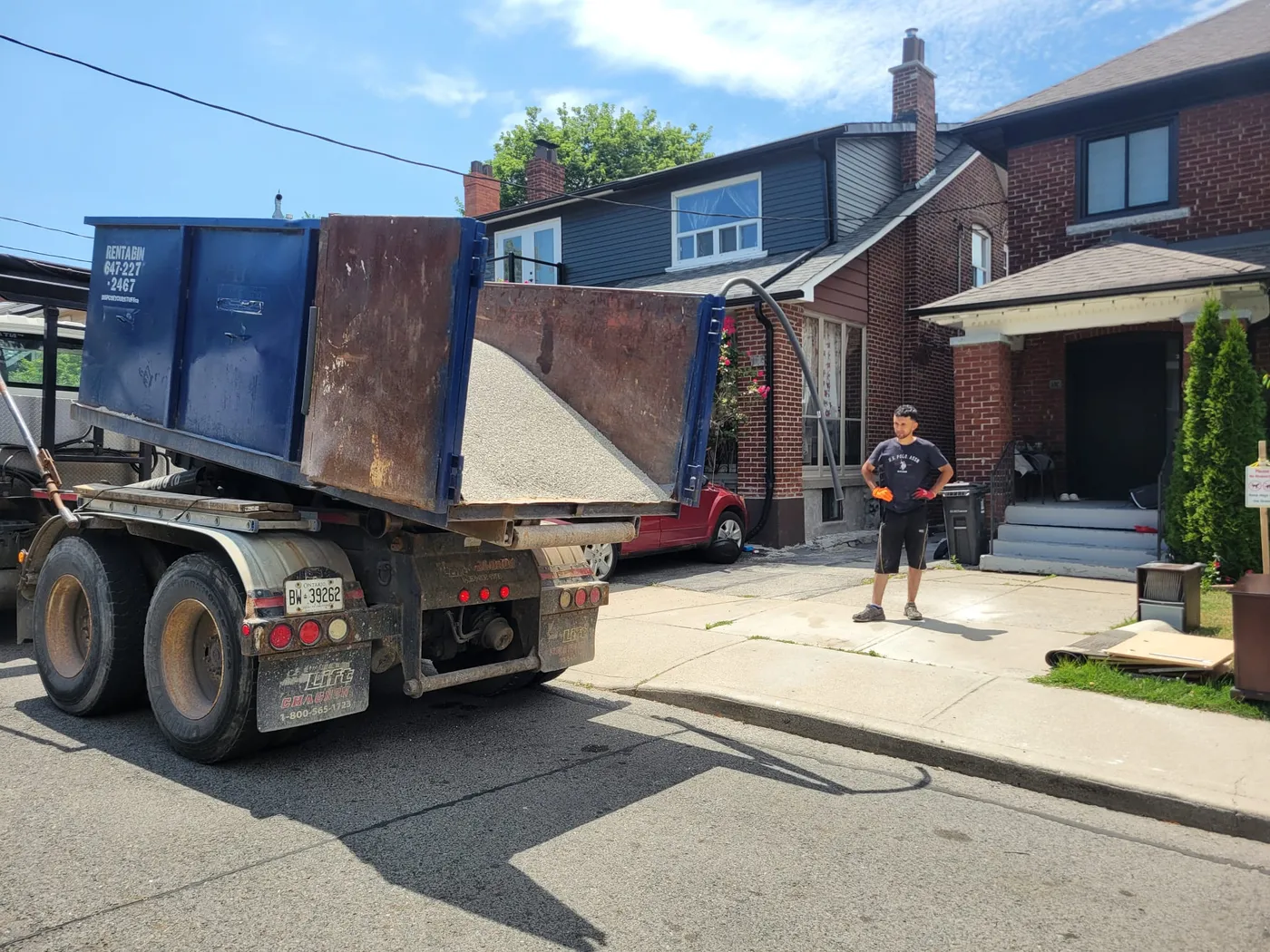
Disposal truck in the process of delivering a bin to a residential driveway
2

Delivery Day and Bin Placement

On delivery day, the driver arrives with driveway protection boards already on the truck. These are placed under the bin before it is set down, distributing the weight load across a larger surface area and preventing the bin's steel frame from making direct contact with the driveway. This matters on concrete, which can crack under concentrated point loads, and even more on asphalt, which softens in warm weather and will deform under an unprotected steel edge.

Placement precision on a roll-off truck is more accurate than most customers expect. An experienced driver can position the bin within inches of a target location using the hydraulic system. If the driveway has a tight entrance, a low-hanging branch, or a vehicle that cannot be moved, communicate that detail at booking so the driver has what's needed to plan the approach before the truck leaves the yard.

Roll-off truck positioning a disposal bin beside a residential property
3

The Rental Period

Once the bin is down, the rental period begins. Load it at whatever pace the project dictates. The one firm rule is that debris cannot exceed the height of the bin walls. Overfilled bins cannot be transported safely, and any material above the rim will be levelled off on-site before pickup. The excess remains at the client's property and at the client's expense.

If the bin fills before the project is complete, call to request a swap. The driver picks up the full bin and delivers a fresh one, and the rental period on the new bin starts fresh. If the project wraps up ahead of schedule, early pickup can be arranged at any time. The flat rate does not change based on how early the bin is returned, and there is no penalty for finishing ahead of the included period.

Large blue disposal bin loaded with renovation debris showing fill level
4

Pickup and Material Disposal

Pickup is scheduled by phone when the project is complete or the rental period is ending. The driver arrives, does a visual check of the load height, and hauls the bin to the appropriate disposal or processing facility. Your presence is not required. The process from call to pickup is typically completed within the same business day for addresses within the core service area.

Material from mixed-waste bins is taken to a licensed waste processing facility. Recyclable materials identified at booking are pulled into appropriate processing streams and diverted from general landfill. The handling chain from your driveway to final disposal is fully licensed and compliant with Ontario waste management regulations. If materials in your load have specific disposal requirements, raising that conversation at booking ensures the right routing from the start.

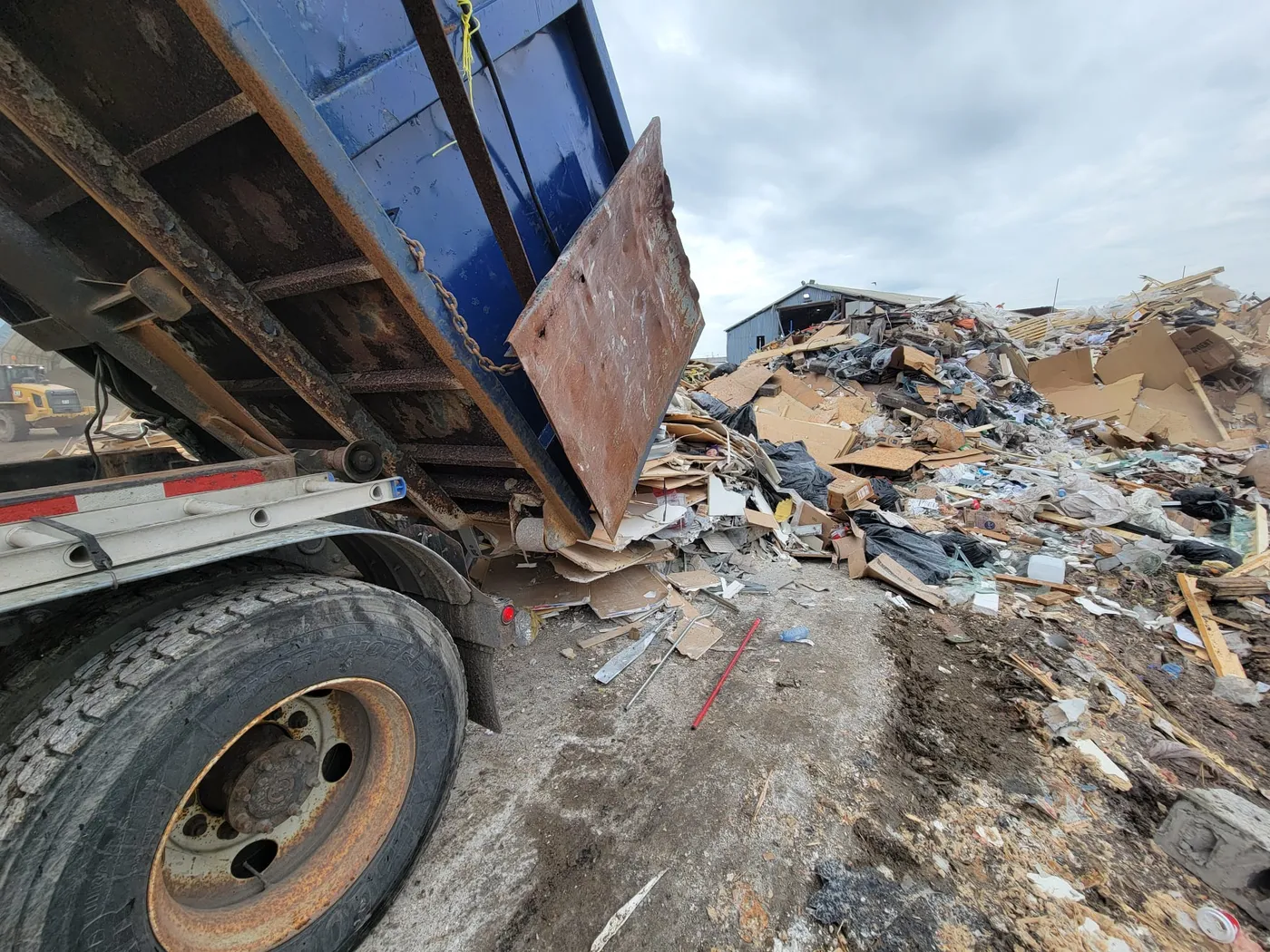
Disposal truck tipping a full bin at a licensed waste processing facility

Driveway Protection and Placement Planning

Driveway protection boards come on every delivery as standard practice, included at no extra charge. The boards distribute the bin's weight across a larger surface area, reducing the risk of cracking on concrete and preventing the frame corners from pressing into asphalt or interlock. On a hot summer day, asphalt softens enough that an unprotected steel edge will leave a permanent impression in the surface. On older concrete, a concentrated point load at the corner of a heavy bin can initiate a crack that was not there before the truck arrived. The boards eliminate both risks without any additional step on the customer's part.

Interlock and paving stone driveways are the most sensitive to placement, even with boards underneath. The bin should sit on the most structurally solid section available, ideally where the base layer is confirmed to be compacted, since surface type affects more than which material the boards are protecting. If the driveway has any soft spots, settled sections, or recent repairs, mention those specifics at booking so the driver can adjust placement once the truck is on-site.

When a driveway cannot accommodate the bin at all, whether because of a narrow gate, a steep grade change, low overhead clearance from a tree or structure, or a vehicle that cannot be relocated, the next option is street placement. Street placement in most GTA municipalities requires a road occupancy permit from the local city before the bin touches the public road surface. In Toronto, Mississauga, Brampton, and Oakville, the permit process, fees, and processing times differ. Some jurisdictions process permits within one business day; others require several days of lead time, and responsibility for securing it generally falls to the property owner. Build permit timelines into the project schedule if street placement is on the table, since street access is a lead-time item and cannot be arranged same-day.

Pricing, Flat Rates, and What Triggers Extra Charges

A plain-language breakdown of the full cost structure

The flat rate covers bin delivery, the full rental period, pickup, and standard disposal within the included weight allowance. When the load stays within those parameters, the quoted price is the price paid, plus HST. The situations that generate additional charges are specific and predictable: overweight loads, aggregate-heavy loads, and distance-based fuel surcharges.

If the total weight of your debris exceeds the allowance for the bin size ordered, the overage is billed at $135 per metric ton plus HST after pickup. Heavy materials cause this most often: dense tile, concrete mixed into renovation debris, large volumes of soil, or heavy appliances concentrated in one area of the bin. Estimate conservatively when your load has a meaningful component of heavy material. A swap costs less than an overweight surcharge on a bin that was pushing the limit from the first load.

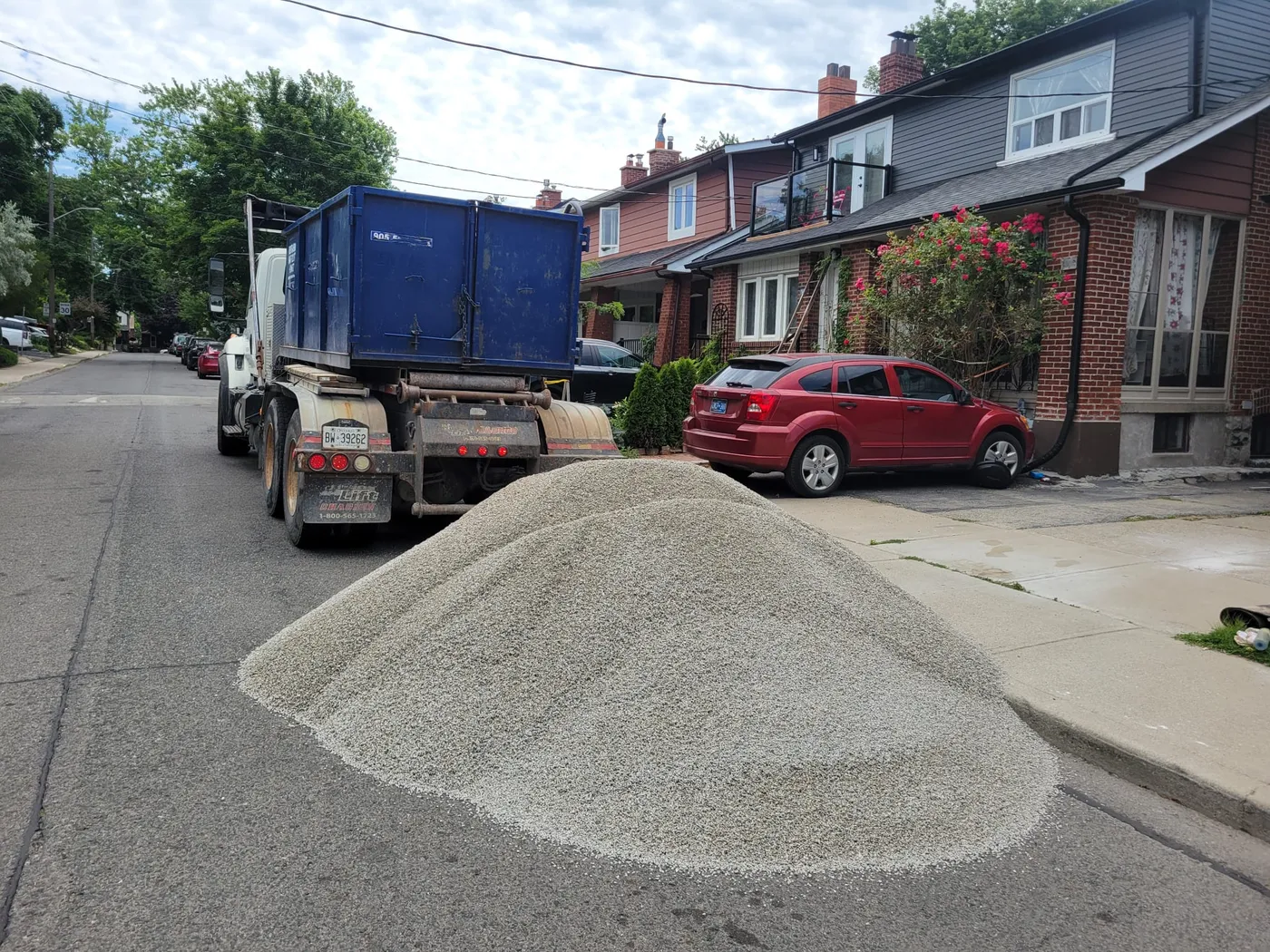
A bin that is 70% concrete rubble will be refused or billed by weight. The aggregate distinction is straightforward: a few bricks or a small volume of concrete mixed through standard renovation debris is fine. Once a load is composed primarily of aggregate material, only the 4-yard bin can take it, and only by prior phone arrangement. All other sizes accept mixed waste only.

Large aggregate material pile on a construction site illustrating heavy load considerations

Payment Methods, Fees, and Fuel Surcharges

Payment is accepted by cash, e-transfer, debit, and credit card. Credit card payments carry a 3% processing fee applied at the time of charge. If a bin is refused at delivery after the truck has already dispatched, a $150 service fee is charged regardless of the reason for refusal, since the delivery has already consumed truck time, fuel, and driver time. Call to reschedule before the truck leaves the yard if circumstances change ahead of the scheduled delivery.

Within the core western GTA service area covering Milton, Mississauga, Brampton, Oakville, and Etobicoke, fuel surcharges are minimal to none. Deliveries to addresses farther from the yard are quoted with the surcharge included upfront, so there are no adjustments after the fact.

Book Your Bin button icon
Customer Types

Who Uses Bin Rental and How Each Situation Is Handled

The range of people who rent bins across the GTA is wider than most expect. Each situation carries its own timing pressures, material considerations, and logistical realities that a one-size-fits-all approach does not address.

Homeowners Running Renovations

Weekend renovation projects, room-by-room cleanouts, and kitchen or bathroom upgrades make up the largest share of residential bin rentals, and the monthly structure fits how homeowners actually work around jobs and family schedules. The bin sits in the driveway and takes debris as it comes out, on whatever timeline the project ends up needing.

A 14-yard bin is almost always the right call for a full kitchen gut, even when the kitchen itself doesn't look large before demolition starts. Cabinets, countertops, tile, drywall, plumbing, and everything behind the walls add up fast, and underestimating that volume is the most common mistake first-time renters make.

Contractors and Trades

Multi-week builds, flooring crews, roofing companies, and general contractors on active job sites use bin rentals as a project management tool as much as a disposal solution. Having a bin on-site from day one gives trades a fixed place to load debris directly as each phase wraps up.

For multi-trade projects running across several weeks, the 20-yard bin is typically the most cost-effective choice over ordering and swapping smaller bins repeatedly. On-site availability alone tends to cut internal labour hours, since material goes straight from the work area into the bin as work progresses.

Property Managers and Landlords

Clearing units between tenants, managing a full building cleanout, and coordinating waste removal across a multi-property portfolio are recurring operational realities for property managers. Bin rental provides a repeatable cost structure and a defined disposal process that does not require re-negotiating terms for each job.

Property managers running multi-unit turnovers in Mississauga and Brampton sometimes stage two bins simultaneously, positioning one near the building entrance and one in the parking area to shorten the carry distance from any unit in the building. Multi-bin placements require a brief pre-booking conversation to confirm site access and truck routing for both drops.

Estate Executors and Family Cleanouts

Clearing a family home requires managing emotional complexity and logistical pressure at the same time. Estate executors are often working against a hard deadline (an estate timeline, a property sale, a probate schedule) while simultaneously making decisions about decades of accumulated belongings that cannot be made quickly.

The single-day option works well for estates where the sorting is largely complete and the remaining items are ready to load. A crew can load efficiently when material is staged, and having the bin off the property the same day removes one item from a list that is already long. For cleanouts that will take multiple days, the monthly rental gives the family time to work through the property without the pressure of watching extension fees accumulate on a tight timeline.

TESTIMONIALS

What Customers Say About Delivery, Pricing, and Driveway Safety

Customers who got the bin they were quoted, delivered when they were told, on a driveway that was still intact after the truck left, are the ones driving a 96% referral rate across the western GTA. The reviews that come back are rarely about general satisfaction. They name the driver, mention the time the truck arrived, and note whether the price matched what was quoted on the phone.

See our 80+ reviews on Google Order Button Icon

Common Questions About Bin Rental in the GTA

What happens if my project runs longer than expected? +
Extension fees apply after the standard rental period ends. For the 4-yard bin, extensions run $10 per day or $100 per week. For the 10, 14, 20, and 40-yard bins, the extension rate is $15 per day or $100 per week. The cleanest approach is to call before the rental period ends to either schedule pickup or confirm an extension. Daily fees accumulate automatically without a call, so staying ahead of the timeline is the straightforward way to keep costs predictable.
Can I add a second bin if the first fills up before the project is done? +
Yes. Call to request a swap or a second bin placed alongside the first. A swap means the driver picks up the full bin and delivers a fresh one; the rental period on the new bin starts fresh from delivery. If the site can accommodate two bins simultaneously and the truck can access both drop locations, that arrangement can be made at booking or mid-rental. Multi-bin jobs are common for large renovations and active contractor sites.
What if the bin gets too heavy before it is visually full? +
Weight limits apply regardless of how full the bin looks by volume. If the total load exceeds the flat-rate weight allowance, the overage is billed at $135 per metric ton plus HST after pickup. This is most likely to occur with heavy materials like tile, concrete fragments, or large volumes of soil mixed into renovation debris. If you are working with dense materials, call ahead to discuss load composition before booking. Our guide to avoiding overweight fees in the GTA covers this in practical detail.
Do I need to be home for delivery and pickup? +
No. Contactless delivery and pickup are standard. Clear placement instructions at booking and an unobstructed access route on delivery day are all that is required. No one needs to be present at the property. If there is any ambiguity about placement, a quick call before the truck departs resolves it. The driver will not place the bin in an unexpected location without confirming first.
Can you place the bin without damaging my driveway? +
Driveway protection boards are used on every delivery as standard, included at no extra charge. They distribute the bin's weight across the surface and prevent the steel frame from making direct contact. This protects concrete from point-load cracking and asphalt from deformation in warm weather. The specific protocols we follow are detailed in our 2026 driveway protection guide.
Do I need a permit if the bin goes on the street? +
Most municipalities across the GTA require a road occupancy permit before a bin can be placed on a public road or boulevard. The permit process, fees, and timelines differ by city. For city-specific breakdowns, see our guides for Toronto, Mississauga, and Brampton. Permit responsibility typically falls to the property owner. Build permit lead time into the project schedule if street placement is the plan. Same-day street placements are not possible in most jurisdictions.
Can I put shingles, soil, or concrete in the bin? +
Light quantities of these materials mixed with other renovation debris are generally fine. Loads composed primarily or entirely of shingles, soil, concrete, gravel, or similar heavy materials (what are called pure aggregate loads) are only accepted in the 4-yard bin by prior phone arrangement. All other bin sizes accept mixed waste only. If your project produces significant volumes of heavy aggregate material, call before booking to confirm the right approach for your specific load. Our bin size guide for home renovations covers material weight considerations in practical terms.
What happens to the material after the bin is picked up? +
The bin goes to a licensed waste processing facility. Recyclable materials identified at booking are separated for appropriate processing and diverted from general landfill. Mixed waste is handled according to Ontario waste management regulations, and the disposal chain is fully licensed and compliant throughout. If your load contains materials with specific disposal requirements, raising that at booking ensures the material reaches the right processing stream from the start.

Still have questions? Call us directly. FAQ button icon

Bin Rental by City Across the Western GTA

Related Disposal Services

Serving the Western GTA and Surrounding Areas