
The Five Materials That Can Stop a Bin Pickup
Who the refusal list binds
Homeowners running a renovation or basement cleanout, and general contractors loading a job-site bin, all work under the same refusal list from Dispose Your Stuff. If a crew finds a prohibited item in the bin, the company has the right to leave the bin in place or charge for the contamination, and five material categories trigger that outcome.
Dispose Your Stuff bins carry a prohibited list because every load has to end at a disposal or processing site that will take it, and a single wrong item tucked inside an otherwise clean load of drywall and lumber can create problems for the whole bin once it leaves the driveway.
Those five categories apply to every bin size from the 4 yard to the 40 yard, across every rental length from weekly to monthly, in every city the company serves, and two of them, paint and solvents, are the kind of thing stored on a basement or garage shelf.
- Pure aggregate in any bin other than the 4 yard or 10 yard sizes
- Hazardous chemicals and solvents, including thinners and strippers
- Tires, whether one spare or a full set
- Explosives and fireworks, including leftovers from a past holiday
- Full paint cans, sealed or opened
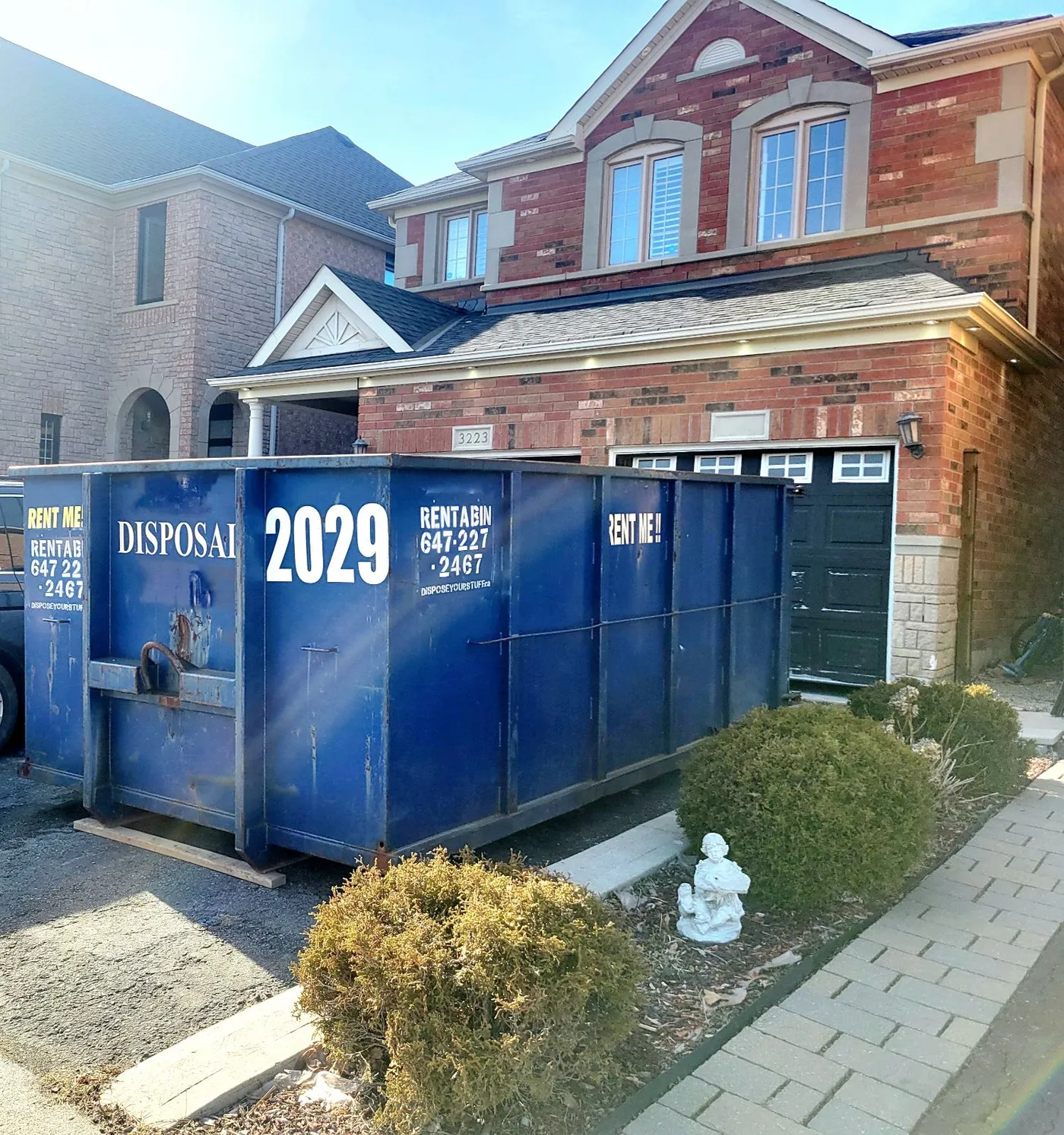
Chemicals, Solvents and Full Paint Cans
Why leftover paint stays out of the load
Homeowners often treat a sealed can of leftover paint as ordinary renovation garbage, yet full paint cans are on the prohibited list for every Dispose Your Stuff bin, whether the can holds a gallon of trim white or a forgotten tin left by the previous owners.
Where the solvents hide
A basement or garage cleanout can put paint thinner, driveway sealer and laundry-room cleaning products on the same shelf as the boxes and furniture headed for the bin, and hazardous chemicals and solvents are prohibited outright in every Dispose Your Stuff bin.
Chemical and solvent containers have to come out before loading starts, since once they sit under drywall or a broken sofa the crew can treat the whole bin as contaminated. A junk removal booking puts the hauling in a crew's hands, while tires and anything that can ignite are just as easy to spot and riskier to move.
Tires, Fireworks and Pressurized Hazards
A garage cleanout can turn up a stack of old tires and a bag of leftover fireworks from a past summer, and both sit on the prohibited list. Setting them aside before the bin is delivered keeps the crew from having to leave the bin or charge for contamination on collection day.
Propane tanks and batteries are not named on the Dispose Your Stuff list, so a barbecue cylinder or a box of old car batteries needs a call to 647-227-2467 to confirm before either goes near the bin.
Explosives and fireworks are refused in every bin size, which sets them apart from pure aggregate, the one prohibited category whose answer depends on the bin that was booked.
Why Concrete and Soil Depend on Bin Size
Only the two smallest bins take aggregate
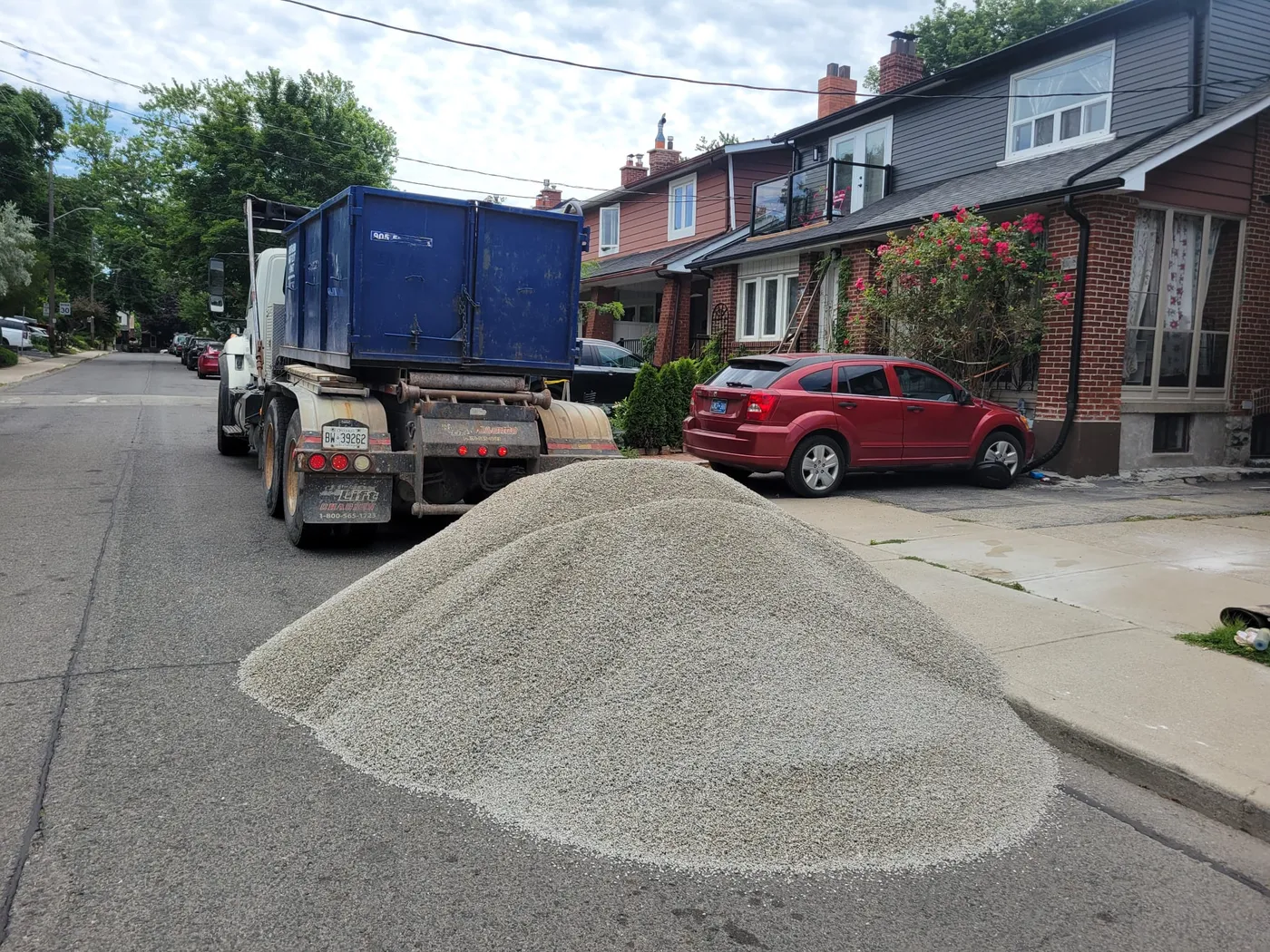
Pure aggregate loads are accepted only in the 4 yard and 10 yard bins, and they are refused in the 14, 20 and 40 yard bins, so the size chosen on the bin sizes and pricing page decides whether a load of broken concrete or patio base can be collected.
Two jobs that produce an all-aggregate load
A contractor breaking out an old concrete pad, or a homeowner digging out the gravel base under a failing patio, ends up with a bin holding nothing but aggregate. That load has to be booked into a 4 or 10 yard bin from the start, whether the job runs as a demolition rental or a landscaping rental.
When a bigger bin is the wrong call
Booking the biggest bin as a safety margin suits bulky renovation debris but fails with pure aggregate, which only the two smallest sizes accept, so mixed loads of drywall and lumber belong in a mixed waste bin, while loads that include broken tile or other aggregates need a 4 or 10 yard bin confirmed by calling 647-227-2467.
- 4 yard bin, accepts pure aggregate
- 10 yard bin, accepts pure aggregate and is the largest size that does
- 14 yard bin, refuses pure aggregate loads
- 20 yard bin, refuses pure aggregate, so concrete-only loads need a smaller booking
- 40 yard bin, refuses pure aggregate despite being the biggest size offered
Items Commonly Restricted Across the Industry
What the wider industry keeps out
None of these items appear on the five-category Dispose Your Stuff refusal list, which leaves borderline cases such as an old chest freezer or a box of fluorescent tubes to confirm directly, and a call to 647-227-2467 before the item goes in settles the question.
Filling the bin straight from the house makes it easy to bury a problem item under the next armload, while sorting on the driveway first keeps every item visible and lets clean cardboard and metal go to a separate recycling bin rental. Contamination can be found when the crew collects the bin or when a load is rejected at a disposal site.
- Asbestos and materials that contain it
- Medical waste generated at home
- Fridges, freezers and A/C units, appliances that hold refrigerant
- Fluorescent light fixtures taken down during a renovation
What Happens at Pickup and the Check Before You Load
Collection day in all five cities
The crew pulls up to a driveway or job site in Milton, Mississauga, Brampton, Oakville or Etobicoke expecting to lift a full bin, and the same refusal list applies in all five cities. A paint can wedged between broken cabinets, or a tire showing at the corner of the load, turns that routine pickup into a contamination decision.
Dispose Your Stuff has the right to leave the bin where it sits or charge for the contamination. On a job site, a bin left in place keeps occupying the ground planned for the next phase of work, whether that space was meant for a material delivery or a fresh empty bin.
Counting on loose debris to hide a prohibited item puts the entire load at risk, so before the bin arrives, walk the cleanout or site and set aside every paint can, solvent, tire and firework, and keep pure aggregate out of the 14, 20 and 40 yard bins. Then call 647-227-2467 or book online with the load described.