Why tires and propane tanks stay out
Before the first bag goes into the bin, you need every tire and propane tank pulled out of the Etobicoke cleanout pile and a separate destination chosen for each. Dispose Your Stuff accepts no tire of any size in any bin, and propane tanks are prohibited along with unused fireworks, spent fireworks casings and anything else that could pressurize or combust. A stack of old winter tires and a barbecue cylinder beside the garage door are exactly the pair that has to leave the property another way.
Loading either item puts the whole bin at risk. Dispose Your Stuff reserves the right to empty a bin on site when it holds contaminants or hazardous waste, and if a disposal facility rejects a contaminated load, the bin comes back to your property and the cost of the return trip and re-sorting falls entirely on you. One tire wedged under drywall is enough to bring a full bin back to the driveway at your expense.
Pressurized cylinders fall under a broader rule about crew safety. Items that need special handling or are dangerous to operators, such as gasoline, paint thinners and fireworks, are not accepted in the company's truck either, so a hauled cleanout runs under the same limits as a bin rental, and sorting becomes the first physical job of the day, done before anything heavy lands on top of the tanks.
Sort them out before the bin arrives
A tire left in the general pile can end up under lumber and carpet, and pulling it out of a loaded bin means unloading everything above it. Separating tires and tanks before delivery avoids that, and it matters most on a single-day rental, where the driver delivers the bin, waits on site while it is loaded and hauls it away the same day, so any mid-load sorting eats into that window.
Counting matters because the propane route has a daily cap. Toronto's Drop-Off Depots take household hazardous waste from residential sources free of charge, up to 50 litres or 50 kilograms per day, and that allowance includes 5 gas tanks such as propane, so a garage holding seven or eight cylinders needs at least two depot days planned around the bin delivery.
Most of a cleanout can go in as found. Furniture, mattresses, appliances, boxes, drywall, lumber and carpet are all accepted, so the sort only has to catch the handful of refused items. Full paint cans join that set-aside pile because they cannot go in the bin, though empty cans are fine, and RPRA's provincial drop-off map covers household hazardous waste such as paint.
- Walk the garage, basement and shed, and pull every tire and propane cylinder into one pile.
- Split the cylinders into batches of five or fewer, one batch per depot day.
- Add full paint cans to the same pile.
- Stage that pile on the far side of the garage, clear of where the bin will sit.
- Find a free tire drop-off site on the provincial map before loading day.
Propane tanks at Toronto drop-off depots
An Etobicoke household can bring propane tanks to a City of Toronto Drop-Off Depot free of charge, up to 5 gas tanks a day inside the 50 litre or 50 kilogram household hazardous waste limit. Check the City's list of accepted depot items before loading the car, since that page sets out what the depots take and what they currently turn away.
The free allowance applies to residential sources. A contractor clearing cylinders from a renovation job site should confirm with the City of Toronto how commercial tanks are handled before driving them to a depot, because the published limits are written for household drop-offs.
A tank that is dented, leaking or smells of gas is a different problem from routine disposal. Ontario directs anyone unsure how to handle a spill or dispose of a pollutant to the Spills Action Centre at 1-800-268-6060, available 24 hours a day, 7 days a week, and licensed spill contractors can be hired when a clean-up needs specialized equipment.
Where tires go when depots refuse them
Anyone who drives tires to a Toronto depot along with the propane will be turned away, because the City's Drop-Off Depots are not accepting tires until further notice, so the two items coming out of the same Etobicoke garage need two separate destinations planned from the start.
RPRA's Where to Recycle map shows locations across Ontario where the public can drop off tires for free, along with batteries, electronics, lighting and household hazardous waste such as paint and antifreeze. Search from your Etobicoke address, then confirm hours and any quantity limit directly with the site before the tires go in the car.
Road permit fee, bin price and booking
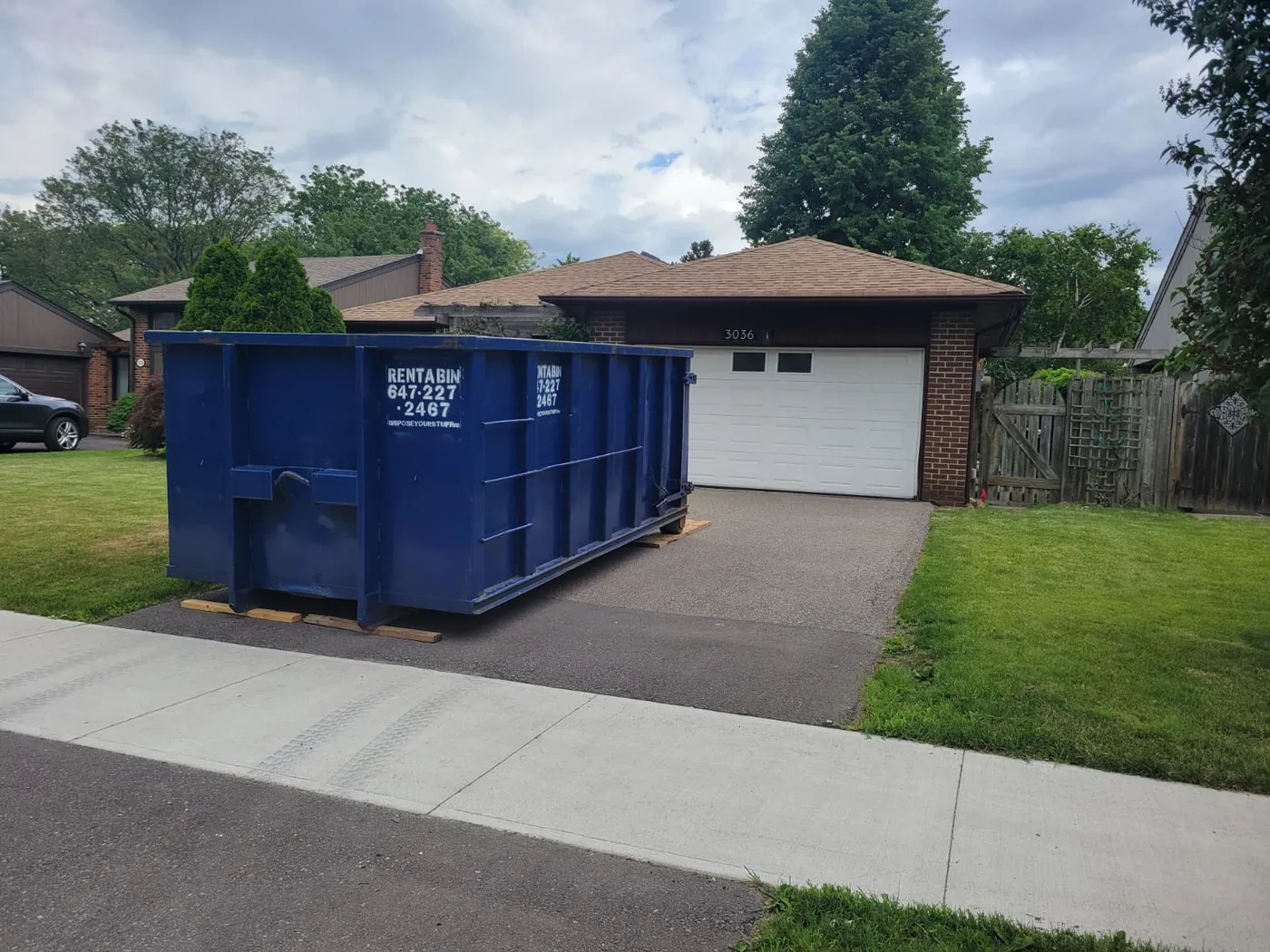
Once the tires and tanks are gone, an Etobicoke bin still has a city rule to meet. The City of Toronto requires a Street Occupation Permit to place a disposal bin in a roadway or public laneway, and the 2026 fee for a bin outside a Construction Hub is $73.89 + HST per day. Dispose Your Stuff may be able to set the bin on your lawn or the street, so confirm placement when booking.
For the remaining debris, a 10 yard bin is a flat $450+Tax for mixed waste with a rental period of up to a month, or $400+Tax as a single-day rental. Contents may not rise above the rim, and an overloaded bin that is unsafe to lift is levelled off before it leaves the property, with the excess left behind at the client's expense.
To book a bin for what is left, call Dispose Your Stuff at 647-227-2467 or reserve through the online booking page, and see the Etobicoke bin rental page for local service. Anyone who would rather have the cleanout hauled without a bin can ask about junk removal, priced on the volume of junk with a free estimate.
The tires and tanks set aside in the garage have to stay out of the loading path until delivery day ends, because either item found in the bin can get the load emptied on site, or sent back to your property with the return trip and re-sorting billed to you.