
The fill line decides the size
If an overloaded bin is unsafe to lift, the crew levels it off before it leaves the property. Everything taken off the top stays behind at the client's expense. All bins can be filled only to the top of the rim, which rules out the obvious estate plan of ordering one box and heaping it until the house is empty. Sizing a whole-house cleanout means sizing to the rim, measured in a bin's length and wall height.
An estate cleanout fills a bin with the contents of the rooms: furniture, mattresses, beds, appliances, boxes, toys, carpet and cabinetry, all of which appear on the accepted-materials list. Together they make up mixed waste, the category the 10, 14, 20 and 40 yard flat rates are written for. Because those rates cover mixed waste only, the heavy and hazardous leftovers in an older house need separate planning.
There are five sizes to choose from. The smallest is a 4 yard box, 8 feet long with 4-foot walls, and the largest is a 40 yard bin, 16 feet long with walls 7.25 feet high. For a whole house, the comparison below weighs each size on the dimensions that limit a cleanout load: floor length for the longest items, wall height for every lift, and whether heavy material makes up enough of the load that only the smallest size accepts it. For estimates by project, see our bin sizing guide.
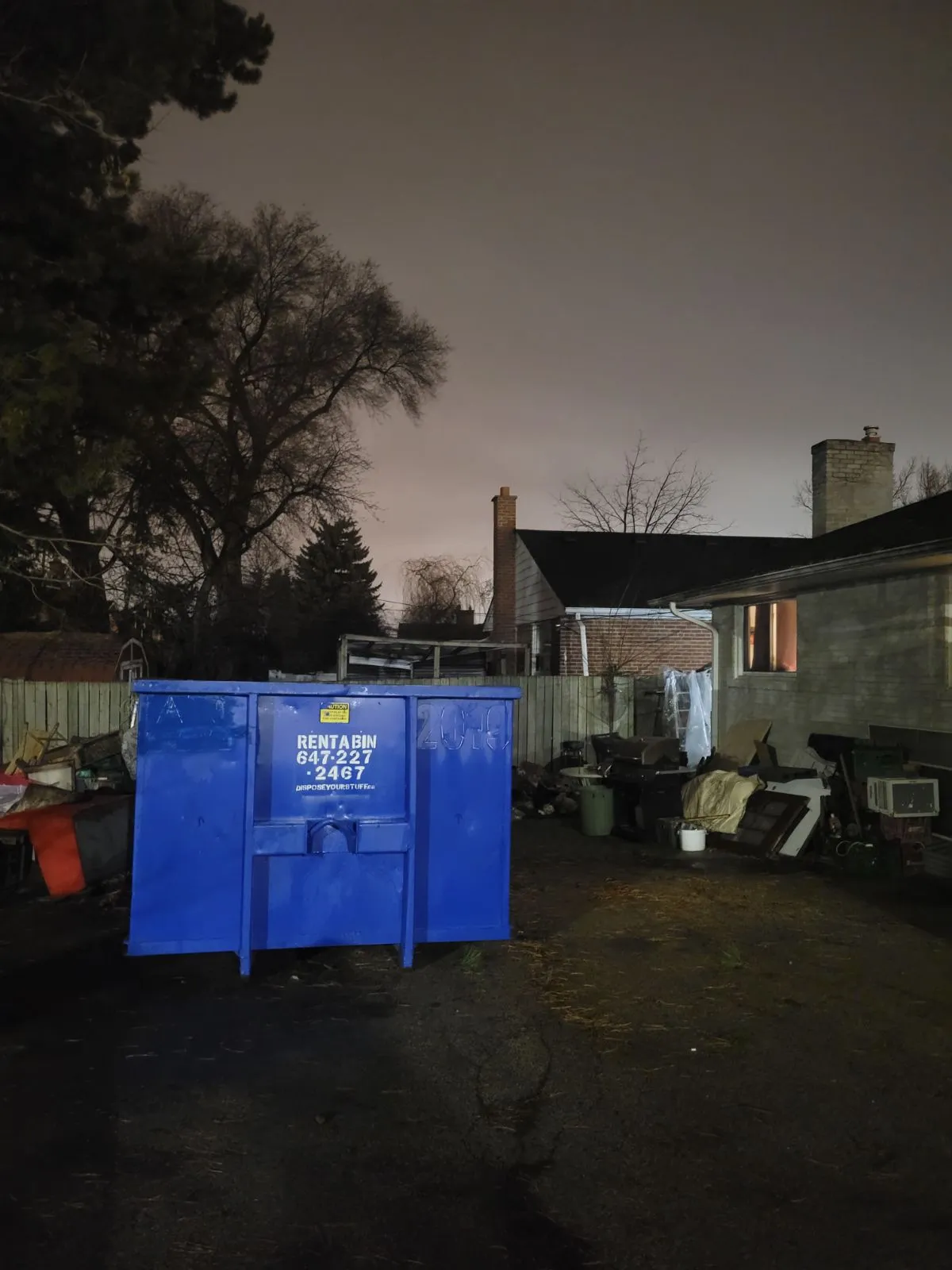
Comparing the bin sizes and a junk crew
Every option below except the 4 yard is a mixed waste bin rental at a flat rate, with up to a month on site. The 4 yard is priced monthly for clean fill or mixed waste. Full figures sit on the bin sizes and pricing page. The comparison here is about which box suits a house full of belongings.
The 10 yard bin for one floor
At $450 plus tax, the 10 yard bin is the smallest flat-rate size. It fits a partial cleanout, such as a single floor or a crowded basement. Its 4.7-foot walls keep each lift over the side low. Its 6-foot width matches the 20 yard, so moving up a size changes length and height, not width.
14 yard bin
At $550 plus tax, the 14 yard bin sits between the 10 and 20 yard sizes on price and on its 12-foot length. Its 7-foot width makes it the widest of the three mid sizes, which gives bulky pieces like dressers and sofas more floor to sit on before anything has to be stacked toward its 5-foot rim.
The 20 yard bin with a longer floor
The 20 yard bin costs $650 plus tax and adds length and wall height while keeping the same 6-foot width as the 10 yard. Its 14.3-foot floor lets bed frames, rolled carpet and long runs of cabinetry lie flat. The 6-foot walls hold more before the load reaches the rim.
The 40 yard bin
Treating the biggest bin as the safe pick for a full house ignores what the $1,000 plus tax rate actually delivers. It buys a body 8.2 feet wide and 16 feet long, with walls 7.25 feet high. That means the driveway footprint, and the work of lifting every item over a rim taller than most people, belong in the decision alongside raw capacity.
A 4 yard bin for brick, tile and soil
Some cleanouts include breaking out a patio or a tiled room. Brick, tile and soil cannot make up the main contents of the 10, 14, 20 or 40 yard bins. A handful of bricks or a bag or two of soil mixed into other debris is acceptable. A heavier load goes in the 4 yard bin by prior phone arrangement, at $350 a month with no single-day option. Weight over the flat-rate limit is billed per metric ton, so confirm the per-tonne rate for this size when booking.
Junk removal without a bin
When an estate leaves too few hands to carry furniture out to the driveway, junk removal takes the bin out of the plan. Pricing is based on volume, with a free estimate and no hidden fees. Payment is due only once the job is complete, by cash, card, PayPal or e-transfer. Service runs same-day or next-day, depending on availability.
Refused items, permits, rental days and booking
Estate garages and basements are where refused items like full paint cans, propane tanks and tires tend to surface, and our guide to what bin crews won't haul covers them item by item. For an estate, the risk is a bin loaded over weeks by several relatives, because a contaminated load rejected at the facility comes back to the property, with the return trip and re-sorting billed entirely to the client.
In Mississauga, Peel's Fewster Community Recycling Centre at 1126 Fewster Dr. takes tires, paint, motor oil and electronics from 8:30 a.m. to 4:30 p.m. daily, with Thursday open until 8 p.m. from May to September. Milton and Oakville households can bring 20 L of household hazardous waste per day and up to 10 tires free to the Halton Waste Management Site. Toronto's Drop-Off Depots take 50 litres or 50 kilograms a day, including 5 gas tanks, but refuse tires until further notice, so Etobicoke tires, which no bin accepts, need a free site from RPRA's Where to Recycle map.
A bin too long for the driveway that has to sit on the road needs a city permit, and the fee depends on the city. In Etobicoke, Toronto's Street Occupation Permit costs $73.89 plus HST per day. Mississauga's 2026 fee schedule sets $100 plus 13% HST per application. Oakville lists $334 per application plus $32 a day in its 2026 rates and fees. Brampton requires a Road Occupancy & Access Permit, so confirm its fee with the City before applying.
An estate in Milton that needs a street bin should start the permit before choosing a size, since the Town allows up to 30 business days for issuance under By-law 35-2020, refuses permits on Regional roads and sets the bin's final placement itself, any of which can rule out the longer 20 or 40 yard boxes. The application steps, including the liability insurance requirement, are in our Milton permit walkthrough.
An estate cleanout that pauses while belongings are sorted keeps the rental clock running. Each bin cycle lasts 30 days, after which the 10, 14, 20 and 40 yard bins cost $15 a day or $100 a week extra. Payment is due on delivery by cash, e-transfer, debit or credit card, with a 3% fee on credit. A $150 service fee applies if the bin is rejected at delivery for any reason.
The option most estate cleanouts miss is the single-day rental. The driver delivers the bin, waits on site while it is loaded and hauls it away the same day. On residential rentals of every size except the 4 yard, it costs $50 less than the flat rate, so a 20 yard runs $600 plus tax. Specific delivery dates are guaranteed only when you order at least a week ahead. Once the permit timeline is set, call Dispose Your Stuff at 647-227-2467 or reserve your size on the booking page.