
Toronto municipal code requires a Street Occupation Permit for any bin placed on a public right-of-way. Homeowners must secure this documentation from Transportation Services at least 48 hours before delivery to avoid immediate city enforcement or the rejection of the bin drop-off by the operator. Fines for non-compliance regularly exceed $1,000.
Regulatory Risks of Improper Bin Placement
Permit Timelines and Enforcement
Within the Right-of-Way Management division, on-site inspectors in the Greater Toronto Area frequently cite property owners for blocking pedestrian sightlines near intersections. A 3.05 metre clearance is mandatory for all active roadways to ensure emergency vehicle access is never compromised. Operators will reject the delivery if a valid Certificate of Insurance (COI) is not provided.
Unauthorized placement triggers a daily fine that accrues until the equipment is removed from the thoroughfare. These penalties often escalate beyond the initial municipal permit cost due to administrative oversights. Property owners should finalize all documentation two business days early to prevent immediate site rejection by the heavy transport operator during the drop-off phase.
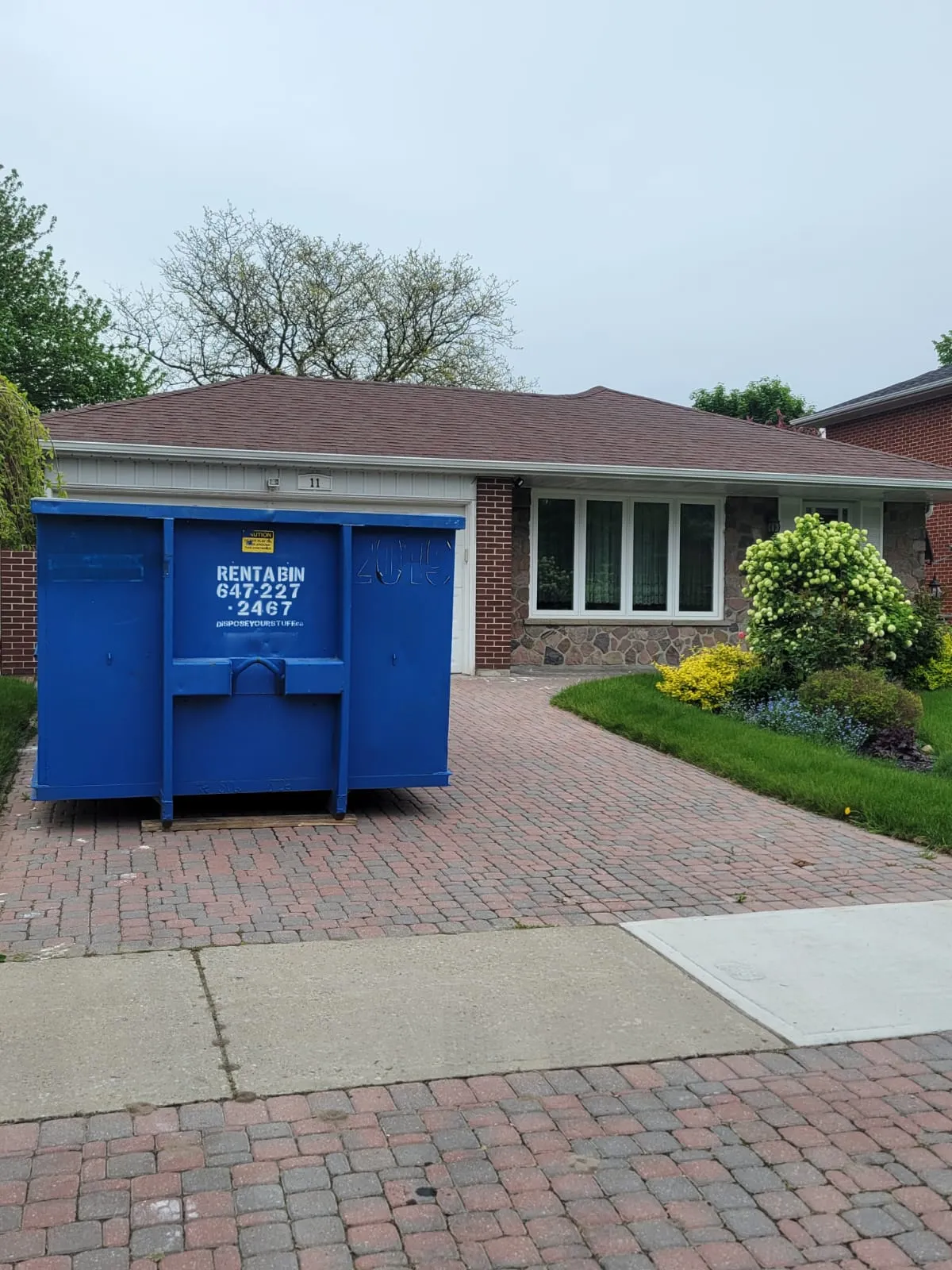
Spatial Constraints in Etobicoke and Scarborough
Infrastructure Nuances by Region
Residential infrastructure across the GTA varies significantly between post-war bungalows and modern high-density builds. In Etobicoke, narrow driveways often hemmed in by brick retaining walls dictate a maximum bin width of 8 feet, regardless of the yardage capacity required for the renovation. Property owners should consult Regional Public Works for specific property boundary markers and driveway width restrictions before ordering.
Width is the primary failure point for bin delivery in older GTA suburbs.
In Scarborough, larger suburban lots allow for 20-yard containers, but overhead telecommunication lines often hang lower than the 14-foot clearance required for a roll-off truck. A Temporary Road Occupancy Permit is required if the equipment must occupy the street during the loading phase. Measuring the vertical path is as critical as measuring the ground footprint to ensure successful container placement.
Volumetric Load Calculations for Structural Debris
Calculating the Air Gap in Mixed Waste
Most renovators believe a 14-yard bin is sufficient for a full basement gut, but drywall and framing studs do not pack tightly. This volumetric capacity density issue creates air gaps that can consume 30% of a bin's rated capacity. Contractors often require a second container mid-project because the irregular structural members refused to compress during the initial load-in phase.
A standard 4-yard bin handles 4 pickup truck loads of bathroom tile effectively. Moving to a kitchen update requires the 10-yard model, equivalent to 8 pickup truck loads, while large demolitions demand the 14-yard bin or 12 pickup truck loads. Adhering to load leveling standards prevents hazardous transport conditions and ensures the safety of other motorists on the Ontario Highway Traffic Act regulated routes.
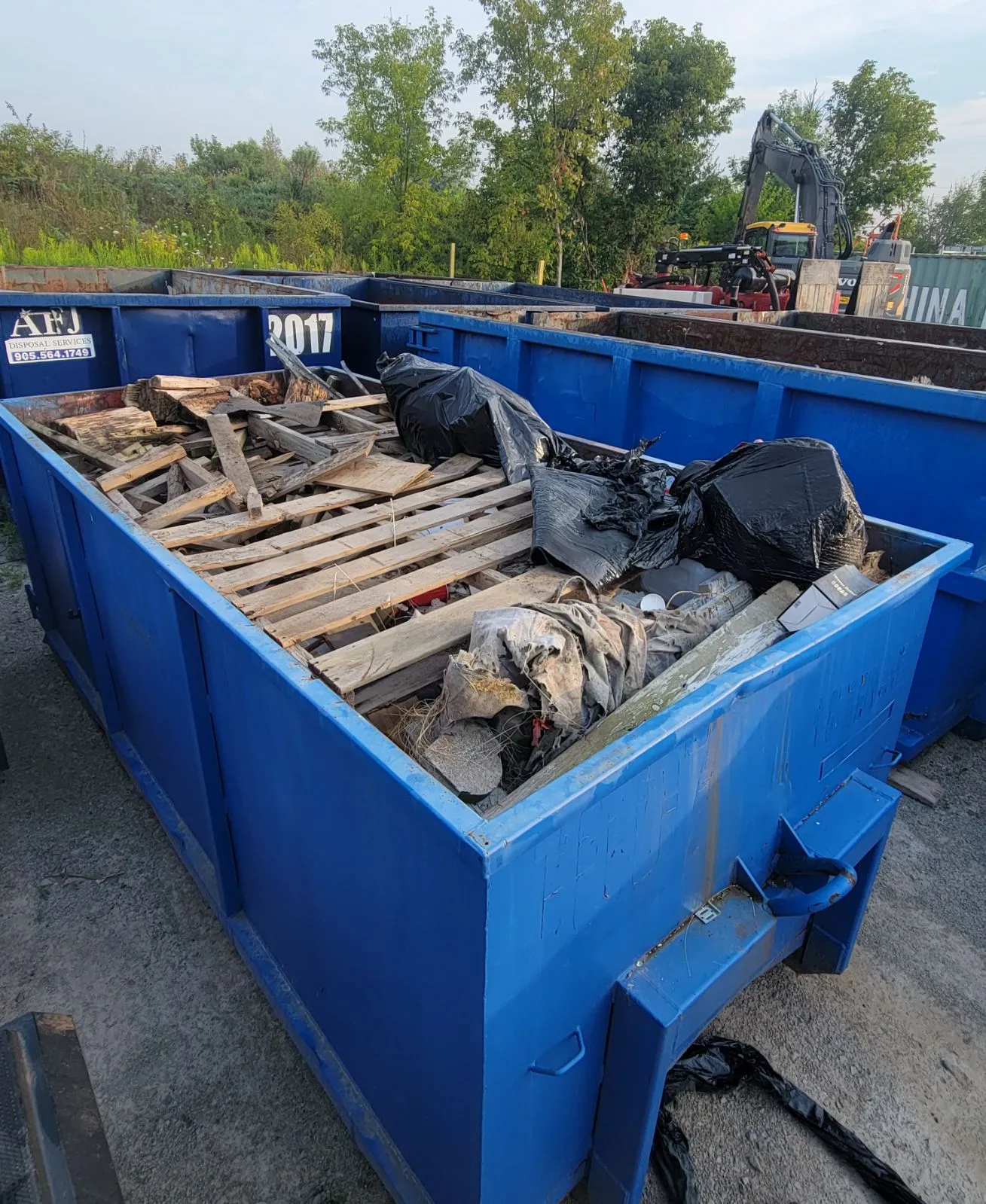
Weight Restrictions for Heavy Fill Materials
Mechanical Lifting Limits and Road Safety
Can a 40-yard bin be used for concrete or clean fill? The answer is a firm negative due to the hydraulic lifting limits of transport vehicles and strict axle weight distribution regulations. Heavy fill materials in large bins create mechanical lifting failures that damage both the truck and the driveway surface during the attempted removal from the staging area.
While a 40-yard bin offers the most space, it is reserved for light, bulky waste. For heavy materials such as asphalt, soil, or brick, the industry standard is to cap the bin size at 20 yards. Within a designated Construction Hub zone, owners must deploy flasher barricades and maintain an approved Traffic Control Plan for any roadside placement to ensure pedestrian and vehicle safety.
Improper distribution of dense mass can lead to permanent indentations in the substrate. Ontario Regulation 413/05 holding property owners liable for driveway surface repairs if site staging is performed improperly. Using protective wooden planks is the industry standard for mitigating these structural risks and protecting the integrity of the property during the rental duration.
Logistics for 40 Yard Industrial Grade Renovations
Space Requirements for Commercial Scale Projects
A 40-yard container requires 60 feet of linear space for the truck to perform a safe drop-off. This capacity, representing significant pickup truck load equivalents, is exclusively suited for commercial renovations or estate clean-outs. The hook-lift mechanism clearance necessitates a path free of all overhead obstructions to prevent structural damage to the transport equipment or the local utility infrastructure.
- Household Furniture and large appliances that require significant wall height for safe containment during estate clearing.
- Roofing Shingles and light construction debris from large-scale multi-family roof replacements in suburban GTA regions.
- General Junk stemming from multi-room clearing during residential transitions or full residential basement guts.
- Insulation and bulky packing materials that occupy high volume without contributing excessive weight to the load.
In Mississauga, property owners must ensure the driveway is reinforced if they intend to park a fully loaded 40-yard bin for more than seven days. The prolonged pressure can cause asphalt depressions or cracks in older concrete pads. Distributing weight with protective wooden planks is the only way to safeguard the underlying residential substrate from permanent deformation during the service period.
Site Readiness and Delivery Clearance Requirements
Final Pre Delivery Checklist
Effective waste management concludes with the safe arrival and departure of the service vehicle. Beyond the bin's dimensions, the site must be clear of all parked cars and basketball nets to facilitate a single-attempt delivery. Failure to check these final metrics results in immediate financial penalties and project delays. For more information on sizing, view our bin sizes and prices page.
Verify that the overhead clearance at the driveway entrance is exactly 14 feet to prevent a $250 failed-delivery fee triggered by low-hanging telecommunication lines. This check is mandatory for all roll off dumpster rentals in high-density zones. Measure the vertical clearance of the delivery path for telecommunication lines and branches before the truck arrives to protect the renovation schedule.