
Mississauga residents and general contractors now face maintained enforcement standards by the Transportation and Works Department to prevent boulevard obstructions. Unpermitted containers resting on municipal land trigger mandatory removal orders that can stall active project timelines for weeks.
Mississauga Bin Placement Regulations and the 2026 Enforcement Strategy
Monitoring Street Safety and Drainage Access
Mississauga homeowners and contractors face immediate work stop orders for unpermitted bins placed on city property. The City of Mississauga Transportation and Works Department increased field inspections for 2026 to ensure street safety and drainage access. Officers prioritize the removal of unmarked obstructions that interfere with public maintenance cycles.
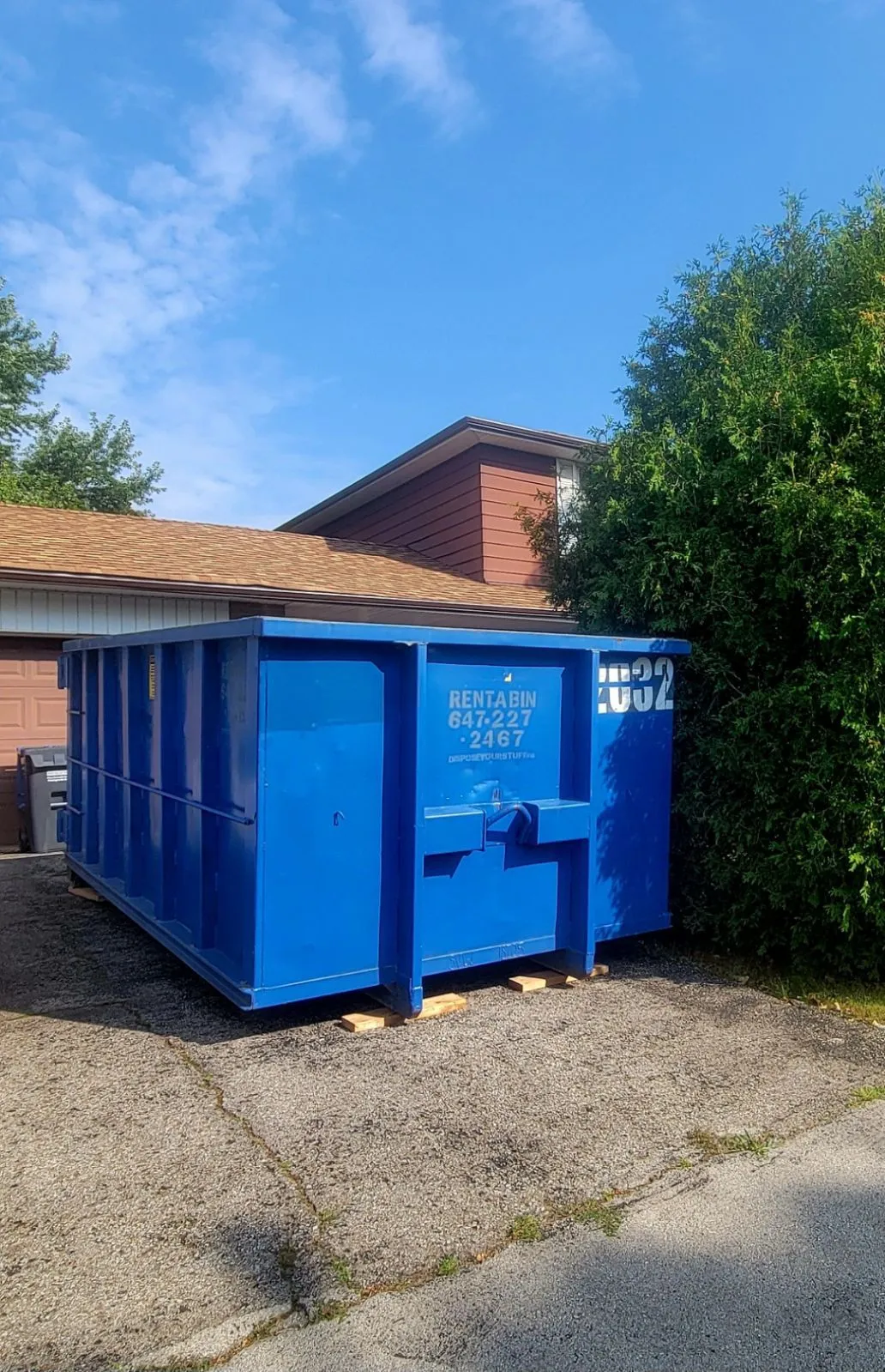
A 14 yard bin resting on a residential curb in Port Credit or Streetsville occupies the public right of way. This placement triggers a legal requirement for a permit to manage liability and pedestrian flow during the rental period. Failure to account for the curve of a cul-de-sac often leads to unintentional encroachments.
Inspectors verify that staging locations do not block catch basins or drainage grates to prevent localized flooding during seasonal thaws. While the need for a permit is clear, the specific location of the bin determines which municipal department holds jurisdiction over the site.

Property Lines and the Legal Definition of Public Space
Understanding the Municipal Boulevard Strip
The municipal boulevard typically extends several meters beyond the paved street surface into what appears to be private lawn. Mississauga residents often mistake this city-owned strip for private property, leading to permit bypass errors during project planning. Accurate identification of property pins is the only way to verify legal staging areas.
Bins placed entirely on a private paved driveway do not require a Mississauga TROP permit. However, the container must not overhang the sidewalk or obstruct the sightlines of neighboring driveways, as this violates secondary safety bylaws. Professional bin rental Mississauga services verify these clearances before the truck arrives at the site.
Major thoroughfares like Dundas Street and Hurontario Street fall under Region of Peel jurisdiction. Placement on these arterial roads requires coordination with regional authorities rather than the local municipal office. Site supervisors must account for these distinct jurisdictional boundaries to ensure total legal compliance.
Mississauga Temporary Road Occupancy Permit Standards
Administrative Requirements and Mandatory Fees
Applying for a permit in 2026 requires a 80 dollar residential permit fee for standard placements. The application process necessitates metric site sketches illustrating the exact dimensions of the 10 yard or 20 yard bin relative to nearest intersections and fire hydrants. The city validates these sketches against utility maps to prevent structural damage.
The 14-day standard duration is the baseline for most residential projects in Mississauga. If the project exceeds this window, an extension must be requested through [email protected] before the original permit expires. You can review the Mississauga Road Occupancy By-law 0173-2020 for specific liability clauses.
Permit requests are governed by Traffic By-law 555-2000, which dictates how private equipment occupies public thoroughfares. A maintenance restoration deposit may be required for high-risk sites to cover potential curb or asphalt damage. This financial safeguard ensures that the taxpayer does not carry the cost of private construction activities.
Manual paper filings have been replaced by the Mississauga Online Permit Portal for all road occupancy requests. While the digital shift speeds up the application, it requires precise insurance documentation naming the City of Mississauga as an additional insured party. Failure to provide this documentation results in an automatic rejection of the permit request.
Required Safety Protocols for Bin Placement on City Property
Infrastructure Protection and Public Access
Compliance with the Accessibility for Ontarians with Disabilities Act is a critical component of 2026 site audits. Maintaining AODA sidewalk clearance ensures that wheelchair users and pedestrians can navigate the public boulevard without redirection. Any bin placement that forces pedestrians into the live traffic lane is strictly prohibited.
The Parks Forestry and Environment Division mandates a 5-metre tree protection zone for all street-side containers. This buffer prevents heavy machinery from compacting the soil or damaging the root systems of municipal trees. Inspectors routinely check for these setback requirements during active rental periods in residential neighborhoods.
Ensuring a 40 yard bin does not damage municipal infrastructure requires using protective 3/4-inch plywood or wood dunnage beneath the bin rollers. This mandatory step prevents asphalt scarring and curb crushing during the loading process. Residents must also ensure storm drain protection is in place to prevent debris from entering the local sewer system.
Mississauga Permitting Checklist
- Verify Property Pins: Confirm the exact boundary between your driveway and the municipal boulevard.
- Submit Metric Sketches: Provide precise site drawings indicating distances to fire hydrants.
- Pay the Fee: Process the 80 dollar flat fee through the Mississauga Online Permit Portal.
- Protect the Boulevard: Deploy 3/4-inch plywood and maintain the 5-metre tree protection zone.
Review the bin rental rules across the GTA to compare Mississauga's requirements with neighboring municipalities.
Penalties and Liability Risks for Unauthorized Bin Placement
The Financial Cost of Non-Compliance
Fines for permit violations in Mississauga start at 500 dollars per day. These costs often exceed the total price of the roll-off dumpster rental itself. The Mississauga Administrative Penalty System (MAPS) handles these citations with limited appeal windows for property owners.
Property owners frequently assume the bin rental company holds the permit. In Mississauga, the homeowner or general contractor carries the legal burden if the permit expires or is never filed. If the site supervisor ignores these regulations, they face the full liability for infrastructure damage and public safety breaches.
The City of Mississauga Legal Services Department may pursue damages if unpermitted bins cause structural failure in the roadway. Legal warnings precede a final set of verification steps that ensure total site readiness before the container arrives. The responsibility remains with the applicant throughout the occupancy period.
Mississauga Site Readiness and Permit Verification Steps
Final Inspections and Community Safety
Urban density in the Greater Toronto Area necessitates stricter control over public thoroughfares. Mississauga’s infrastructure protects the flow of emergency vehicles and transit, making permit compliance a matter of community safety. Every properly permitted bin ensures that fire trucks and ambulances maintain clear access to residential streets.
Verify your property pins and use the Mississauga interactive map tool to confirm exactly where the city boulevard begins. Confirming these boundaries prevents costly delivery delays and ensures your disposal project stays within the legal framework of Traffic By-law 555-2000.
More details on Mississauga Road Occupancy Permits are available on the municipal website. Residents should also check for parking restrictions that may overlap with their approved TROP permit dates to avoid double citation risks.