GTA property owners and general contractors managing excavation projects face significant financial risks if they ignore provincial road weight regulations. Violating the Ontario Highway Traffic Act by overloading disposal containers leads to immediate roadside citations and substantial surcharges.
The Financial Weight of Toronto Waste Management Standards
Provincial Compliance and Road Safety Requirements
Toronto Municipal Code Chapter 841 mandates strict weight limits for all temporary waste containers stationed on public or private property. GTA property owners and general contractors who ignore these density restrictions face immediate Registered Gross Weight (RGW) violations and substantial Ministry of the Environment citations. Fines represent the high cost of road repair.
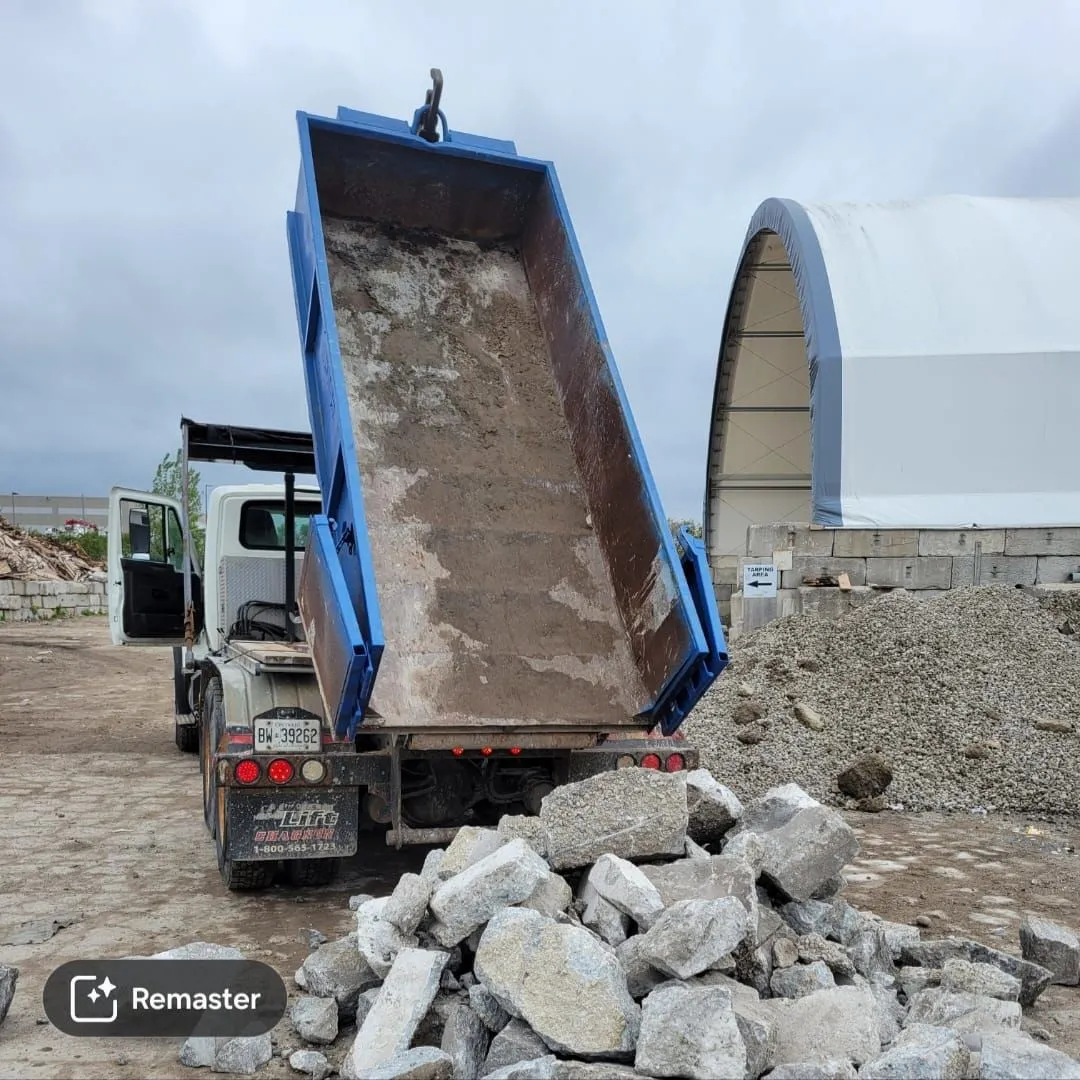
A standard 10 yard bin filled to the brim with wet Toronto clay or broken concrete can weigh over 10 tons, often exceeding the Gross Vehicle Weight Rating (GVWR) of many roll-off trucks. This physical reality creates a hard ceiling on volume for specific materials to prevent axle load limits from being breached on residential streets.
Commercial haulers must maintain a valid Commercial Vehicle Operator's Registration (CVOR) to operate within the Greater Toronto Area. Any violation of axle load limits results in points against this registration, impacting the hauler's ability to secure future provincial contracts. Site managers must verify that their chosen service provider adheres to these strict safety benchmarks.
Categorizing Heavy Fill for GTA Disposal Sites
Excess Soil and Recyclable Aggregate Classification
The distinction between clean fill and mixed waste is the primary factor in determining disposal costs at GTA transfer stations. Under O. Reg. 406/19, the provincial government reclassified excess soil as a resource, necessitating strict adherence to an excess soil management plan. These regulations ensure that soil remains within specific recycling streams overseen by the MECP.
While mixed waste bins allow for a variety of materials, heavy fill bins require strict Inert fill classification purity to avoid rejected loads. Including a single layer of pressure-treated wood in a concrete bin results in the load being reclassified as expensive mixed waste. This error leads to budget overruns due to tipping fee structures shifting.
Engineering Limits of the 4 Yard and 10 Yard Bin
Highway Traffic Act Weight Restrictions
The common assumption that a larger bin is always more efficient fails when applied to heavy materials like brick or gravel. A 40 yard bin filled with concrete is physically impossible to transport under the SPIF framework. Such a load would require specialized industrial trailers far exceeding residential capabilities while violating the tandem axle weight allowances.
Why do 4 yard and 10 yard bins serve as the industry standard for masonry? These smaller footprints allow for the concentration of weight over the truck's rear axles, ensuring the vehicle remains within legal axle weight distribution limits. This precision is required while traversing Toronto’s narrow residential streets and aging bridge infrastructure throughout the GTA.
Maintaining an appropriate axle spread is essential for distributing the weight of heavy fill across the pavement. Trucks equipped with lift axles must ensure they are deployed correctly to meet the requirements of the Safe, Productive and Infrastructure-Friendly standards. Failure to calibrate these systems leads to significant pavement damage and legal penalties.
For heavy fill, volume is the enemy of transportability and legal compliance.
Strategic Placement and Surface Protection Protocols
Point-Load Pressure Mitigation on Residential Surfaces
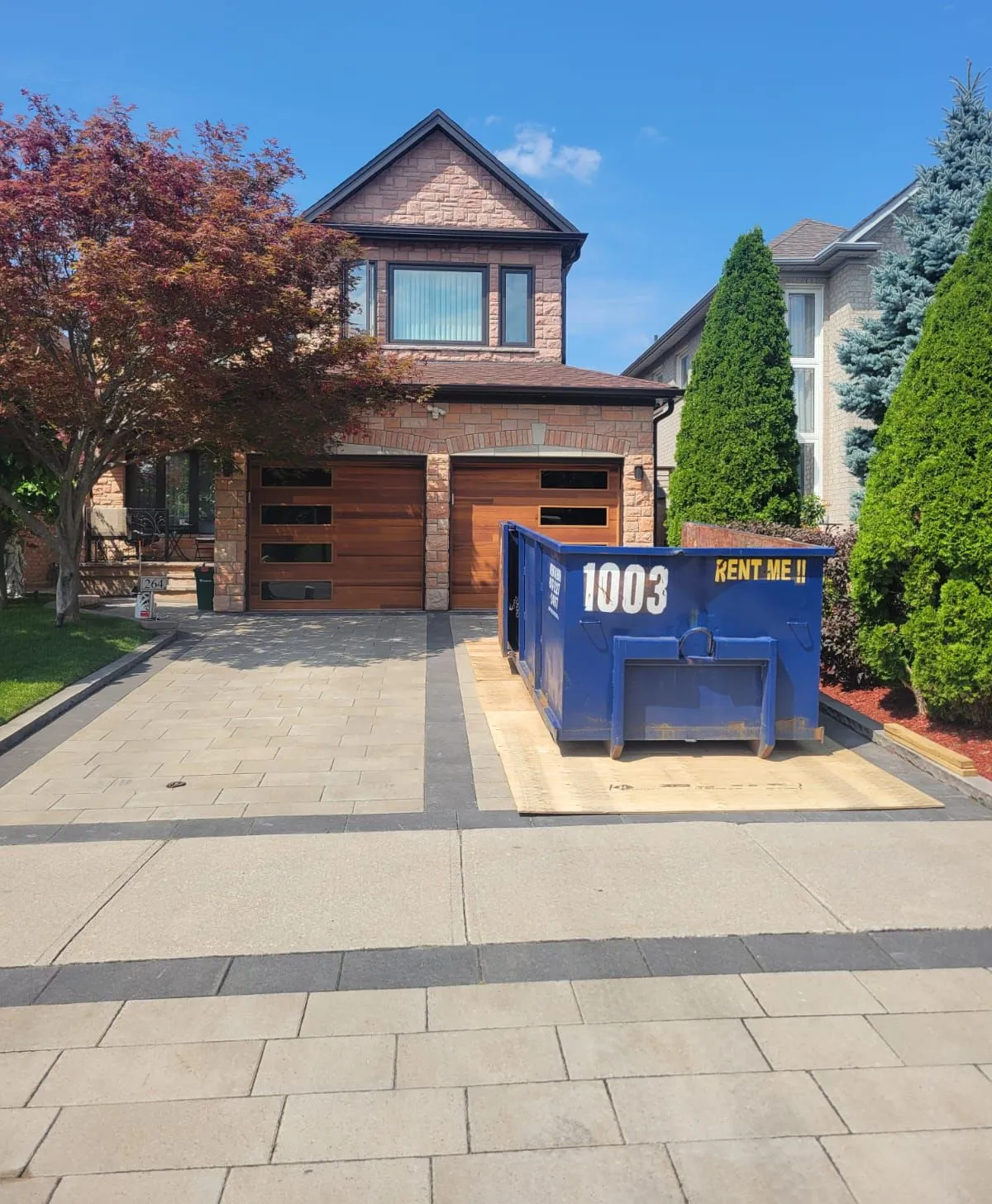
A full 10 yard concrete bin exerts immense point-load pressure on GTA driveways, especially during the humid summer months when asphalt is more susceptible to indentations. Placing 2x10 wood planks beneath the rollers is a mandatory safety protocol to distribute this weight across a wider surface area. This step preserves the value of the property while preventing overage surcharges.
While many newer subdivisions in Vaughan feature reinforced concrete pads, most older Toronto driveways lack the sub-base necessary to support heavy bin weights without structural protection. This proactive step prevents thousands of dollars in property damage. Proper site preparation ensures a damage-free experie350 once the roll-off dumpster rental is removed from the location.
Execution of the Heavy Material Disposal Protocol
Coordinating GTA Logistics and Lead Times
How does a project manager ensure a seamless transition from a full bin to a clean site? Real-time coordination with a local GTA dispatcher ensures that bins are swapped or removed before they interfere with municipal street cleaning schedules. This timing is especially critical during the Reduced Load Period when provincial weight limits are strictly enforced.
Booking a heavy fill bin requires at least 24 hours of lead time to ensure the availability of specialized heavy-lift trucks. Finalizing your disposal plan today prevents project stagnation during the half-load season when the spring thaw weakens road bases. This window allows dispatchers to calibrate routes for heavy-load transit through congested urban corridors.
Material Management Best Practices
GTA Heavy Fill Purity Standards
Large excavation projects exceeding specific volumetric thresholds require a Qualified Person (QP) to verify soil quality for the RPRA Excess Soil Registry. This mandatory oversight ensures that every cubic meter of material follows the strict hauling records protocol mandated by the provincial government. Maintaining these records prevents heavy fill from being rejected at local transfer stations.
Keeping concrete and brick separate from soil reduces the environmental footprint of your project while lowering tipping fee structures. Proper sorting at the source maximizes site value and ensures you receive the most competitive disposal rates available for pure heavy materials. Contamination checks occur during every transport cycle to confirm inert fill classification.
Heavy Fill Purity Checklist Pro Tip
- Verify material types: Ensure only soil and rock are placed in clean fill bins.
- Separate aggregates: Keep concrete, brick, and block in a separate bin designated for recyclable aggregates.
- Avoid contamination: Remove all wood and plastic to maintain recycling eligibility and avoid fees.
- Monitor fill lines: Never fill a heavy bin above the top rim to ensure safe road transit.
Securing Your Heavy Fill Container Today
Professional Disposal Standards
Managing heavy waste independently often leads to rejected loads and rental surcharges, but following established Toronto standards ensures a predictable budget. Selecting the correct 4 yard or 10 yard bin is the most effective way to maintain site safety and regulatory compliance. Professional oversight removes the guesswork from complex weight calculations and prevents financial penalties.
Dispose Your Stuff provides specialized heavy fill bins across the GTA to meet these exact municipal requirements. Access the online booking tool at disposeyourstuff.ca to schedule a 4 yard or 10 yard bin delivery for your concrete, soil, or brick disposal needs immediately. Our team prioritizes legal compliance and property protection for every project in the region.