
Homeowners throughout the Greater Toronto Area are currently managing a shifting environment of waste protocols as 2026 introduces more precise municipal mandates. Adapting to these local updates remains the primary method for maintaining a compliant and functional residential property during any large scale furniture removal effort.
Regional Waste Diversion Targets and Compliance
Administrative Shifts in Provincial Disposal Models
The Long Term Waste Management Strategy established a goal of 70 percent waste diversion by 2026. This specific policy benchmark influences the rigorous inspection protocols residential property owners now encounter at their curbside during scheduled collection days.
The transition to Circular Materials represents a fundamental change in how the province manages end-of-life products. This shift moves the financial and logistical responsibility from the municipality to the manufacturer through the Extended Producer Responsibility model which aims to incentivize sustainable design.
Adhering to a Unified Materials List ensures that residential waste streams remain free of contamination during the sorting process. Modern furniture manufacturing frequently incorporates blended wood, metal, and synthetic polymers that require specialized separation to meet these evolving environmental standards and qualify for recycling.
Current performance data shows single-family homes reaching a 61.4 percent diversion rate. Multi-unit buildings trail significantly at 27.3 percent. This gap illustrates the logistical difficulty of sorting complex materials in dense urban environments where space for separate waste streams is often at a premium.
Municipal Bulky Waste Collection Mandates
Safety Protocols for Upholstered Units and Sofa Beds
The Region of Peel states there is no numerical limit for bulky items set out on regular garbage collection days. While this provides flexibility, items must still follow safety guidelines to prevent being tagged and refused by municipal crews during their rounds.
Specific requirements from Solid Waste Management Services mandate that mattresses and box springs must follow strict Bed Bug Wrapping Protocols. Utilizing clear plastic bags prevents the spread of pests and protects the health of the collection staff during manual handling operations.
Furniture with mechanical components requires additional preparation to ensure safety during transport. Homeowners must maintain Sofa Bed Frame Security by using heavy duty twine or zip ties to lock the metal mechanism in a closed position before placing the unit on the curb.
Compliance requires setting items out no earlier than 8:00 p.m. the evening before collection to avoid blocking pedestrian traffic. Items left prematurely or in violation of placement bylaws often result in administrative penalties that disrupt project budgets and create tension with municipal enforcement officers.
Fines for bylaw infractions typically range from $100 to $300 plus victim surcharges. These set fines act as a deterrent against the unchecked accumulation of debris on residential streets during peak moving seasons or major home renovation phases.
Solutions for High Volume Residential Cleanouts
Legal Documentation and Logistics for Large Scale Removal
Many residents assume municipal curbside pickup is an exhaustive removal service. However, 2026 constraints often trigger a refusal of service when volume limits are exceeded. When a cleanout produces a high quantity of furniture, the logistical responsibility shifts back to the property owner.
Staging high volume waste containers in urban environments requires strict adherence to Municipal Code Chapter 604. This regulation governs how long a container can remain on a residential street and defines the necessary permits required to maintain a safe and legal work site.
Clearing out a basement or attic often involves multiple desks, shelving units, and large upholstered chairs. Managing this volume requires a centralized containment strategy to maintain safety on the property. Professional services prevent the unsightly and hazardous accumulation of debris on driveways or lawns.
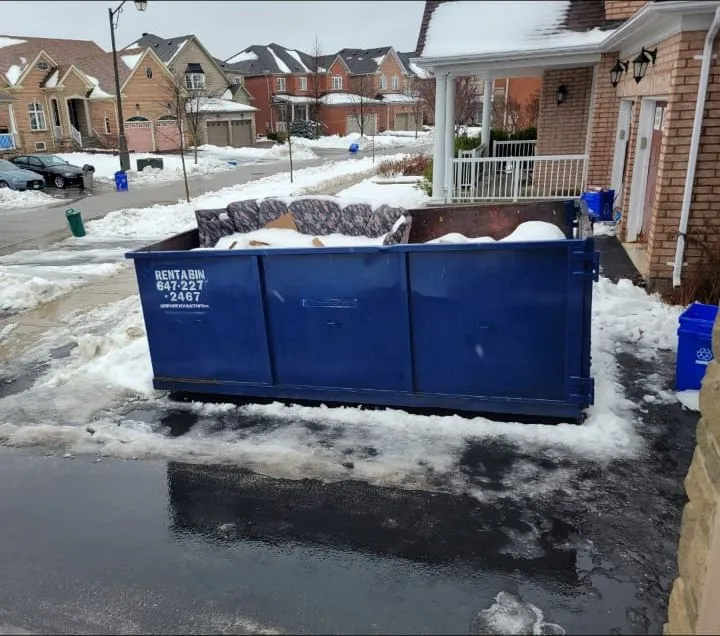
Engaging professional junk removal services allows for the immediate removal of bulk items without violating local municipal volume restrictions. This method ensures that project timelines remain active while adhering to all regional waste management standards and avoiding neighborhood complaints.
Direct disposal at local facilities involves Transfer Station Gate Fees based on the weight and type of material being discarded. Professional bin services consolidate these costs into a single rental price, providing a more predictable budget for homeowners managing extensive furniture disposal projects.
Residential Bin Placement Safety Standards
Managing Right of Way and Public Property Boundaries
Safe hoist operation for roll-off equipment requires significant overhead space. While industry standards suggest a 25-foot vertical clearance, Ontario Regulation 851 mandates a minimum 3-metre distance from energized overhead power lines to ensure operator and site safety.
When a driveway is too small for a container, homeowners must apply for Street Occupation Permits to place equipment on the road. Navigating Encroachment Bylaws ensures that the bin does not obstruct public access or violate the legal boundaries of the municipal property.
Maintaining a clear Right of Way for emergency vehicles and pedestrian traffic is a critical legal requirement in the downtown core. Professional operators help identify the safest placement locations to avoid blocking hydrants, sidewalks, or neighbor access points during the rental period.
Selecting mixed waste bin rentals provides high capacity, yet the physical equipment footprint must be verified. A 40 yard bin offers maximum volume but requires substantial driveway length that many compact urban properties simply cannot accommodate.
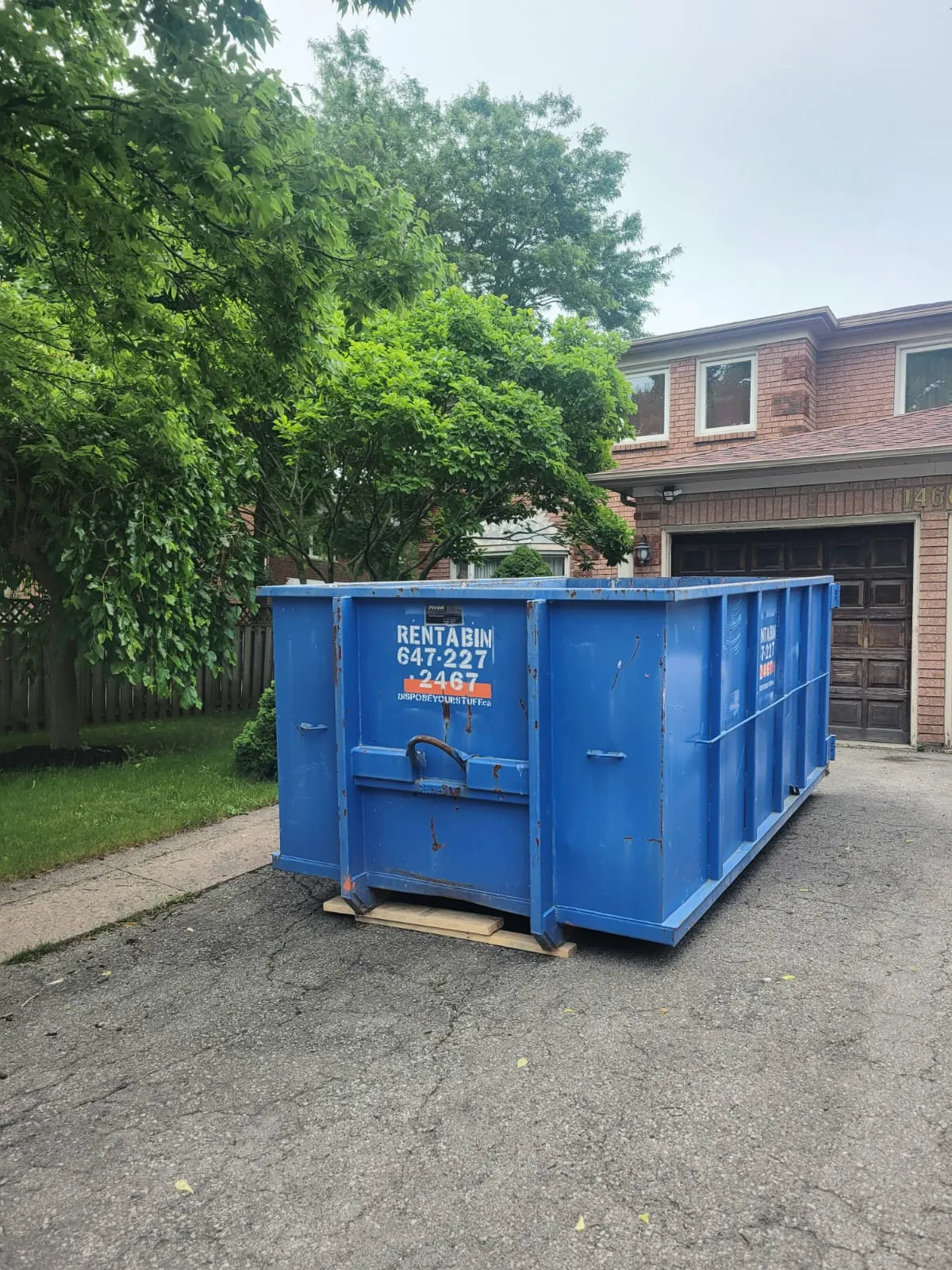
Driveway surface damage can occur if heavy containers are dropped directly onto asphalt. Professional standards dictate the use of protective wooden boards beneath the bin rollers to distribute weight evenly and prevent cracking or surface abrasions on interlocking stone.
Material Processing at Regional Facilities
Industrial Separation and Resource Extraction
The shift from traditional landfills to energy-from-waste centers is a core component of the GTA’s long-term environmental strategy. York Region currently reports a 92 percent landfill diversion rate when residual waste is processed through the Durham York Energy Centre.
Each load arrives at a Material Recovery Facility where automated and manual sorting processes isolate different debris types. This high-efficiency environment ensures that only Residual Waste proceeds to thermal treatment while recyclable commodities are returned to the manufacturing supply chain.
This facility processes non-recyclable materials into electricity, successfully diverting vast amounts of regional waste from reaching capacity at local landfills. Furniture components like foam padding and low-grade plastics are incinerated at high temperatures to power industrial turbines for the provincial grid.
The adoption of a Circular Economy framework prioritizes the reuse of materials to minimize the extraction of new resources. Separating metal springs and untreated wood at the source ensures compliance with 2026 sustainability mandates and lowers the total carbon impact of cleanup operations.
Workflow Optimization for Residential Projects
Scheduling and Professional Site Management
Efficiency in a 2026 residential cleanout is determined by the speed of removal and the accuracy of material staging. Coordinating the arrival of a roll-off dumpster rental with the peak labor hours of your project prevents site congestion.
Property owners should prepare for 48-hour lead times for bin deliveries during the busy spring and summer months. Keeping the delivery path clear of vehicles and overhanging branches is essential to avoid scheduling delays or additional service charges during the cleanup.
Fast turnover of waste containers keeps driveways functional and compliant with property standards in Toronto or York Region. A well-managed site minimizes the impact on neighbors and ensures the home remains accessible throughout the duration of the clearing project.
2026 Residential Disposal Checklist
- Verify specific weight limits for oversized item collection in your municipality before staging any debris on the curb.
- Schedule bin deliveries at least 48 hours in advance to guarantee availability during the peak residential cleaning seasons.
- Confirm 3-metre clearance from energized power lines to comply with Ontario Regulation 851 safety mandates during bin placement.
- Set out items no earlier than 8 p.m. the night before collection in Toronto to avoid municipal bylaw citations.
- Apply for occupation permits if the disposal bin must be placed on the public right of way rather than private property.