
The Willowdale Construction Hub represents a focal point for municipal inspectors who monitor right-of-way compliance across the Yonge Street corridor under the Vision Zero road-safety goals. Homeowners and contractors must navigate these strict enforcement zones to avoid administrative penalties that can stall a project for weeks. Disruption of a seized waste container during active renovations causes significant logistical delays.
North York Street Occupation Penalties in 2026
Enforcement Trends in High Density Corridors
A Street Occupation Permit (SOP) is mandatory for any bin placed beyond the private property line in North York. The City of Toronto has increased enforcement frequency to manage pedestrian clearway accessibility in high-traffic zones like Willowdale. Inspectors from Right of Way Management prioritize clearing these transit routes for emergency services and local residents.
One hundred and twenty-six dollars is the specific inspection fee added to recovery costs when an unpermitted 14 yard bin is seized and removed by the city. This often happens near Lawrence Heights when equipment lacks reflective markings or blocks visibility for oncoming traffic. Maintaining visible markers ensures that waste containers remain compliant with the Vision Zero safety initiative during active work.
The financial risk of improper placement is compounded by the specific zoning restrictions that dictate where private property ends and city land begins. These boundaries are legally binding.
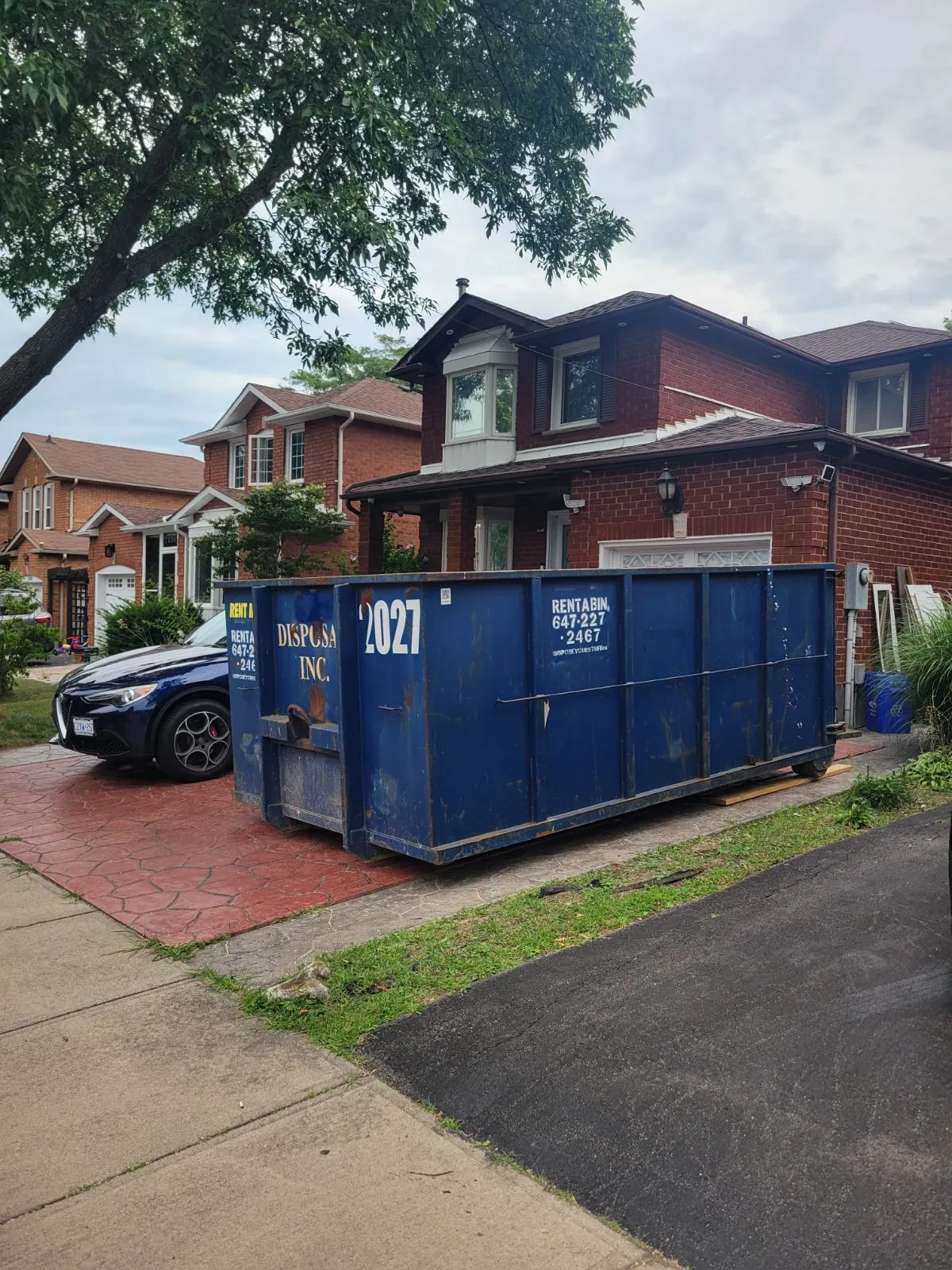
Critical Compliance Markers
Every North York project must adhere to the following technical requirements to avoid immediate work stoppages or municipal fines:
- SOP Documentation: Maintain a valid Street Occupation Permit on-site for any bin placed on the road or boulevard.
- Hydrant Access: Ensure a minimum 2-metre hydrant buffer is maintained at all times for fire department accessibility.
- Sidewalk Clearance: Provide at least 0.6 metres of sidewalk clearance to ensure the pedestrian clearway remains unobstructed.
- Reflective Safety: Apply high-intensity reflective tape to all four corners of the bin to meet night-time visibility standards.
Private Property Boundaries and Zoning Setbacks
Identifying the City Owned Right of Way
Toronto Municipal Code Chapter 743 dictates that any waste container—ranging from a 4 yard bin to a 40 yard roll-off—must not cause sightline obstructions for neighboring driveways. Front-yard depths vary significantly between established York Mills neighborhoods and newer North York developments. These setbacks dictate the feasibility of on-site equipment storage without triggering boulevard encroachment violations.
While property owners generally have the right to use their driveways, overlapping onto the public apron technically constitutes a street occupation. This distinction is often the primary cause of neighborhood disputes and subsequent inspections in dense residential pockets like North York. Reviewing a property survey prevents these costly municipal interventions before the bin delivery truck arrives on the site.
When a driveway lacks the necessary depth for a standard container, the property owner must navigate the formal permit application process for street placement. This requires a detailed site sketch.
Municipal Permit Requirements for Roadside Placement
Application Timelines and Roadway Clearance
The TORIS portal serves as the digital gateway for all 2026 permit applications within the City of Toronto. Applications must be submitted to the North York District Office at least five business days before the bin delivery to allow for site review. Proactive scheduling ensures that the General Manager of Transportation Services grants approval before heavy equipment occupies the public roadway.
Permit numbers must be clearly displayed on the bin in a weatherproof sleeve at all times.
On narrow residential streets near Downsview, the city may deny a permit if the bin leaves less than 3.05 metres of passable road. Applicants must include a Traffic Management Plan (TMP) for larger projects that impact local traffic flow or transit stops. These documents prove that the contractor has accounted for community safety and emergency vehicle access requirements.
Securing the permit is only the first step in compliance; the physical condition of the site must also meet specific safety and environmental standards. Failure to maintain these standards invites daily fines.
Safety Standards and Surface Protection Mandates
Visibility and Structural Integrity Requirements
Heavy containers like a 40 yard demolition bin can fracture asphalt driveways, yet simple plywood buffering can prevent thousands in property damage. City regulations for street placement often mandate the use of boards to protect the underlying road surface from hydraulic pressure. This Municipal Road Damage Deposit may be required for projects involving heavy machinery or prolonged street occupation.
What level of visibility is required for bins left overnight on North York streets? Municipal code dictates that flashing amber beacons must be placed at the corners of the bin in high-traffic corridors to alert drivers. This is a critical component of night-time visibility standards in poorly lit residential pockets. These active safety measures reduce the liability risk for the property owner.
Safety concerns extend beyond physical visibility to the actual contents of the bin and how they affect the local environment. Spillage control is a primary concern for inspectors.
Expert Tip for North York Projects
Always photograph your driveway before the bin arrives and after it is removed to document the condition of the public right-of-way. This provides essential evidence in the event of a surface damage dispute or a municipal inquiry. You can review construction bin requirements to ensure your project stays within budget. These records protect your project from unjustified damage claims.
Environmental Compliance in the Don Valley Watershed
Runoff Management and Sediment Control
North York's proximity to the Don Valley ravine system means that runoff from construction sites is strictly monitored. Bins used for mixed waste or landscaping must be covered during heavy rain to prevent contaminated sludge from entering the storm sewer system. The Toronto and Region Conservation Authority frequently inspects sites near sensitive ravine zones.
A contractor disposing of demolition debris near Bayview Avenue must ensure that dust and light materials are contained. Failure to prevent debris from blowing into public parklands can result in environmental remediation orders. These costs far exceed the price of a standard bin rental. Protecting the natural network is a legal obligation for all North York residents.
Managing these environmental and legal variables requires a final verification of the site plan before the heavy equipment arrives. This proactive approach ensures project continuity.
Final Compliance Checklist for North York Bin Delivery
Pre Delivery Site Verification
Many homeowners believe the bin provider is responsible for site permits, but the legal burden rests entirely on the property owner. Verifying the exact placement markers on your driveway or street four hours before delivery prevents a failed drop-off fee. Clear site markers help the driver avoid overhead clearance issues with low-hanging wires or tree branches.
Confirm your liability insurance certification covers temporary street occupation before applying for a municipal permit.
The Construction Hub Surcharge applies to specific North York zones where infrastructure work is concentrated. Downloading the 2026 Street Occupation Application is the first step in your verification process. You should schedule your bin delivery only after receiving your permit number. This guarantees that your placement avoids a municipal encroachment violation.
This systematic approach ensures that your project proceeds without the interruption of city-ordered work stoppages. Proper administrative diligence protects your financial investment.
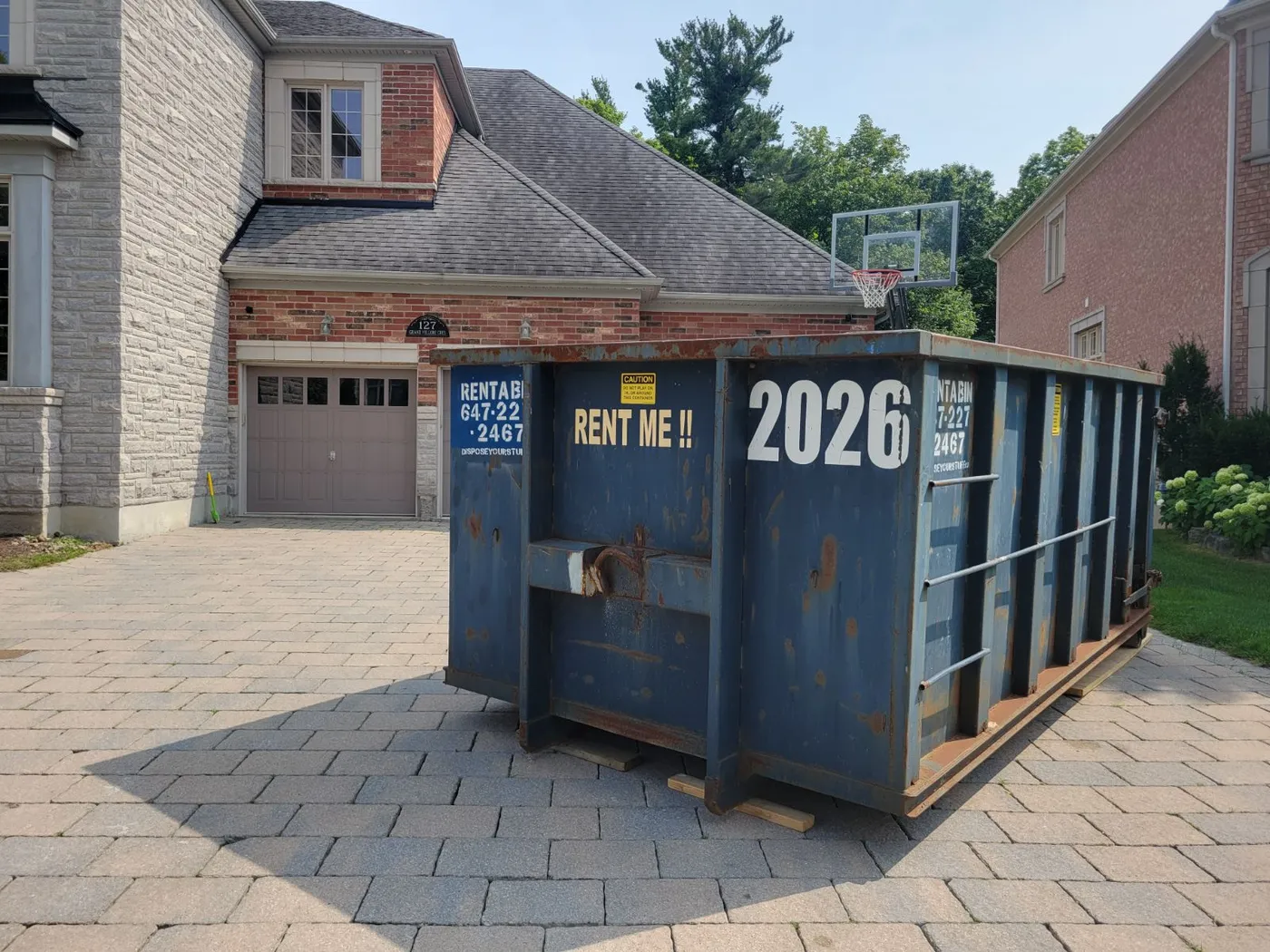
North York Permit Summary
- Toronto Municipal Code Chapter 743 governs all street and boulevard occupations in the district.
- Five business days is the minimum required lead time for SOP applications via the TORIS portal.
- Construction Hub Surcharges may apply to projects located within high-density development corridors.
- Liability insurance certification must be provided to the North York District Office during the application.
- Vision Zero road-safety goals dictate the visibility and clearance requirements for all bins.