
Failing to secure a Street Occupation Permit before a bin arrives results in immediate removal orders and administrative penalties. Professional site management requires a precise understanding of municipal infrastructure standards to avoid costly project delays in high-density urban zones.
Toronto Street Occupation Requirements
Legal Authority for Public Right of Way
A base application fee applies to every permit request submitted to the City of Toronto Transportation Services. Homeowners must account for this cost alongside the daily rental rate when budgeting for a major demolition project or landscaping overhaul.
Municipal enforcement officers monitor construction sites daily to verify that Street Occupation Permits are active and displayed. A bin dropped on a sidewalk or a metered parking spot without authorization blocks emergency access and violates the Public Right of Way. These officers operate under the authority of Toronto Municipal Code Chapter 743.
Traffic safety regulations require at least 3.05 metres of roadway clearance for passing vehicles and emergency equipment. Bins must also adhere to 9.0 metres from intersections as part of standard setback mandates to maintain sightlines for motorists and pedestrians. These distance requirements ensure the City of Toronto Transportation Services can manage road safety effectively.
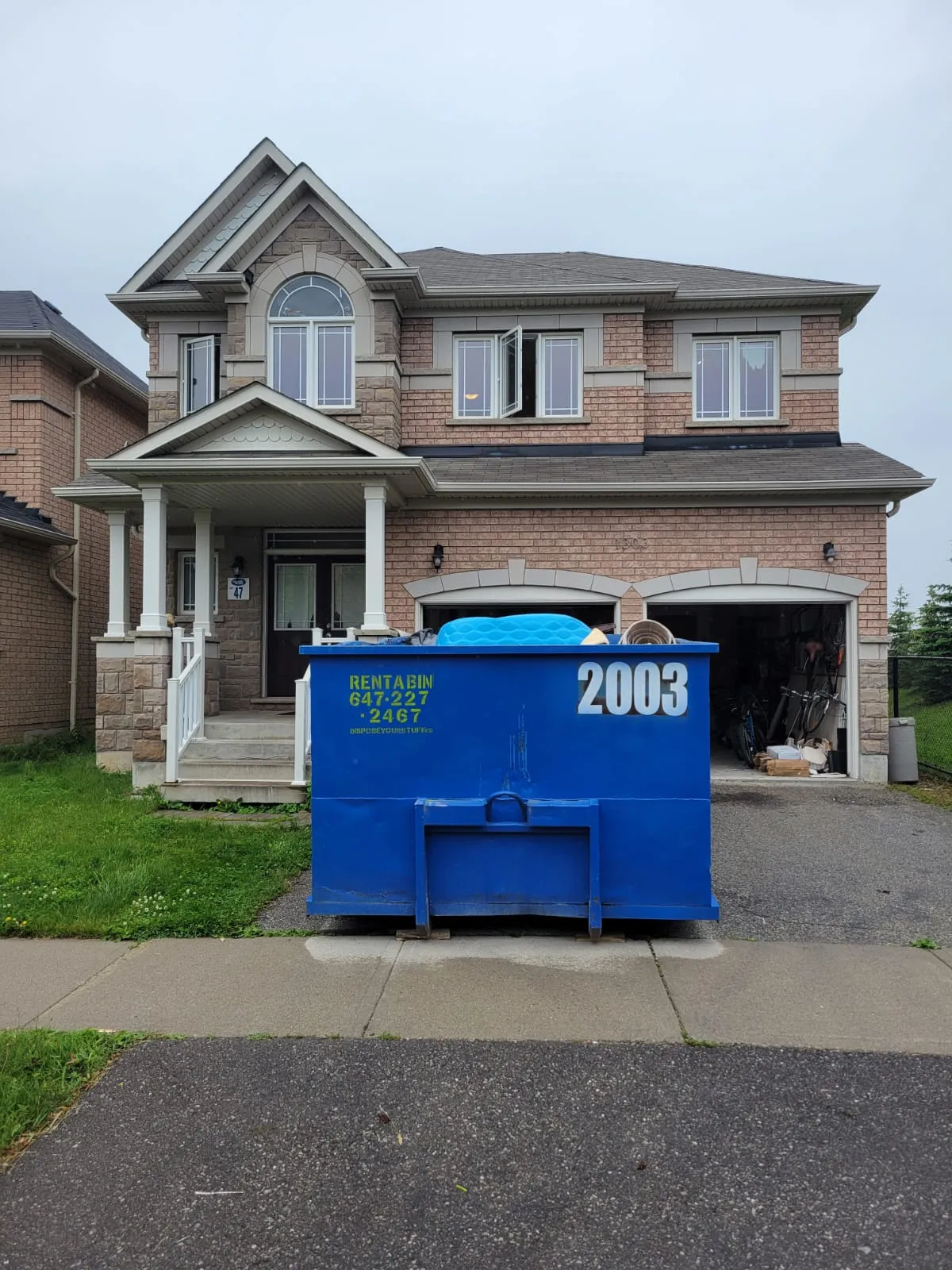
The financial risk of non-compliance is only one part of the equation, as the physical impact on city infrastructure dictates how these permits are actually issued.
Municipal Infrastructure Protection Guidelines
Surface Protection and Liability Shifts
Heavy steel bins filled with concrete or mixed waste exert thousands of pounds of pressure on asphalt surfaces. Without protective padding like plywood or specialized runners, the weight of a 20 yard bin can crack standard residential pavement or damage subterranean utility lines. City inspectors routinely check for surface scarring during post-project audits.
Many contractors assume that a permit is only about space, but it serves as a formal liability shift. By securing the permit, the applicant acknowledges responsibility for any damage to the curb, sidewalk, or roadway during the rental period. This legal framework ensures that municipal repair costs are recovered directly from the project owner.
Neglecting these physical safeguards leads to automatic permit revocation and repair invoices from the city.
While infrastructure protection is the city's priority, the logistics of obtaining the legal right to use that space requires a specific timeline.
Permit Application Protocols and Processing Times
Managing the Administrative Window
Standard processing for a Toronto Street Occupation Permit requires a minimum of eight business days. Spontaneous bin rentals often fail because the administrative window was ignored during the project planning phase. Scheduling a delivery without a confirmed permit number causes operational gridlock for both the homeowner and the provider.
Applicants must provide a metric site plan and a valid Certificate of Insurance naming the City of Toronto as an additional insured. The city typically requires a $2 million liability threshold to cover potential third-party claims or infrastructure damage. Submitting incomplete documentation results in immediate application rejection and further delays for landscaping or demolition bin rentals.
What happens if the project runs over the initial permit duration? Renewals must be submitted forty-eight hours before the expiration date to avoid a lapse in legal status while the bin is still on-site. Homeowners should coordinate with their roll-off dumpster rental provider to synchronize pick-up times with permit validity.
Securing a permit for the street is an administrative hurdle, but shifting the bin to private property introduces a different set of bylaw constraints.
Private Property Placement and Encroachment BylawsProperty Lines and Municipal Encroachment
Placing a bin entirely on a private driveway generally exempts the homeowner from city permits. However, if any portion of the bin or the delivery truck overhangs the sidewalk, the exemption is voided immediately. This rule protects the Public Right of Way and ensures clear passage for pedestrians and mobility devices.
In neighborhoods like East York or Old Toronto, driveways are often too narrow for a 40 yard bin. Homeowners must measure the clearance between the house and the property line to ensure the delivery vehicle can safely drop the unit without striking eaves or overhead wires. Precise site data is the only way to prevent structural collisions during the drop-off process.
Toronto Zoning Bylaw 569-2013 restricts how long a bin can remain on a driveway before it is classified as a nuisance or a semi-permanent structure. Most residential zones allow for temporary placement during active construction, but long-term storage of waste containers is strictly prohibited. Property standards officers investigate complaints regarding stationary bins that lack active project progress.
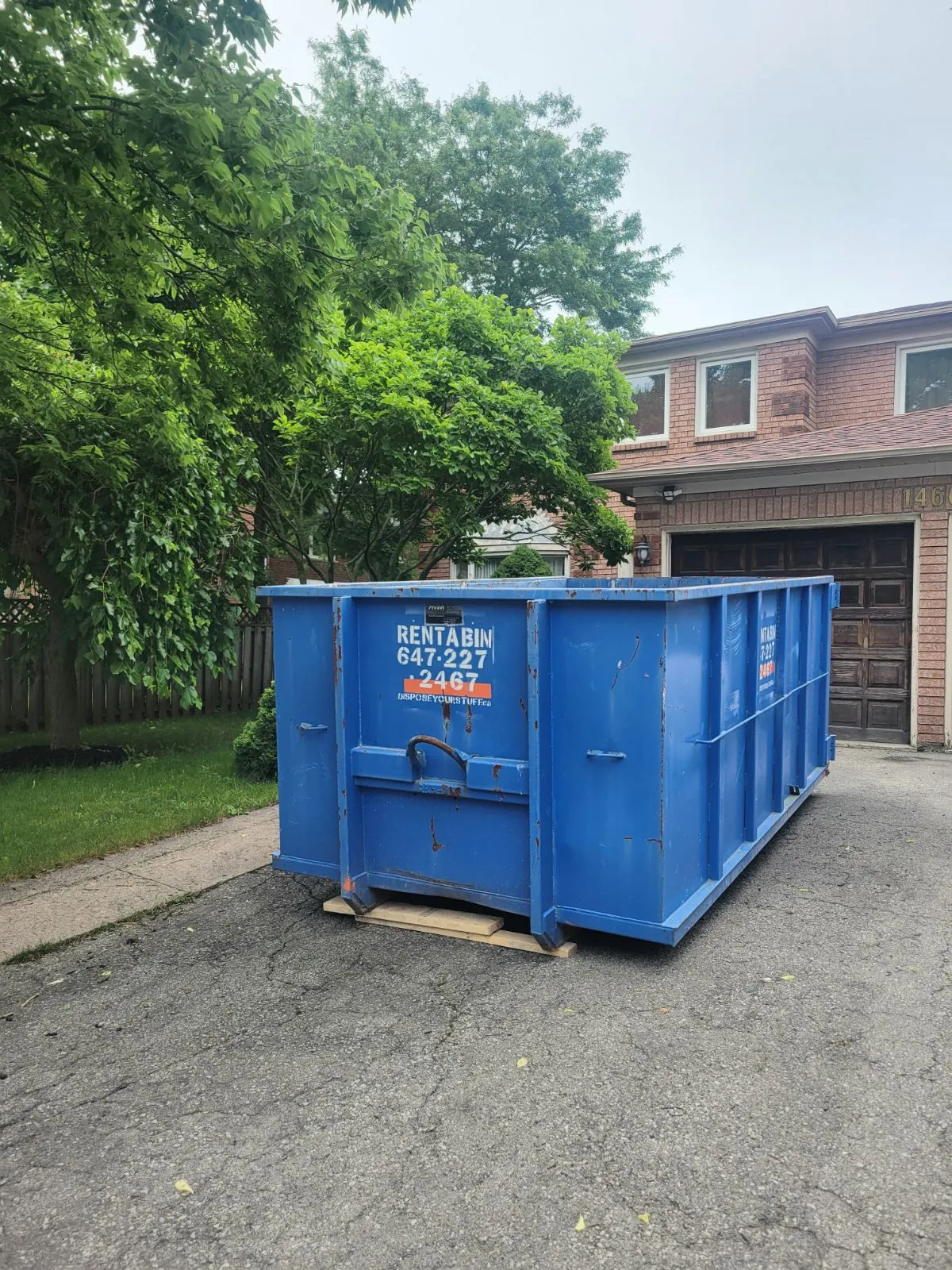
Physical constraints on the property often dictate the maximum bin size allowed, regardless of the volume of waste produced.
Seasonal Restrictions and Safety Compliance
Winter bin rentals in Toronto face additional scrutiny due to snow removal operations. Bins placed on the street must not obstruct plows or salt trucks, and permit holders are responsible for clearing snow around the unit to maintain visibility and access. Bins in high-traffic areas require amber flashing lights and flasher barricades to protect motorists during low-visibility hours.
Project managers must also account for FIFA World Cup 2026 restrictions which may alter standard road occupation protocols in designated transit corridors. Adhering to Toronto Vision Zero Safety Standards prevents vehicular collisions and protects the homeowner from personal injury lawsuits. Safety compliance remains a non-negotiable aspect of the Toronto municipal code.
Safety compliance is a non-negotiable aspect of the Toronto municipal code.
Maintaining a safe site is the final step before the physical logistics of the bin arrival can be finalized.
Residential Site Preparation Checklist
Vertical Clearance and Access Requirements
A failed delivery due to site obstructions results in a dry-run fee from the rental provider. Ensuring the drop-off zone is clear of vehicles, low-hanging branches, and debris is the most effective way to avoid unnecessary costs. Project sites designated within Toronto Construction Hubs may be subject to a 25% surcharge on permit fees due to increased management complexity.
- Verify vertical clearance for the roll-off mechanism, which typically requires twenty-two feet of height during the lift.
- Place two-by-fours or plywood sheets on the ground to distribute weight and protect the asphalt surface from scarring.
- Confirm property lines to ensure the bin does not accidentally encroach upon the sidewalk or public boulevard.
- Monitor project timelines to ensure permit renewals are submitted at least forty-eight hours before expiration.
The final step for any Toronto project is a physical measurement of the proposed site against the dimensions of your chosen bin size. Precise planning prevents the legal and financial setbacks associated with municipal non-compliance. Execution depends on data.
Following these steps ensures the project moves from the planning stage to execution without legal or physical setbacks.