
Banned items that stop a bin pickup
Homeowners filling a bin for the first time during a renovation or basement cleanout face the costliest early mistake, a refused pickup or a contamination charge triggered by one prohibited item. Dispose Your Stuff does not accept hazardous chemicals and solvents, tires, explosives and fireworks, or full paint cans, and a crew that finds any of them in a bin has the right to leave the bin where it sits or charge for the contamination.
Basement and garage cleanouts are where these items surface, from old solvent jugs on a workbench shelf to full paint cans left over from the last repaint, a spare set of tires against the wall and a box of stored fireworks. Pulling each one aside before the first load goes in is far easier than digging for it later, since anything tossed in early ends up buried under everything that follows.
A single paint can or one old tire can feel too minor to matter in a bin full of drywall and broken furniture, yet the policy carries no size exception. Because banned items can lead the crew to refuse the pickup or add a contamination charge, one item is enough, which makes a five-minute sweep of the space before loading the cheapest step in the rental. The bin rental FAQ covers the accepted-materials questions in more detail.
Where pure aggregate is allowed
Ordering a bigger bin creates no extra room for a load of pure aggregate, because Dispose Your Stuff accepts pure aggregate only in its 4-yard and 10-yard bins, while the 14, 20 and 40-yard bins are for general or mixed waste. The full lineup sits on the bin sizes and pricing page. For a homeowner breaking up an old patio or walkway, that rule settles the bin before volume ever enters the decision, and a call to 647-227-2467 before booking confirms the right one for the stone.
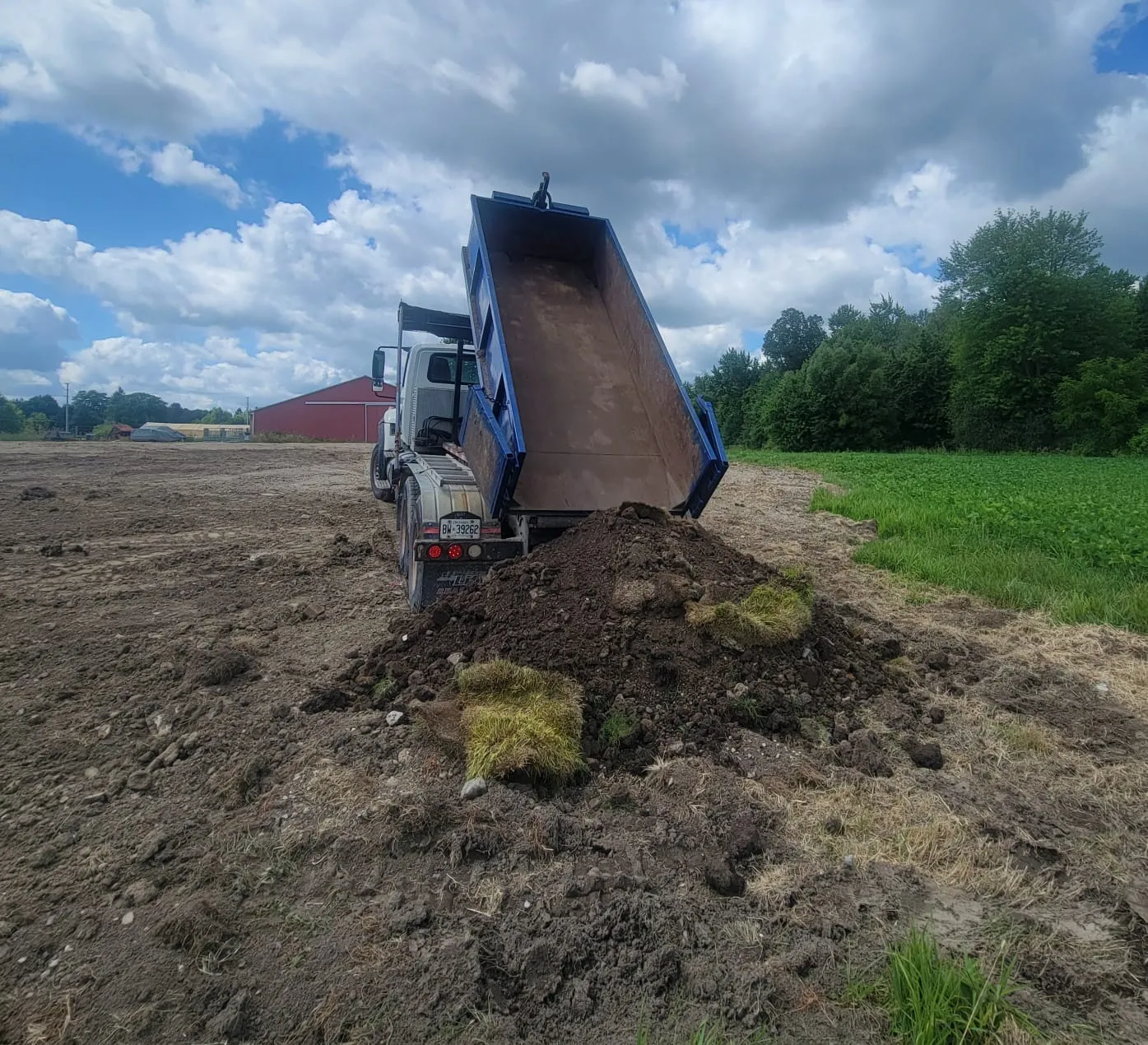
Landscaping and demolition projects can produce aggregate alongside much lighter material, such as sod and branches beside a torn-out stone border, or framing and drywall beside a broken concrete step. Planning a landscaping bin rental or a demolition bin rental around that split from the first call means the stone goes in a small bin and the lighter debris goes in a bin sized for its own volume.
How material rules narrow the bin size
Dispose Your Stuff rents five bin sizes, 4, 10, 14, 20 and 40 yards, and the material headed for the bin narrows that choice before volume does. A job dominated by pure aggregate is already limited to the two smallest sizes, so the three largest only come into play once the load is something other than pure aggregate.
Specifications for each size are listed on the bin sizes page, and the surest way to read them correctly is to call 647-227-2467 with a description of the project and the materials it will produce, so the size is set by what is actually going into the bin. Homeowners and builders in Milton, Mississauga, Brampton, Oakville and Etobicoke all choose from the same five sizes under the same material rules.
- 4-yard and 10-yard bins, the only sizes that accept a pure aggregate load
- 14, 20 and 40-yard bins, for loads that are not pure aggregate
Booking weekly when the job runs monthly
A weekly rental booked for a renovation that keeps producing debris after the first week leaves the renter with a term that ends while the work is still generating waste. Dispose Your Stuff offers monthly bin rental alongside weekly rental for longer jobs, so the term should be matched to how long the project will keep filling a bin, counted from the first day of tear-out to the final cleanup.
The two terms exist because the two main groups of renters work on different clocks. A homeowner clearing a basement over a weekend has a short, defined window, while a general contractor or small builder carrying a site through framing, drywall and finishing needs a bin on hand for several weeks. Estimate the job's length first, then choose the 7-day or multi-week bin rental option on the online booking page, or call 647-227-2467 to arrange a monthly rental.
Choosing a bin when junk removal fits better
A homeowner clearing a basement of old couches, shelving and boxed household items may be booking the wrong service altogether, because Dispose Your Stuff runs junk removal as a separate service from bin rental, and a cleanout made up mostly of furniture and clutter is the kind of job that service is built for.
Bin rentals are split into separate service lines as well, so the material that makes up most of the load should decide which one gets booked, whether that is a mixed waste bin, a recycling bin, or a landscaping, construction or demolition bin.
Before calling 647-227-2467 or booking online, walk the basement, garage or job site and write down every material that will leave the property, then set aside any paint cans, tires, solvents or fireworks so they never reach the bin. That written list lets Dispose Your Stuff set the service, the bin size and the rental term in one call, and it takes the contamination charge off the table before a bin is ever delivered.
- Furniture and household clutter with no renovation debris points to junk removal
- Sod, branches and yard waste from a landscaping project
- Drywall, framing and old fixtures from a demolition or tear-out
- Pure aggregate, booked in a 4-yard or 10-yard bin only