What Gets a Loaded Bin Left Behind or Charged
The Four Restricted Categories
Homeowners running a renovation or basement cleanout, and general contractors loading a job-site bin, need the restricted-item list in hand before loading, because a contaminated bin can be left behind or charged. Dispose Your Stuff reserves the right to empty a bin on site if it contains contaminants or hazardous waste, and tires, paint, and hazardous chemicals are refused.
Plenty of renters assume one stray item buried under drywall scraps will slip past, yet Dispose Your Stuff reserves the right to empty any bin on site if it contains contaminants or hazardous waste, which turns a hidden jug of chemicals into a problem for everything loaded around it.
Restricted-item rules exist because some materials cannot travel in a standard roll-off load alongside ordinary renovation and cleanout debris, and one such item mixed in puts the whole container under the contamination rule. The same reasoning shapes one material that is permitted with a condition attached, because pure aggregate is accepted only in the 4-yard and 10-yard bins.
Match the Material to the Bin Before the First Shovelful
Where Pure Aggregate Is Allowed
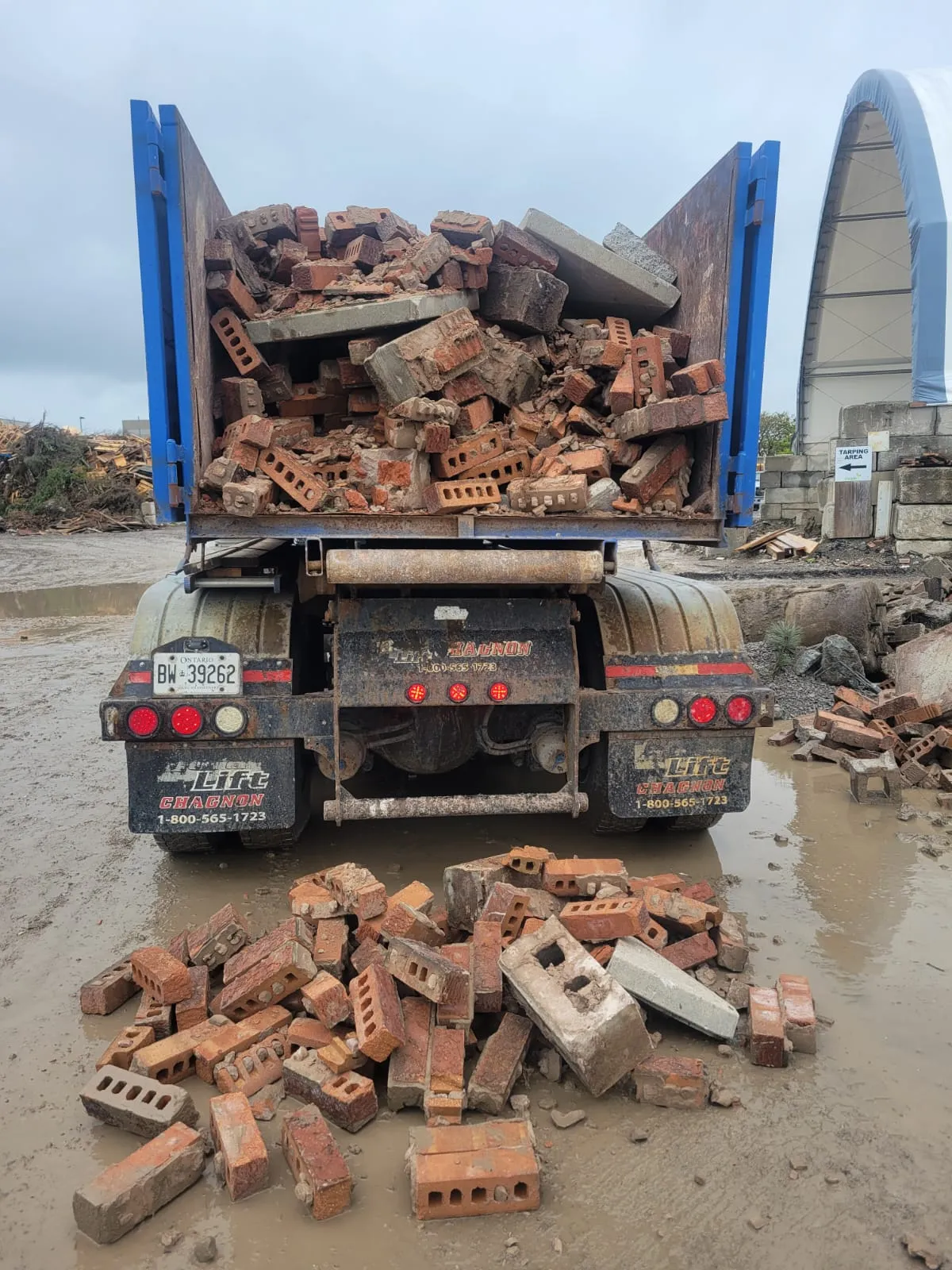
The belief that any bin can take broken concrete, brick or stone puts a pickup at risk, because pure aggregate loads go only in the 4-yard and 10-yard bins and are refused in the 14-yard, 20-yard and 40-yard bins. The bin sizes and pricing page sets out every option side by side.
A contractor who orders a 20-yard or 40-yard bin for a demolition job and then fills it with pure aggregate has loaded a bin that falls outside the rule. The workable approach splits the waste, with the aggregate going into a 4-yard or 10-yard bin and the mixed demolition debris going into a larger bin booked alongside it.
Dispose Your Stuff rents five sizes, and only the two smallest accept pure aggregate. Picking the right one handles half the contamination risk, and the other half depends on which items reach the bin at all.
- 4 yard bin, accepts pure aggregate
- 10 yard bin, the larger of the two sizes that accept pure aggregate
- 14 yard bin, no pure aggregate loads
- 20 yard bin, pure aggregate refused, so mixed debris goes here
- 40 yard bin, the largest size offered and also closed to pure aggregate loads
Stage the Debris So Restricted Items Never Reach the Bin
Build a Separate Pile First
In a basement cleanout where old solvent containers, leftover paint and a spare tire sit in the same corner as boxes and furniture, the first step is to set those three items in a separate pile before any loading starts, because each one falls on the restricted list.
Full paint cans are on the restricted list, and the safest course for a renter is to keep any can still holding paint out of the bin until that item is confirmed. Check the bin rental FAQ or call Dispose Your Stuff at 647-227-2467 before an uncertain item goes in.
Restricted-item rules only hold when everyone loading the bin knows them, and several trades may load the same bin on a contractor job site, so staging works best when every crew hears the list before work starts. Order matters next, because the sequence of a clean debris stream decides whether the load can be hauled safely.
- Walk the work area and pull out every solvent container, chemical jug and full paint can.
- Move tires to the separate pile.
- Remove any fireworks or other explosives found during the cleanout.
- Separate broken concrete, brick and stone if they are headed for a 4-yard or 10-yard bin.
- Post the restricted list where every trade on site can read it before loading begins.
- Recheck the separate pile at the end of each day so nothing drifts back toward the bin.
Loading Order and How the Weight Sits
Heavy and Flat Pieces Go Low
Throwing bulky furniture in first leaves voids underneath and loose debris riding on top, which wastes space and makes the load less stable. General practice reverses that order, placing flat and heavy pieces low across the floor of the bin, spreading them evenly, and then filling the gaps with smaller debris.
Piling debris above the walls can look like a way to get more from one rental. The load still has to stay within the bin for safe transport, since a load is a quantity of material that can be transported or processed at one time, and the truck carrying the bin sets that limit.
A homeowner loading a driveway bin across a renovation week adds debris in batches, and each batch is easier to manage when it goes toward the centre of the bin. Keeping the area around the bin clear lets the hauling truck reach it on pickup day, and debris sorted by a single material belongs in a dedicated bin type altogether.
- Lay flat, heavy pieces such as drywall sheets and lumber on the bin floor first.
- Break down furniture where possible.
- Fill gaps with bagged and smaller debris.
- Spread weight from front to back so one end of the bin does not carry most of the load.
- Keep the top of the load at or below the bin walls.
Choosing the Bin Type That Fits the Debris
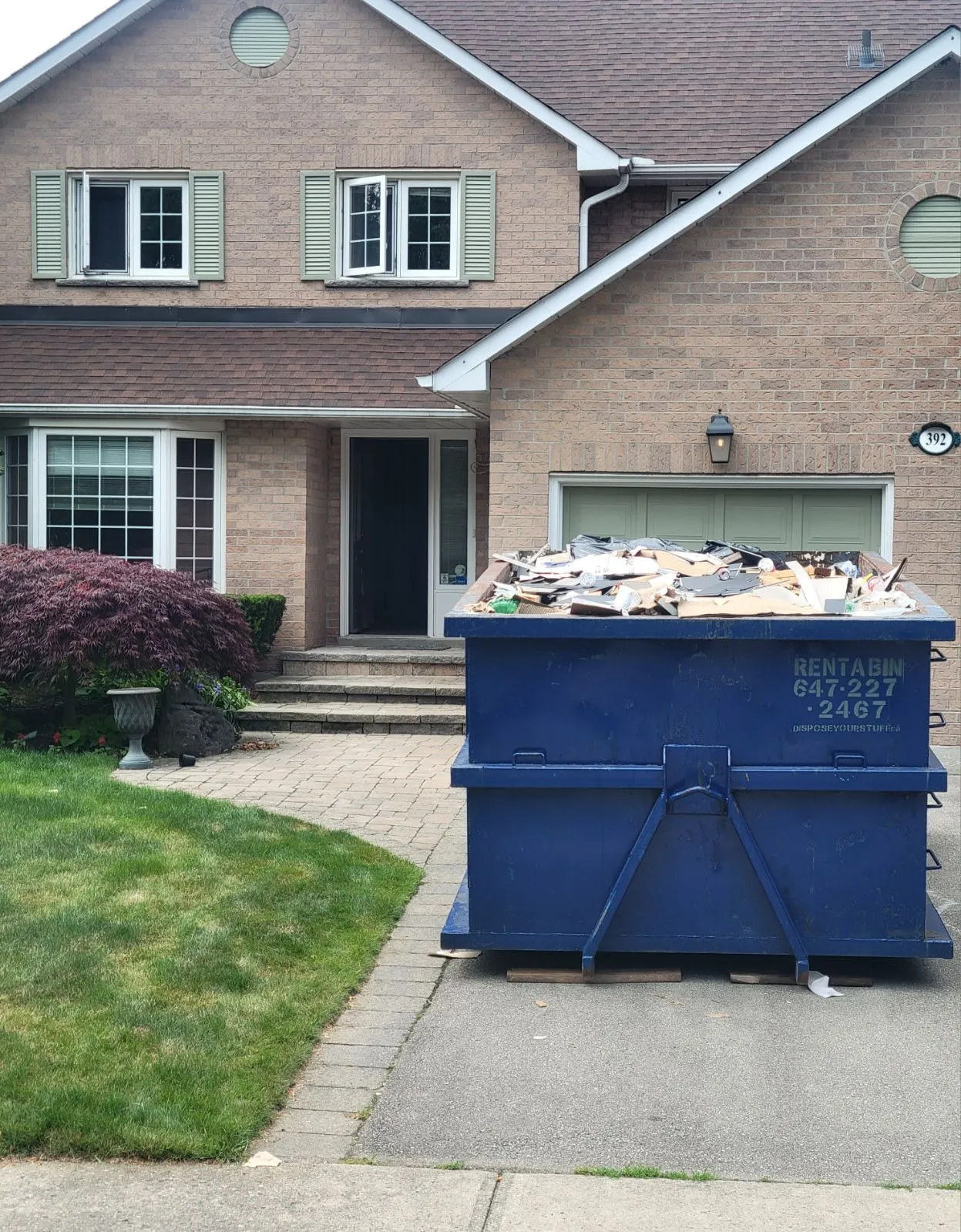
Sending every material into a single mixed-waste bin overlooks the dedicated lines Dispose Your Stuff runs for sorted debris, including recycling bin rentals, landscaping bin rental, and separate demolition and construction bins, with mixed waste bin rentals still available for loads that combine everything.
Rentals are offered on weekly and monthly terms. A contractor on a longer build can match a monthly rental to the length of the project, while a short basement cleanout generally fits a weekly rental, keeping the bin on site only as long as the work needs it.
Heavy items that cannot be lifted safely into a bin are a job for the junk removal service, and whichever bin is chosen, the crew judges it by what is inside on pickup day.
The Last Walk Around Before Pickup
Check the Top Layer
A bin loaded cleanly on Friday can still pick up a neighbour's tire or a subcontractor's solvent jug over the weekend, so the final visual check of the top layer belongs just before pickup is scheduled. The same check applies whether the rental sits in Milton, Mississauga, Brampton, Oakville or Etobicoke, Dispose Your Stuff's main service areas in the western GTA.
Walk all four sides of the bin now, lift out any tire, solvent, firework or full paint can sitting in the load, and confirm that any pure aggregate is in a 4-yard or 10-yard bin and nowhere else. Then book the pickup or your next bin online, or call Dispose Your Stuff at 647-227-2467.