
Why the Wrong Bin Size Costs You Twice
The 25 Percent Buffer That Saves a Second Haul
Choose a bin with at least 25% extra capacity beyond the cubic yards of debris your project will generate. That single buffer separates homeowners gutting a bathroom and contractors framing a new build from a second delivery fee, a second haul fee, or both.
Most homeowners eyeball the pile and guess. That instinct almost always underestimates the volume a single-room renovation produces once drywall, flooring, and cabinetry stack up inside a bin. Dispose Your Stuff carries five sizes, 4, 10, 14, 20, and 40 yard, each mapped to a specific project scale so the structured approach below replaces guesswork with a volume-to-bin match.
Matching Bin Sizes to Common Renovation Projects
How much waste does a bathroom gut or kitchen tear-out actually produce? Small cleanouts generate roughly 7 to 10 cubic yards of debris. Medium renovations produce 15 to 20 cubic yards. Large demolitions reach 20 to 40 cubic yards. Those 3 tiers map directly to the 5 bin sizes Dispose Your Stuff offers.
The 4-yard bin suits a single-room cleanout or minor landscaping removal. A 10-yard bin handles a bathroom renovation or small deck demolition. Think of a 10-yard bin as roughly equivalent to 3 full pickup-truck loads of material.
A homeowner who rents a 10-yard bin for a multi-room renovation risks overflowing it and paying for a second haul. The 14-yard bin is the sweet spot for multi-room renovation work. For a single kitchen tear-out, a 10-yard bin is often sufficient; if the kitchen gut is paired with additional rooms or heavy debris volume, step up to the 14-yard. The 20-yard bin handles full-floor renovations and medium construction jobs. The 40-yard bin is reserved for major demolitions and large-scale construction.
| Bin Size | Capacity | Best Suited For |
|---|---|---|
| 4 Yard | 4 cubic yards | Single-room cleanout, minor landscaping |
| 10 Yard | 10 cubic yards | Bathroom renovation, kitchen tear-out, small deck demolition |
| 14 Yard | 14 cubic yards | Multi-room renovation, medium-sized junk hauls |
| 20 Yard | 20 cubic yards | Full-floor renovation, medium construction, large kitchen remodel |
| 40 Yard | 40 cubic yards | Major demolition, large-scale construction |
Driveway Fit and Placement Realities Across the Service Area
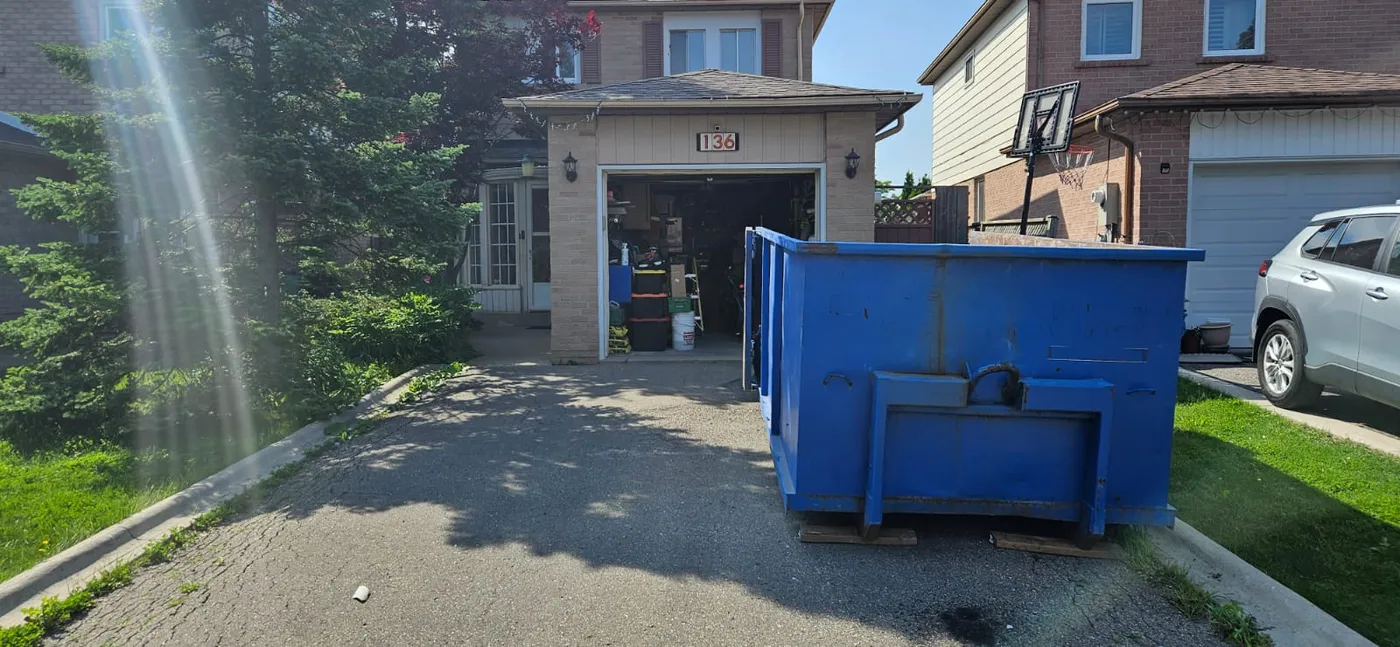
Driveway widths in older Etobicoke neighborhoods like The Kingsway or Long Branch are often narrower than those in newer Milton subdivisions near the Derry Road corridor. A 4-yard or 10-yard bin fits most single-car driveways, while a 20-yard or 40-yard bin typically requires a double driveway or a construction pad.
Limited driveway depth is common in Brampton's older Bramalea area or central Oakville near Lakeshore Road. A smaller bin placed correctly still protects the property and keeps the project moving. Dispose Your Stuff protects driveways during placement, and city-specific guidance is available on the Etobicoke, Oakville, or Brampton service pages.
- 4-yard and 10-yard bins fit single-car driveways in older neighborhoods across Etobicoke and central Oakville.
- 14-yard bins work on most standard suburban driveways in Mississauga and Brampton.
- 20-yard and 40-yard bins typically require a double-wide driveway or designated construction pad, common in newer Milton subdivisions.
What You Can and Cannot Put in a Renovation Bin
Prohibited Materials and Contamination Charges
Pure aggregate loads are only accepted in 4-yard and 10-yard bins. Hazardous chemicals, solvents, tires, explosives, fireworks, and full paint cans are prohibited in all bin sizes. If a Dispose Your Stuff crew arrives and finds prohibited materials in the bin, the company reserves the right to leave the bin on site or charge for contamination.
Ontario's spill and pollution reporting framework is the reason these restrictions exist. Proper handling and disposal of hazardous materials requires licensed spill contractors familiar with provincial rules. The Spills Action Centre operates 24 hours a day, 7 days a week at 1-800-268-6060 for anyone unsure how to handle a hazardous material or its disposal.
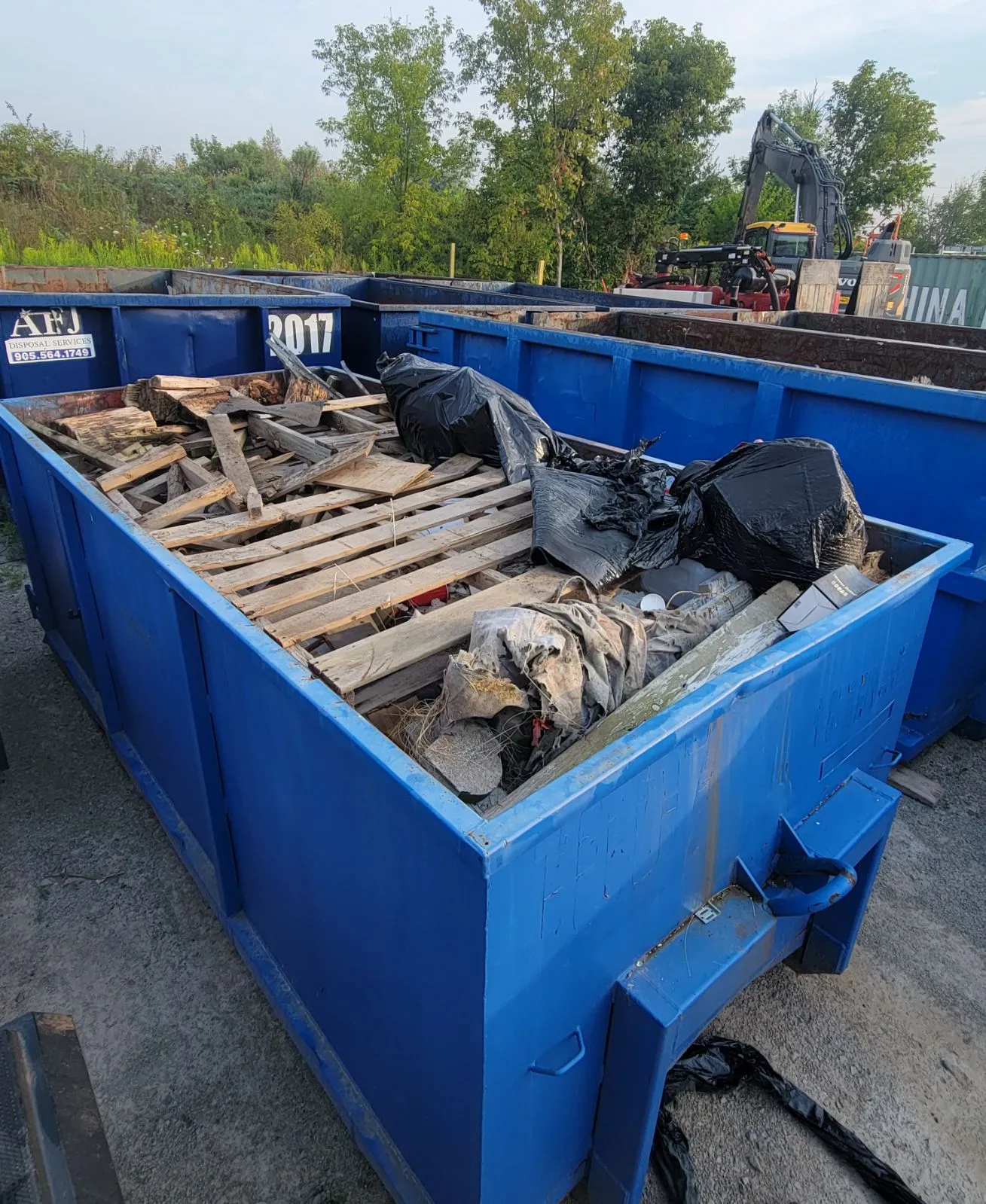
Drywall, lumber, shingles, old flooring, and cabinetry are accepted in every bin size.
Rental Duration and How It Affects Your Total Cost
Weekly Versus Monthly and the Overflow Trap
Many homeowners assume a bigger bin always costs more. Renting a slightly larger bin for the correct duration often costs less than renting a smaller bin, overflowing it, and paying for a second pickup. Dispose Your Stuff offers both weekly and monthly bin rentals, so matching the rental window to the project scope avoids paying for idle days.
A bathroom gut runs 1 to 2 weeks. A full basement cleanout may stretch to 3 weeks. A contractor running a framing job may need a monthly rental. A Mississauga homeowner gutting a kitchen could use a 14-yard bin on a weekly rental to handle roughly 15 cubic yards of tile, cabinetry, and drywall, saving over a second-haul fee by sizing up from a 10-yard bin.
Book the Right Bin Before Demo Day
Timing the Delivery to Avoid Delays
A contractor in Mississauga's Erin Mills area who waits until demo day to order a bin faces a delay that idles the crew. One who books 48 hours ahead has the bin placed before the first sledgehammer swings. Timing matters as much as sizing, and booking early is the simplest way to reduce total project cost.
Call Dispose Your Stuff at 647-227-2467 or book online. Specify the project type, estimated volume, and preferred delivery date. If you are unsure between two sizes, the team can recommend based on scope. Before you call, measure your driveway width and depth, because that single measurement determines whether you need a 10-yard or 20-yard bin.