
Property owners and contractors in the Greater Toronto Area face significant financial liability for roadside inspection failures or property damage during bin transport. Regulation 413/05 weight limits are strictly enforced, and non-compliant bins on public property in Toronto are subject to immediate removal with full cost recovery for towing and storage.
Gravity and Axle Load Dynamics
Highway Traffic Act Regulation 413 05 Compliance
The Ontario Highway Traffic Act Regulation 413 05 dictates strict weight limits for commercial vehicles, meaning an unevenly loaded 40-yard bin can trigger a roadside inspection failure before the truck leaves the driveway. Heavy items must be centered over the bin floor to prevent the roll-off hoist from tipping or damaging the property asphalt. This alignment directly protects the integrity of the hydraulic pressure limits during the initial lift.
In neighborhoods like Cabbagetown or Little Italy, the narrow street widths leave zero margin for error during the loading process. A bin that is heavy on one side will tilt during the winching process, potentially striking parked cars or overhead utility lines. The Ministry of Transportation (MTO) monitor these shifts closely, as improper loading negatively impacts the CVOR rating of the contractor.
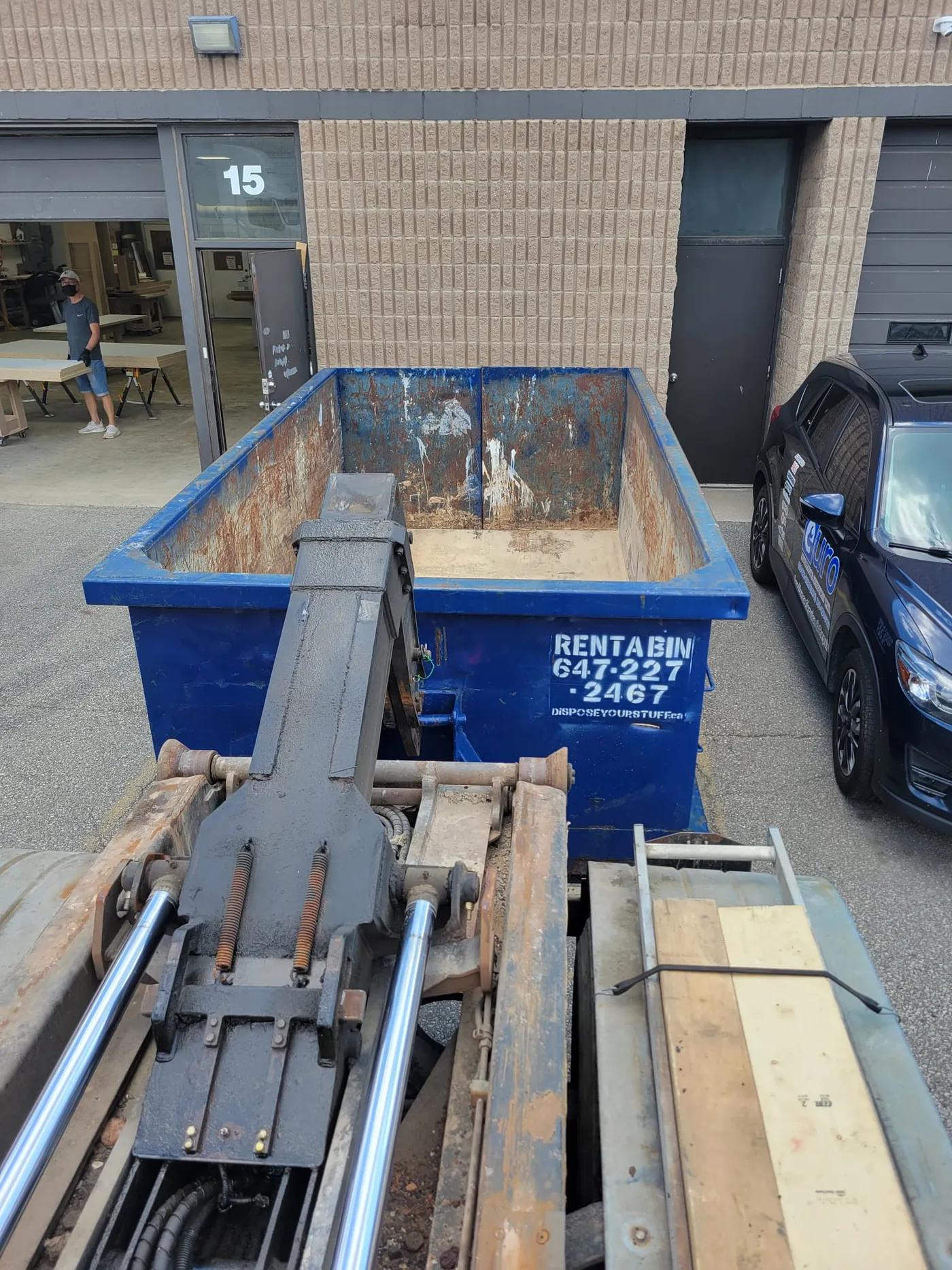
Establishing a precise axle weight spread is mandatory for any commercial operator navigating the dense GTA corridor. Every pound of tare weight counts toward the final calculation, making the initial weight distribution a critical safety check. Once the foundational weight is centered, the focus shifts to the geometric arrangement of the remaining debris to prevent internal shifting.
Vertical Layering for Dense Debris
Optimizing Capacity and Reducing Air Pockets
Tossing large furniture or demolition framing into a bin haphazardly creates air pockets that waste up to 30% of the available 14-yard or 20-yard capacity. Disassembling cabinetry and flat-packing drywall is the only way to ensure the rental fee covers the maximum possible tonnage without requiring a second delivery. This efficiency is necessary to remain within the Gross Vehicle Weight Rating (GVWR) of the transport vehicle.
While residential junk often consists of light, high-volume items, construction debris is low-volume and high-density. Mixing these without a strategy results in a bin that is visually half-empty but legally over its weight capacity for GTA transfer stations. Maintaining SPIF standards ensures that the vehicle can safely carry these varying loads across municipal bridges and overpasses.
Density determines the cost.
Effective layering inside the bin is only half the battle, as the external environment in the GTA imposes its own set of structural boundaries. Our roll-off dumpster rental services provide the equipment necessary to handle these density challenges while following all regional transportation safety protocols.
Spatial Constraints in High Density Neighborhoods
Navigating Toronto Municipal Code Chapter 743
The City of Toronto Municipal Code Chapter 743 regulates the use of public right-of-ways, requiring a Street Occupation Permit for any bin that cannot fit entirely on private property. In areas like North York or Scarborough, driveway lengths usually accommodate 10-yard or 14-yard bins, but downtown lots often force the bin onto the curb. This placement requires Right-of-Way Management to keep the sidewalk clear for pedestrians.
How does the placement affect the loading speed? When a bin is tucked into a tight alleyway near Lakeshore Boulevard, the rear barn doors may not have the full swing radius required for easy entry. Users must plan to load smaller items through the side walls or ensure the truck leaves enough clearance for the rear door to lock securely. These spatial limitations define the operational pace of the entire cleanup project.
Volumetric Limits for Construction Aggregates
Clean Fill Weight Standards
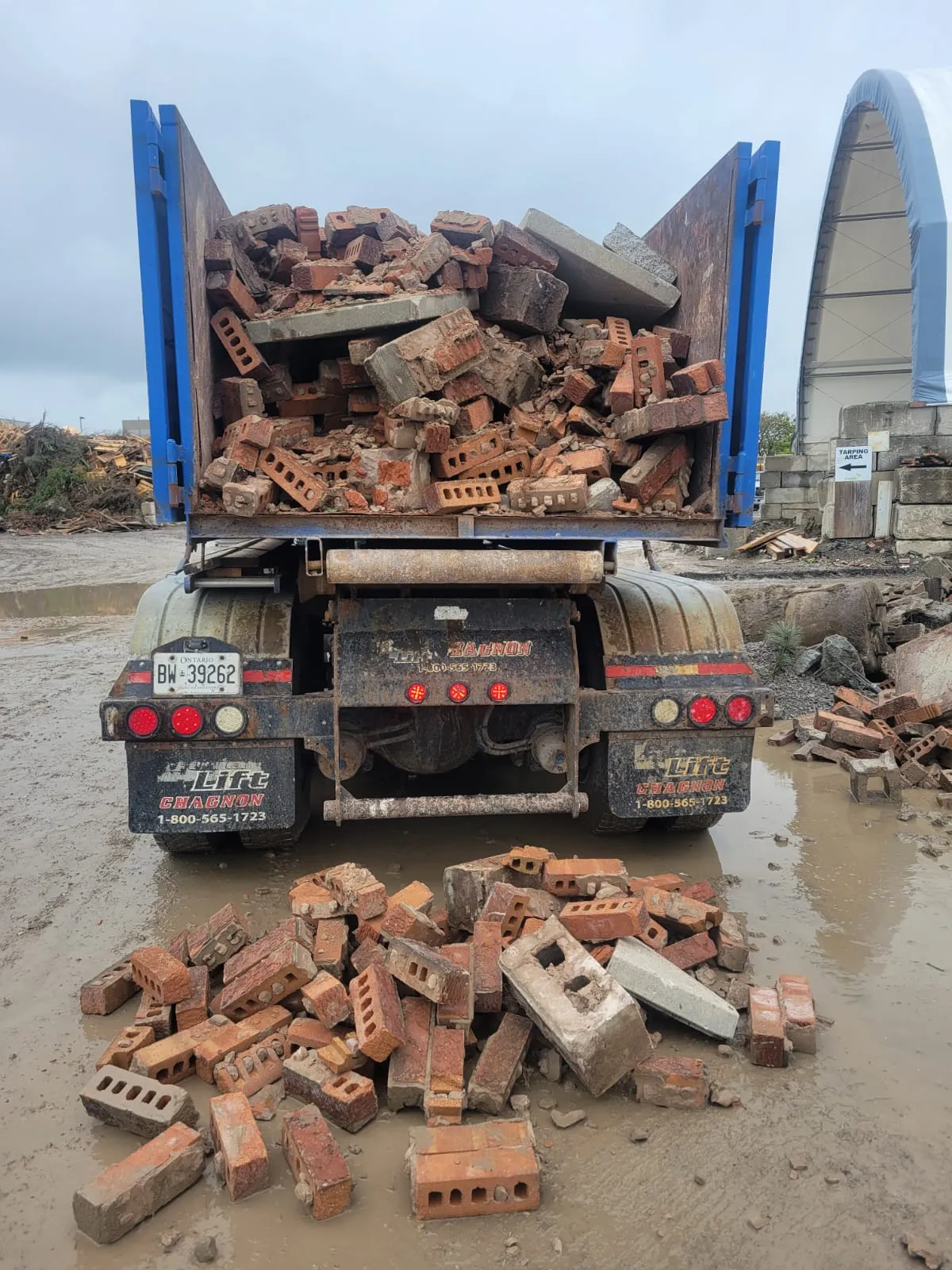
A 4-yard bin is the industry standard for clean fill such as concrete, bricks, or dirt because these materials weigh approximately 2,000 to 3,000 pounds per cubic yard. Attempting to fill a larger 20-yard or 40-yard bin with these materials will exceed the hydraulic lifting capacity of the roll-off truck, leading to a failed pickup fee. Strict adherence to weight ceilings is required for Commercial Vehicle Operator's Registration (CVOR) compliance.
Contractors in Vaughan and Brampton often utilize 4-yard bins for pool excavations or patio removals to keep costs predictable. If soil is loaded beyond the top rail of the bin, the driver is legally prohibited from transporting the load. This prevents debris from falling onto regional roads, a regulation enforced during the Reduced Load Season to protect thawing infrastructure.
- Concrete and Brick: Max 4-yard capacity for safety.
- Asphalt and Dirt: Strict 5-tonne per axle limit on secondary roads.
- Mixed Materials: Requires MECP verification for proper disposal.
The Ministry of the Environment, Conservation and Parks (MECP) governs the final destination of these aggregates, making accurate volume reporting a legal necessity. Exceeding the top rail not only prevents transport but also violates specific securement laws intended to protect other motorists on shared roadways.
Load Securement and Highway Traffic Act Compliance
Risky Transit on Major Arteries
A common error is assuming the heavy weight of the debris will keep it in place during transit on the 401 or the Gardiner Expressway. Wind resistance at highway speeds can lift loose shingles, plywood, or plastic sheeting, creating a lethal hazard for following vehicles. Load securement is checked during MTO inspections along high-traffic corridors like Highway 427 to maintain public safety.
While the driver is responsible for tarping the load, the customer is responsible for ensuring the load is level. Anything protruding above the rim prevents the tarp from creating a vacuum seal, which is a primary reason for refused pickups across the GTA. Regulation 347 governs the transport of waste and mandates that no debris escapes the container during transit.
Level loads are legal loads.
The final stage of a successful rental period is verifying the site is ready for the truck return before the scheduled window. Check our bin sizes and rental prices to select the correct container for your specific project requirements and avoid overloading penalties.
Operational Readiness for Final Collection
Site Preparation and Approach Clearance
On the morning of the scheduled pickup, ensure that no vehicles are parked within 40 feet of the front of the bin to allow the roll-off truck to align its rails. In busy municipalities like Mississauga, a blocked bin results in a dry run fee, which often matches the cost of the initial delivery. Clearing snow piles or equipment from the path is a mandatory operational safety requirement.
Before the delivery truck arrives, verify that the overhead clearance is exactly 14 feet to avoid the $250 failed-delivery fee triggered by low-hanging telecommunication lines or tree branches. Confirm that the path from the street to the bin is clear of any equipment, snow piles, or construction materials that could impede the truck hydraulic stabilizers. Verify the 14-foot vertical clearance and ensure a 40-foot approach path is clear of obstructions before the truck arrives.