
Driveway Surface Integrity Under Load
Residential Asphalt Engineering Limits
Standard residential asphalt in Ontario is engineered to a depth of only two inches. Homeowners in the Greater Toronto Area scheduling a residential bin rental face immediate structural risks if the surface cannot support the concentrated weight. This technical constraint makes pavement susceptible to permanent indentation or cracking when subjected to a loaded 20 Yard Bin.
Point-loading occurs at the four contact points where the steel rollers of the bin meet the pavement. This focuses the entire weight of the container and its contents into less than one square foot of surface area. This pressure often exceeds the shear strength of the asphalt binder. Without adequate aggregate base density, the substrate cannot support the combined static and live load.
In neighborhoods with interlock stone settling or specific patterned concrete structural limits, the risk of damage increases significantly. Unlike uniform asphalt, these decorative surfaces rely on precise sub-base compaction and individual unit stability. Residential driveways are not engineered to the substrate deformation resistance standards required for industrial equipment.
Protective Plywood Shielding Requirements
Surface Damage Mitigation Strategies
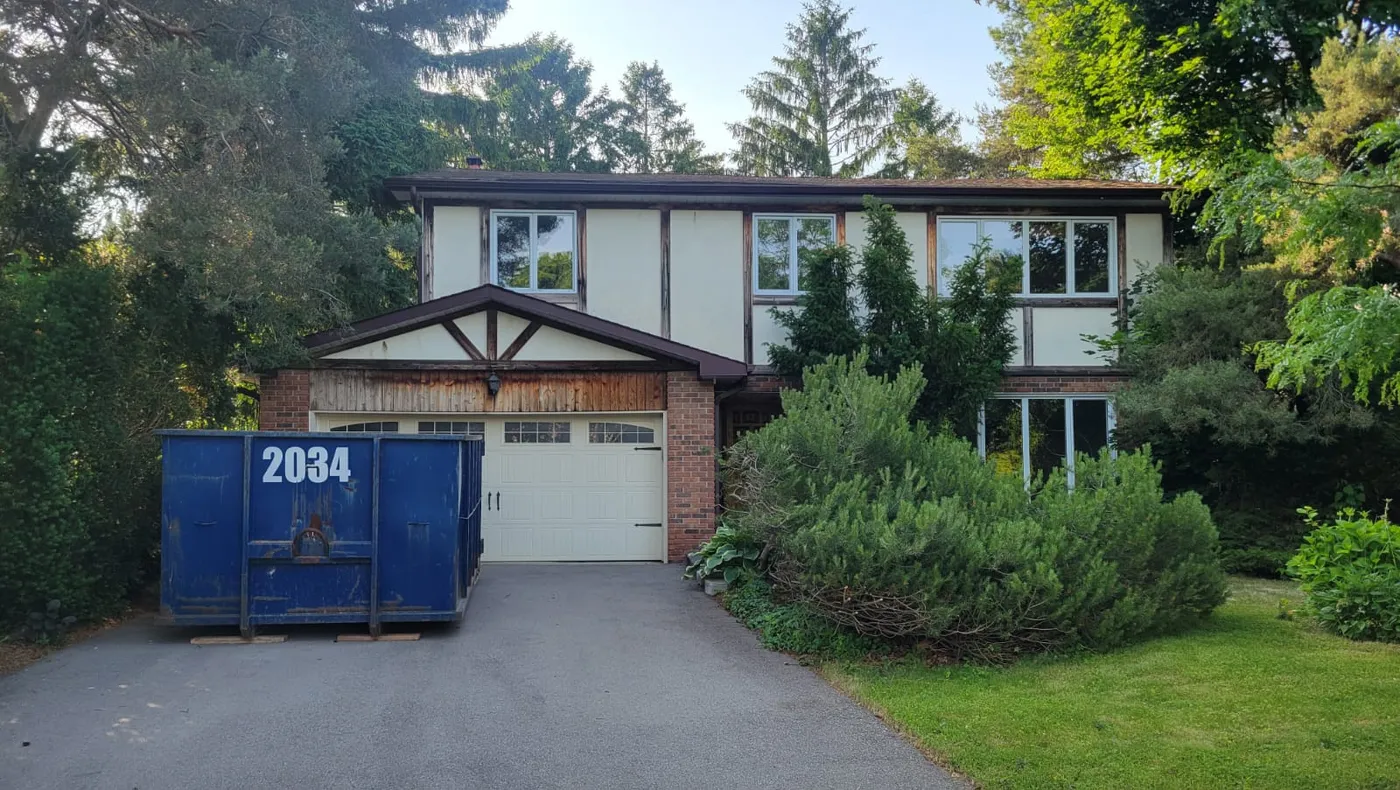
Professional bin rental operations across Peel Region and York Region utilize three-quarter-inch plywood sheets to create a sacrificial layer. These wooden planks function as a protective buffer between the steel rollers and the driveway surface. Deploying this layer is a standard requirement for local contractors adhering to best practices and preserving property value.
While a driveway might appear cured and solid, peak summer heat in Southern Ontario softens the asphalt binder significantly. This thermal state allows heavy steel rollers to sink into the substrate without protective shielding boards. Heat-related surface scarring is a major risk factor for residential driveways during peak summer months, particularly on surfaces that were paved within the last five years.
Even with boards in place, the angle of the truck during delivery introduces mechanical stresses that owners must monitor closely. Concentrated pressure is the primary driver of failure in residential zones. Using a medium to spread the weight prevents the rollers from acting as a mechanical punch against the asphalt binder.
Mechanical Stress During the Loading Process
Hydraulic Dynamics and Surface Pressure
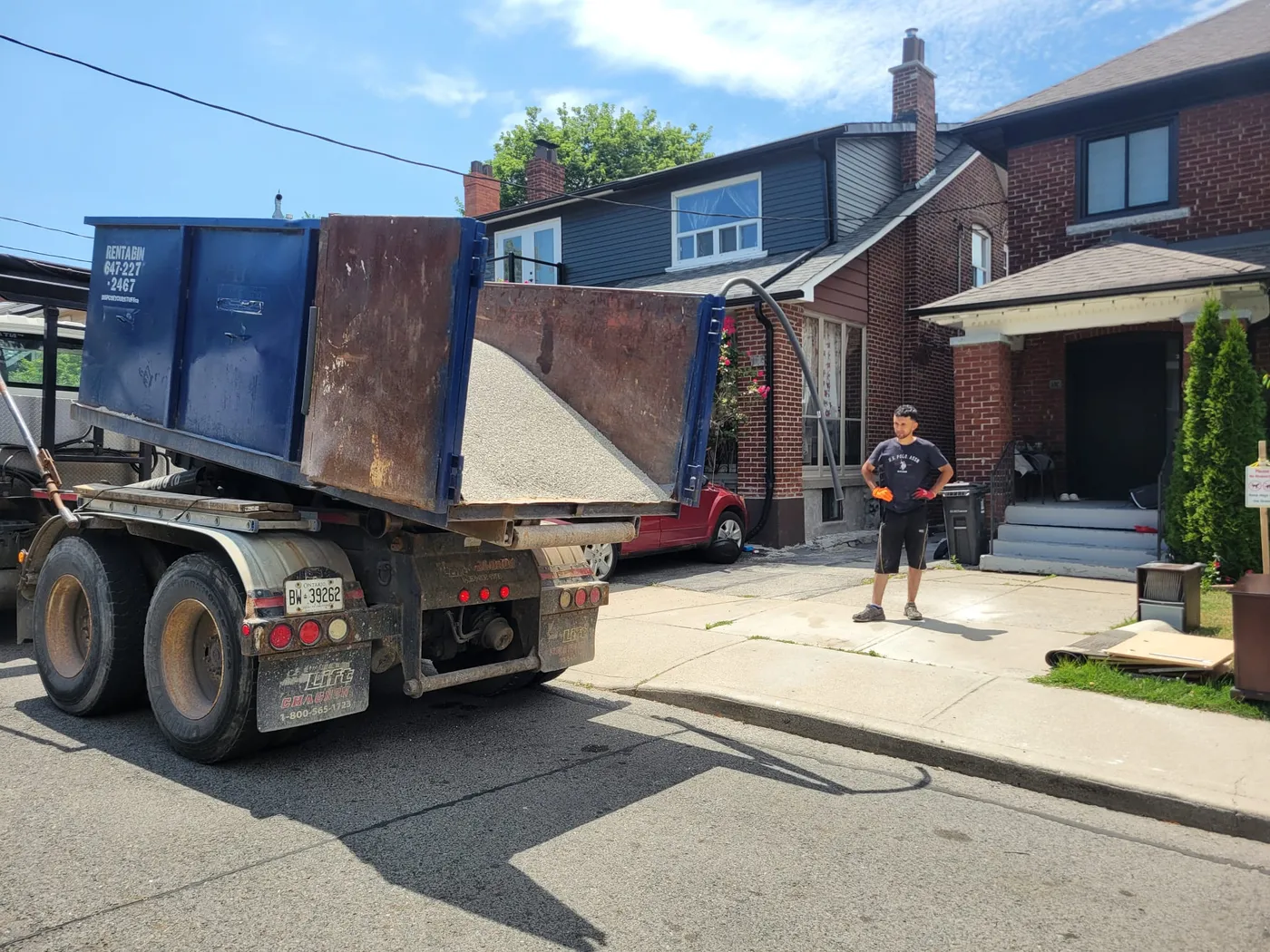
The highest risk of damage occurs during the drop or pick-up phase when the truck hydraulic hoist tilts the bin at a 45-degree angle. This orientation exerts maximum downward pressure on the rear rollers, creating intense torsional stress on the surface. Hydraulic motion increases ground pressure beyond what the static weight of the bin alone would suggest.
Drivers can mitigate some of this force by extending the truck stabilizer bars. However, narrow laneway accessibility in older Toronto neighborhoods like East York often creates a stabilizer bar restriction. When these supports cannot reach solid ground, the entire load remains on the rear axle and bin contact points. This forces the driveway to support lateral mechanical stress without assistance.
The physical space available for these maneuvers dictates the safe weight capacity for the specific bin size selected for the project. Homeowners should consult the roll off dumpster rental specifications to ensure their site can accommodate the equipment. Poor alignment leads to uneven weight distribution and potential damage to the underlying aggregate base.
Weight Distribution and Bin Size Selection
Density and Displacement in Waste Management
A common error is assuming a 40 Yard Bin poses the greatest threat to a driveway. In reality, a smaller 10 Yard Bin filled with clean fill like concrete or wet soil exerts a higher pounds-per-square-inch load. This dense material concentrates weight into a smaller footprint, increasing the likelihood of point-loading failures. Material density is a more accurate predictor of failure than container volume.
Material density is the key metric for property safety. Heavy masonry or excavated soil reaches structural weight limits long before the bin's physical volume is full. The Ministry of Transportation Ontario sets strict weight limits for commercial haulers based on this mass. When choosing a mixed waste bin rental, homeowners must account for the specific weight of their debris.
Miscalculating this density leads to subsurface failures that standard surface repairs cannot fix. If the granular sub-base fails, the asphalt will eventually crack regardless of how many top-coat repairs are applied. Proper material estimation remains the first step in property protection. Estimating the mass prevents the sub-grade from collapsing under the weight of the delivery.
Seasonal Vulnerability in the Greater Toronto Area
Freeze Thaw Cycles and Sub Base Integrity
The GTA experiences approximately 40 freeze-thaw cycles annually, which creates microscopic voids in the driveway sub-base. These voids can collapse instantly under the weight of a construction bin, especially during the half-load season. Local infrastructure is uniquely vulnerable to these temperature swings.
Spring deliveries carry the highest risk profile because the ground is saturated and the structural integrity is at its lowest point. Permeable paver saturation further weakens the sub-grade, making it susceptible to deep ruts. Soil strength decreases significantly during the spring thaw, becoming spongy and unable to support heavy static loads without deformation.
Managing these seasonal risks requires a final physical inspection of the site before the delivery truck arrives. Homeowners should check for existing hairline fractures or signs of alligatoring in the asphalt surface. These visual cues indicate that the substrate is already compromised and cannot support additional industrial weight without significant risk of total failure.
Pre Delivery Site Preparation Checklist
Final Operational Requirements
Standard roll-off delivery requires 22 feet of vertical clearance to raise the hoist safely. This is critical in mature GTA suburbs where overhead telecommunication lines are common. Obstructions can lead to severe property damage or electrical hazards during the hoist operation.
Ensure the intended drop zone is level and clear of all debris to prevent the bin from shifting. A bin that walks during loading can cause lateral scrapes on the driveway surface. For properties where the bin may encroach on the public right-of-way, a City of Toronto Road Occupancy Permit is mandatory. This requirement applies to all dense urban wards.
- Verify vertical clearance of at least 22 feet for overhead wires and tree branches.
- Position 3/4-inch plywood boards at the anticipated roller contact points to distribute weight.
- Confirm compliance with Markham Waste Bylaws or local York Region Right-of-Way rules.
- Secure a Road Occupancy Permit if the container will sit on public property or boulevards.
Measure the exact width of your driveway entrance and compare it to the 102-inch standard width of a delivery truck. Homeowners must provide a three-foot buffer on each side for the mirrors to prevent dry run fees. Under the Ontario Highway Traffic Act, commercial vehicles have specific width limits that require clear site access before the truck commits to the approach.