
Successful project coordination depends on identifying the high-stakes financial risks associated with unpermitted bin placement and improper site preparation. Establishing the specific legal and physical constraints required to keep residential projects compliant is the only way to avoid administrative penalties and infrastructure damage liabilities.
Burlington Waste Disposal Compliance Risks
Administrative Penalties and Fine Schedules
Burlington homeowners and contractors face fines starting at three hundred dollars for unpermitted bin placement on public property. This financial risk is the primary reason why pre-delivery planning is required for any renovation or cleanout project. Service Burlington manages the intake for these regulatory inquiries.
In established neighborhoods like Aldershot, narrow driveways often force bins onto the boulevard, which is technically city land. A bin dropped without checking property lines can result in an immediate stop-work order from a by-law officer. The Transportation Department oversees enforcement protocols for all right-of-way obstructions.
Applicants must provide a 48-hour notice period before placing any equipment on municipal property. This 48-hour lead time allows city staff to assess the impact on local traffic and drainage. Filing a Notice of Commencement ensures that all departments are aware of the temporary occupancy before the trucks arrive on site.
Legal Jurisdictions of Municipal Land
By-law 065-2021 and Liability Requirements
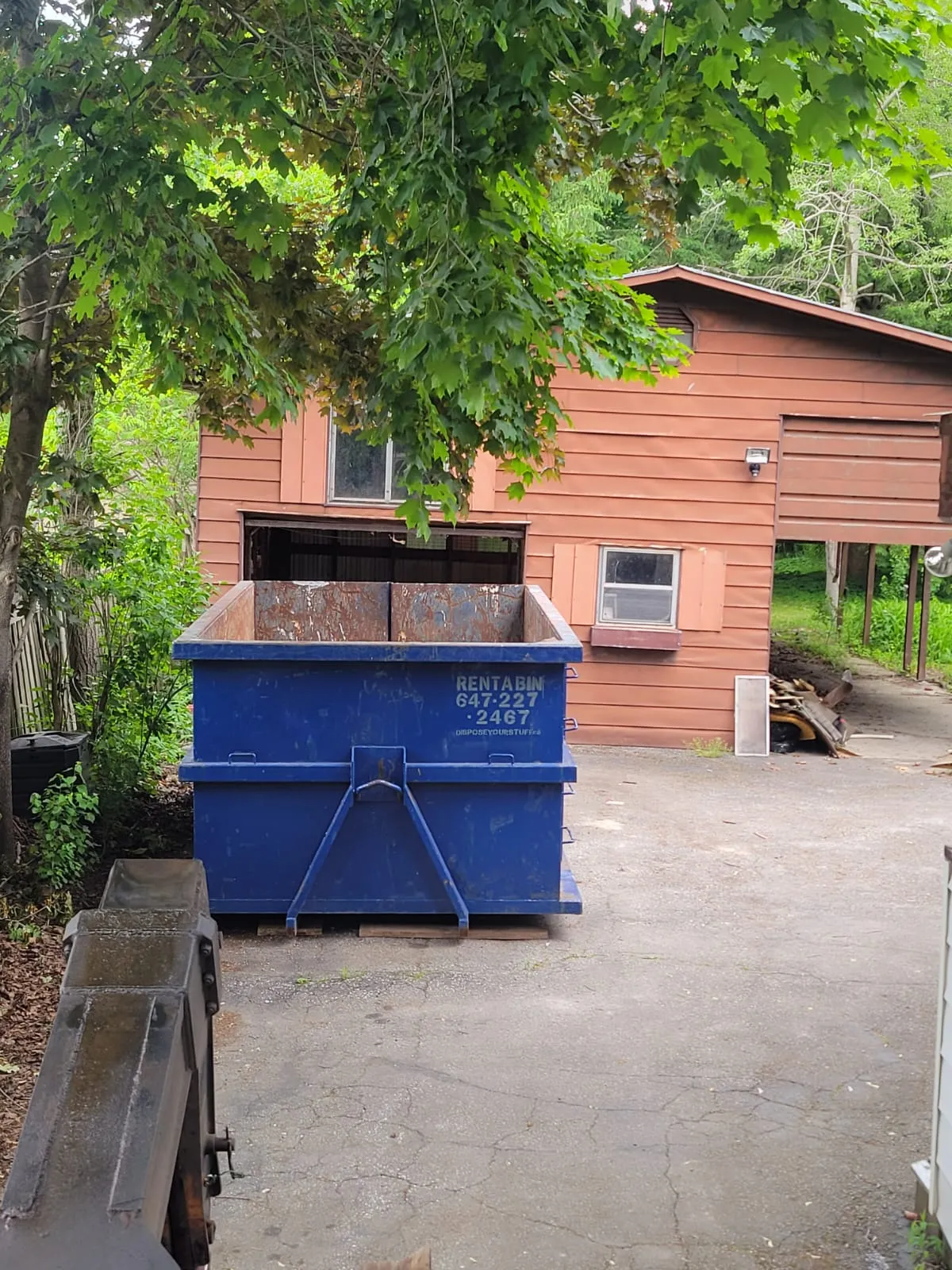
The City of Burlington classifies any land between the curb and the actual property line as a boulevard. This area, while maintained by the resident, is under municipal jurisdiction according to By-law 065-2021. Compliance requires a permit for any temporary obstruction placed within this specific administrative zone.
Securing this permit necessitates a Certificate of Liability Insurance with a minimum of $2,000,000 minimum coverage. The policy must name the Corporation of the City of Burlington as an Additional Insured party. This legal shield protects the municipality from claims arising from property damage or personal injury during the rental period.
While placing a 10 yard bin entirely on a private paved surface avoids these permit fees, the physical footprint of the delivery truck must also be considered. If the truck wheels must mount the curb to drop the bin, the city may still require a protective damage deposit. Documentation can be submitted at City Hall at 426 Brant Street.
Road Occupancy Permits and Public Boulevards
Processing Fees and Duration Limits
Standard dumpster placements are subject to a $71.54 permit fee per location. This administrative cost covers the review of the site plan and the issuance of the occupancy certificate. Residents should email their completed applications to [email protected] for rapid processing by the engineering team.
A 5-day occupancy limit applies to the standard permit duration for residential projects. Extensions require a secondary review and additional fees if the equipment remains on the boulevard beyond the initial window. Failure to remove the bin by the deadline triggers daily non-compliance penalties that accumulate rapidly.
Successful applicants must display a physical copy of the permit in a weatherproof sleeve attached to the 14 yard bin or larger container. This transparency allows by-law officers to verify the legality of the placement during routine patrols. Unlabeled bins are treated as unauthorized obstructions regardless of whether a fee was paid.
Weight Restrictions and Pavement Integrity
Protecting Residential Infrastructure
Many residents assume that as long as a bin fits the space, the ground will support it. In reality, a fully loaded 20 yard bin containing mixed waste can exceed five tons. This weight exceeds the load-bearing capacity of standard residential asphalt in older sectors like Tyandaga.
Asphalt cracking is a permanent structural failure that requires expensive excavation to repair. Burlington residents are liable for any damage caused to the public sidewalk or curb during the delivery and pickup of heavy roll-off dumpsters. Protecting the subgrade is the property owner's responsibility during the entire project cycle.
Subsidence occurs when the concentrated pressure of the bin's rollers punctures the top layer of pavement. Using wooden planks under the equipment is a mandatory precaution for professional haulers. This simple step distributes the load and prevents the metal edges from gouging the driveway surface. Structural integrity is preserved through proper load distribution.
Halton Region Prohibited Waste Categories
Hazardous Material Protocols
A driver arriving at a job site in Millcroft will refuse a pickup if they spot hazardous materials such as propane tanks or old paint cans. This results in a dry-run fee and forces the resident to manually unload the prohibited items before the bin can be moved. Safety remains the highest operational priority.
Hazardous waste must be taken to the Halton Waste Management Site on Regional Road 25. Standard rental bins are not rated for the containment of flammable or corrosive liquids. Improper disposal leads to massive environmental fines from the Ministry of the Environment.
Lithium-ion batteries and pressurized cylinders represent significant fire risks in open-air containers. Residents must separate these items at the source to maintain safety compliance. Proper sorting ensures that general renovation debris can be processed at local recycling facilities without contamination. Source separation is the standard for modern waste management.
Seasonal Placement and Neighborhood Safety
Winter Maintenance and Traffic Visibility
During the summer, bin placement is largely about convenience, but winter projects in high-density areas like The Orchard require accounting for snow removal. A bin that blocks the path of a municipal plow will be cited and potentially towed at the owner's expense. Plow drivers must maintain clear routes.
Visibility is a legal requirement under the Ontario Traffic Manual standards. How does a resident ensure a 40 yard bin remains visible to traffic during a Burlington snowstorm? Reflector tape and clear clearance from the street edge are the only ways to remain compliant with nighttime safety by-laws. High-intensity markers prevent collisions.
Placement near intersections or crosswalks creates blind spots for turning vehicles. By-law officers prioritize these high-risk areas for enforcement. Keeping the line of sight clear for pedestrians is essential for neighborhood safety. Containers must be positioned away from hydrant zones and transit stops. Safety supersedes convenience in residential zones.
Final Site Preparation Checklist
- Verify property boundaries through the Burlington Navigator online mapping tool before the truck arrives.
- Secure twenty feet of vertical clearance to avoid damaging low-hanging utility wires or tree branches.
- Email your insurance certificate to the Transportation Department to finalize your occupancy permit.
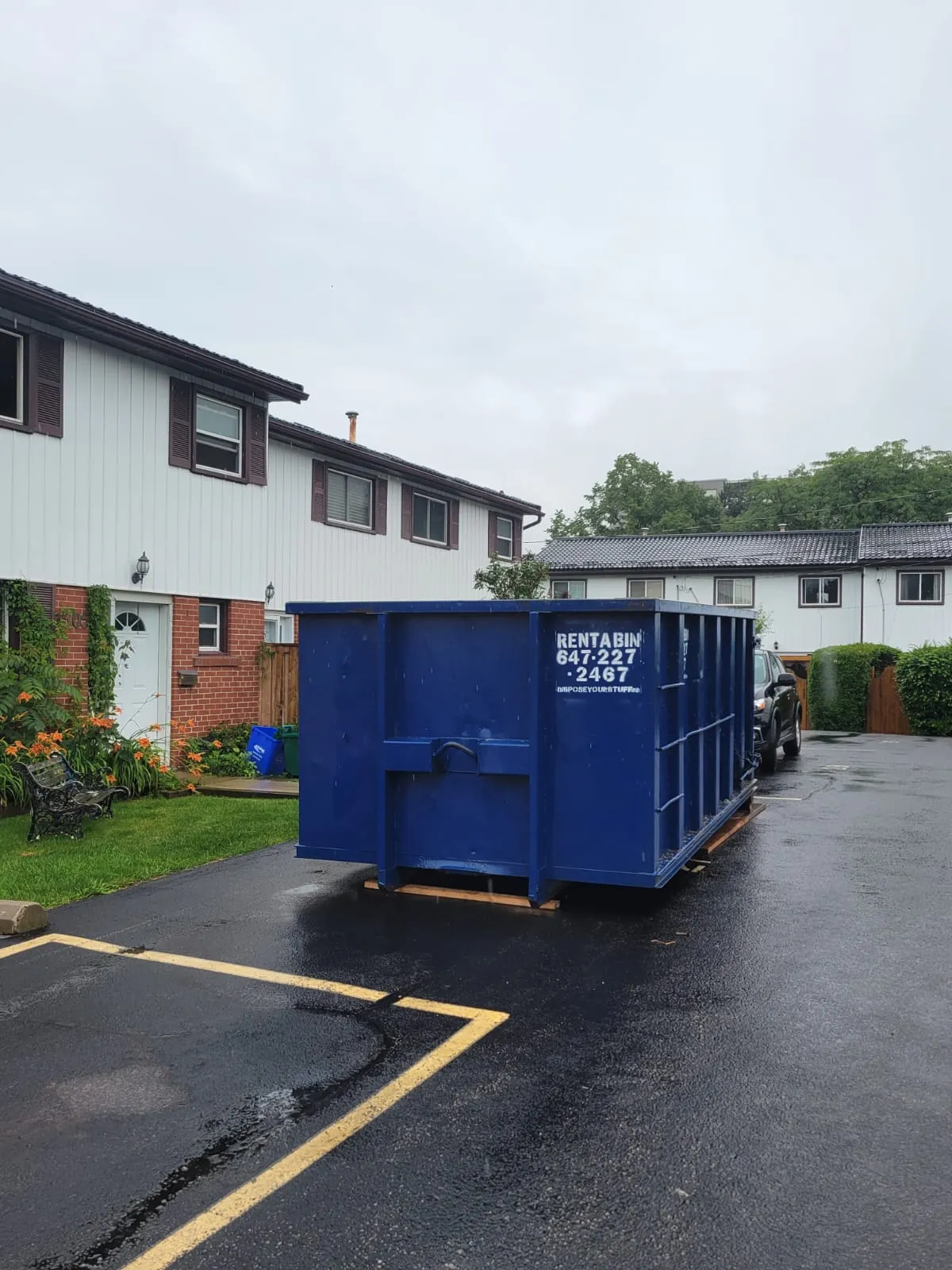
- Position wooden planks on the delivery surface to protect the asphalt from point-load pressure.
The delivery window is not the time to start clearing the driveway of vehicles or low-hanging branches. The truck requires at least twenty feet of vertical clearance and a straight approach to drop the bin safely. Obstructions lead to refused deliveries and scheduling delays. Site readiness is the customer's primary technical obligation.
Confirm exactly where your private driveway ends and the city boulevard begins using the Burlington Navigator GIS tool. This step ensures your bin placement remains legal and fine-free. Using municipal mapping data is the most effective defense against neighbor disputes and administrative penalties. Data-driven planning prevents project shutdowns.
Summary of Burlington Compliance
Compliance in Burlington requires a proactive approach to municipal regulations and physical site constraints. From managing road occupancy permits to respecting junk removal laws, every detail reduces financial and legal exposure. Professional site preparation ensures the project remains on schedule without administrative interruptions.