
Richmond Hill property owners and licensed contractors face immediate work-stoppage orders and municipal fines for bins placed on public roads without a valid permit. This high-stakes oversight delays residential renovations by weeks and triggers a lost Permit Application Fee. Identifying the specific line where private property ends and public land begins determines if a permit is even necessary.
Richmond Hill Road Occupancy Permit Mandates 2026
Legal Boundaries and Municipal Liability
Administrative penalties apply immediately under the Highway Obstruction By-law when containers cross the property threshold. Municipal Code Chapter 801 strictly regulates these specific encroachments on the Public Right-of-Way (ROW). The municipality enforces these rules to maintain order on residential streets during busy construction seasons, ensuring infrastructure remains accessible to emergency services.
A standard 14-yard bin rental frequently extends beyond the curb line in older residential zones, occupying public space. This physical reality places the full legal liability for site safety on the permit holder listed on the city application. The city holds the applicant responsible for all on-site outcomes regardless of the rental company used.
Enforcing these boundaries mitigates the risk of vehicular collisions in high-density areas. Local by-law enforcement officers actively patrol active construction zones to verify documentation. Failing to produce the approved paperwork on-site results in an immediate suspension of work, complicating schedules and inflating costs for the entire renovation project.
Private Property Exceptions and Driveway Loading Limits
Property Standards and Setback Rules
Placement on a private driveway generally exempts a project from road occupancy permits, but it does not bypass property standards regarding sidewalk sightlines. Bins must not obstruct the view of pedestrians or motorists negotiating tight suburban corners. Maintaining clear visibility is a non-negotiable safety standard for every residential driveway placement under current zoning rules.
Heavy 40-yard construction bins must utilize protective padding to maintain municipal infrastructure integrity under the 2026 sustainability framework. The city monitors these standards through routine inspections. Protective materials prevent permanent scarring of the roadway and private property surfaces, protecting the public investment in residential infrastructure.
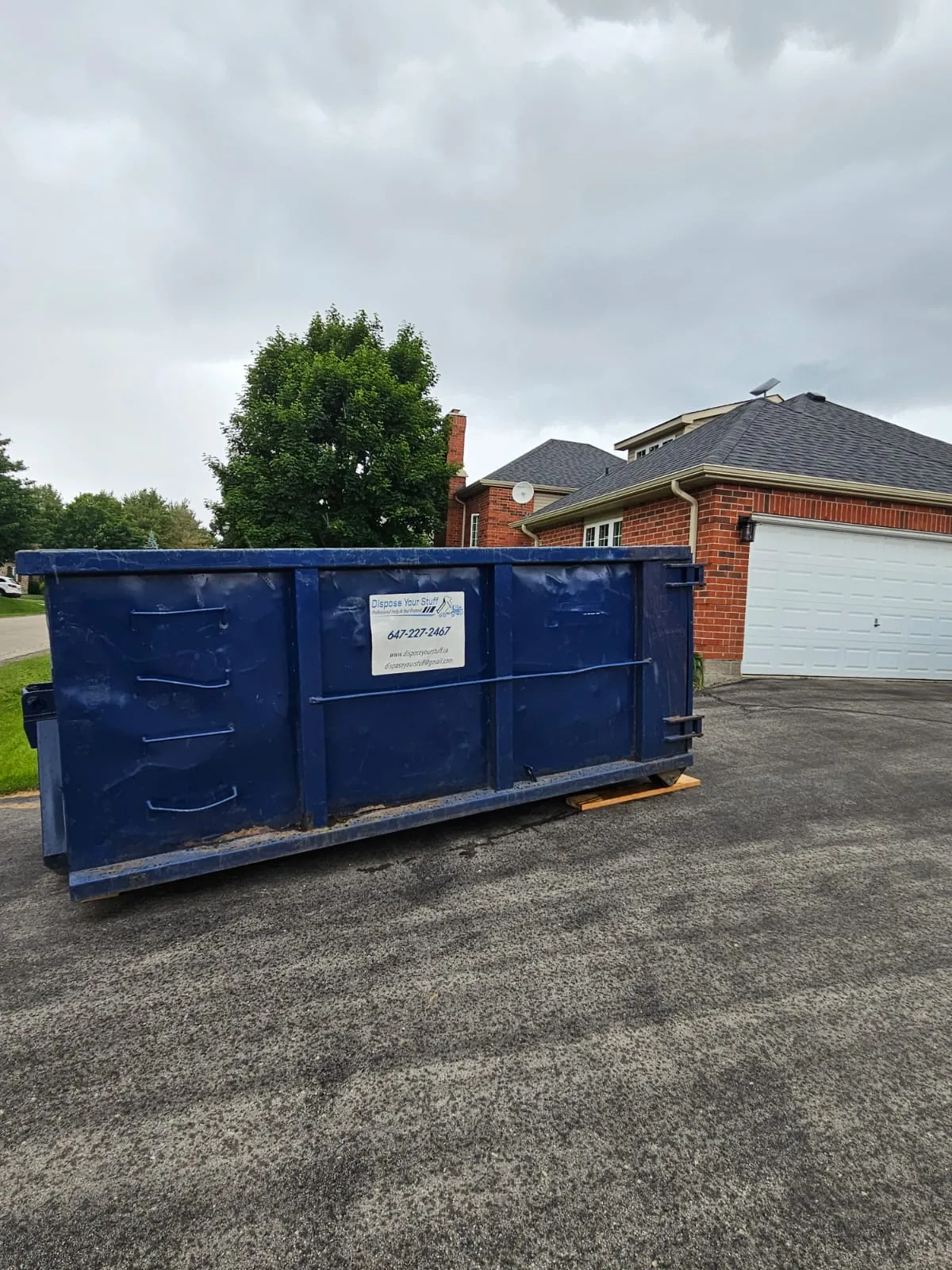
City infrastructure damage is invoiced directly to the permit holder with a 20% administrative surcharge. This penalty makes the proactive use of wooden planks a financial necessity for all local renovation projects. Protecting the roadway is a critical logistical requirement that prevents significant and avoidable municipal expenses.
Logistical Constraints in Oak Ridges and Bayview Hill
Neighborhood Specific Environmental Buffers
Narrow streets in the Oak Ridges area necessitate stringent traffic management plans for any bin larger than 14 yards. These physical constraints often force homeowners to switch from large containers to maneuverable 10-yard bin units. Smaller bins prevent total road blockage during drop-off and pickup cycles, ensuring accessibility remains a top priority.
Bayview Hill driveways may offer ample space for equipment, but neighborhood association covenants frequently impose private penalties for bins visible for extended durations. These internal rules run parallel to municipal permits. They can result in significant private fines if the property owner ignores community standards during the active renovation phase.
Visual screening is often mandatory in these prestigious enclaves. Luxury developments may require bins to be covered or screened from view during weekends to maintain community aesthetics. Property owners should review deed restrictions early, as managing the aesthetic impact of a project is routinely strictly enforced by local homeowner associations.
Essential Documentation for Road Occupancy Approval
Insurance and Liability Mandates
What specific insurance coverage does the municipality require for a temporary bin permit in 2026? Applicants must typically provide proof of comprehensive general liability insurance in an amount not less than five million dollars. Additionally, obtaining $2 million automobile liability insurance is crucial for the transport vehicle, naming the City of Richmond Hill as an additional insured party.
Processing takes a minimum of 48 business hours via the new online application portal. Attempting to schedule a delivery before this window closes often results in a bin being refused at the site by the hauler due to liability concerns. Applicants must also provide a detailed Site Sketch to illustrate the exact proposed location.
Failure to supply accurate documentation stalls the entire approval pipeline. Generic broker documents are frequently rejected by public works officials reviewing the file. Ensuring this documentation is entirely correct before the initial submission prevents unnecessary bureaucratic delays in the municipal approval process, keeping the project timeline intact.
Safety Protocol and Traffic Control Standards
Visible Markers and Seasonal Maintenance
Any bin placed on a Richmond Hill roadway must be flanked by orange traffic cones according to an approved Traffic Protection Plan. During winter months, these bins must not interfere with snowplow operations or salt dispersion routes, which may lead to temporary removal orders. Effective road clearing takes absolute precedence over private projects.
Mandatory Pre-construction photography documents the existing state of the road before the bin arrives. Fulfilling the Public notice requirements by informing adjacent properties is a standard municipal prerequisite for approval. Proper placement ensures nighttime drivers can see roadside obstructions clearly. Safety protocols are designed to protect both the general public and the property of the resident.
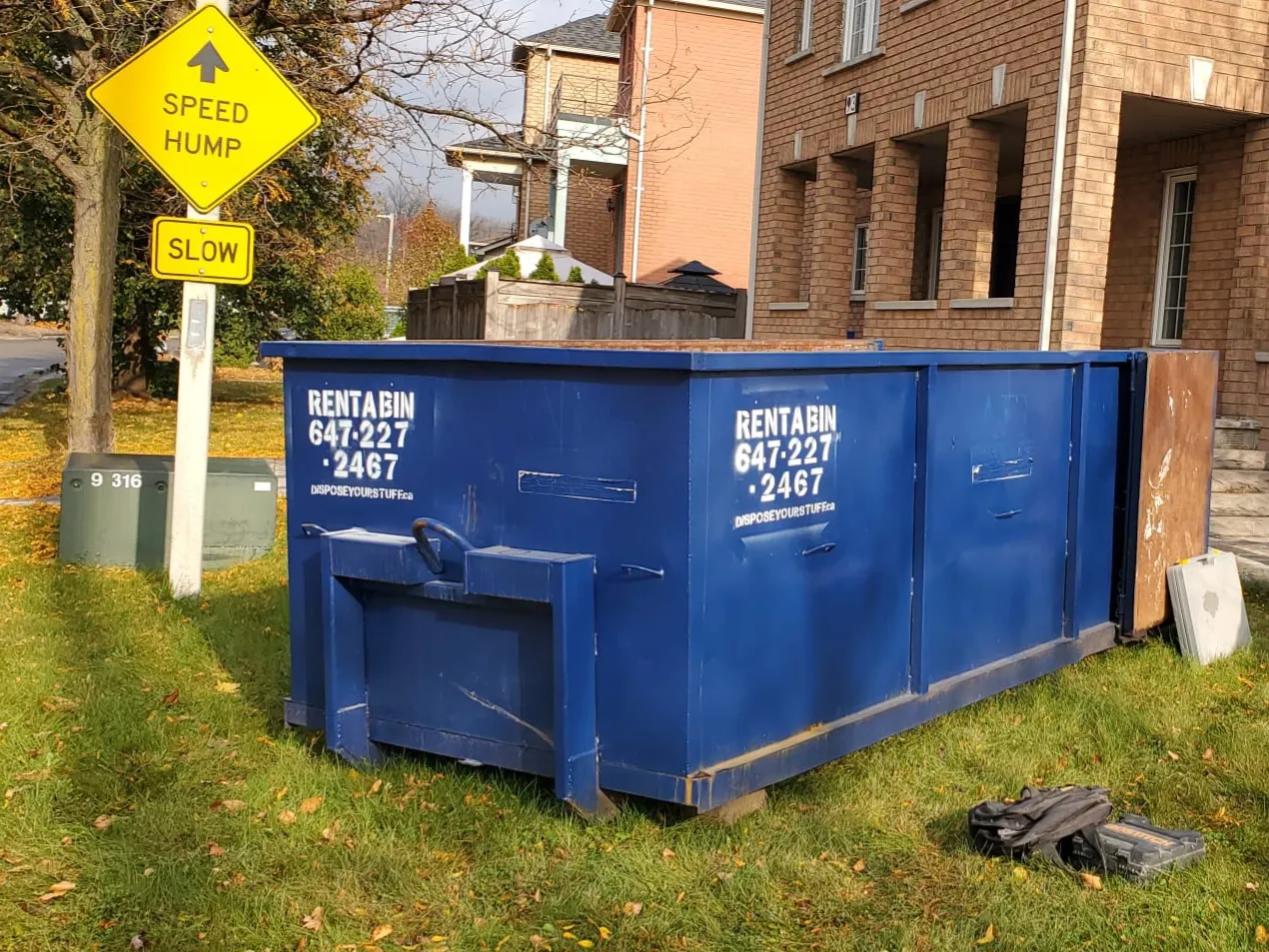
Dark metal bins can blend into low-light residential areas. Consequently, the application of reflective corner tape is a critical safety requirement for any container in the public right-of-way. This protocol prevents vehicular collisions. Managing these hazards reduces the legal exposure for the permit applicant significantly.
Non-compliant bins are towed immediately at the owner's expense.
Site Setback Verification Directives
Proactive Planning Protocols
Property owners should consult the official municipal guidelines before signing a contract. Understanding the exact curb-to-property line distance prevents the common error of ordering a bin that is physically too large for the permitted space. This proactive check saves both time and non-refundable fees associated with rejected permit applications.
Measuring the physical driveway dimensions guarantees the selected container fits safely within the private boundary. Haulers require a specific overhead clearance to operate the lifting mechanisms safely. Assessing these vertical limitations before ordering prevents a failed delivery attempt and the associated dry-run transportation charges from the provider.
Final Compliance Checklist for 2026 Projects
Waste Diversion and Regional Targets
Richmond Hill's waste management strategy continues to evolve, with a greater emphasis on the separation of recycling and mixed waste to meet regional diversion targets. Ensuring your bin size aligns with these sorting requirements avoids overweight charges at the transfer station. This ensures compliance with the broader environmental goals of City of Richmond Hill Public Works.
Applications are processed at 225 East Beaver Creek Road for those who prefer in-person submissions at the City of Richmond Hill Municipal Offices. Paying the mandatory permit fee of $276.23 + HST is required alongside the application. Verifying your site's specific setbacks against the city's updated setback map is the only way to confirm permit necessity for any Road Allowance encroachment before financial commitment.
Reviewing the regional waste management master plan identifies prohibited hazardous materials. Toxic substances will cause an immediate refusal at the disposal site. Understanding these restrictions guarantees smooth processing once the filled container is removed from the residential premises.
- Verify property lines to confirm if a permit is required.
- Secure $5 million liability insurance naming the City as additional insured.
- Submit the official certificate form at least 48 business hours in advance.
- Deploy OTM Book 7 markers for all street-placed containers.