
Homeowners and contractors in Vaughan face administrative penalties exceeding five thousand dollars for placing waste containers on public property without a valid Road Occupancy Permit. Failure to secure this documentation before the bin arrives halts construction and triggers immediate municipal enforcement. Total costs escalate rapidly across Woodbridge and Maple.
The Financial Risk of Unpermitted Road Occupancy
Municipal Enforcement and Administrative Penalties
Administrative Monetary Penalties (AMPs) for unauthorized encroachments currently stand at five hundred dollars per occurrence under the Road Allowance By-law 126-2024. This regulation authorizes municipal officers to issue fines immediately upon discovering unpermitted disposal equipment on any portion of the public road allowance. Penalties apply to every unpermitted day.
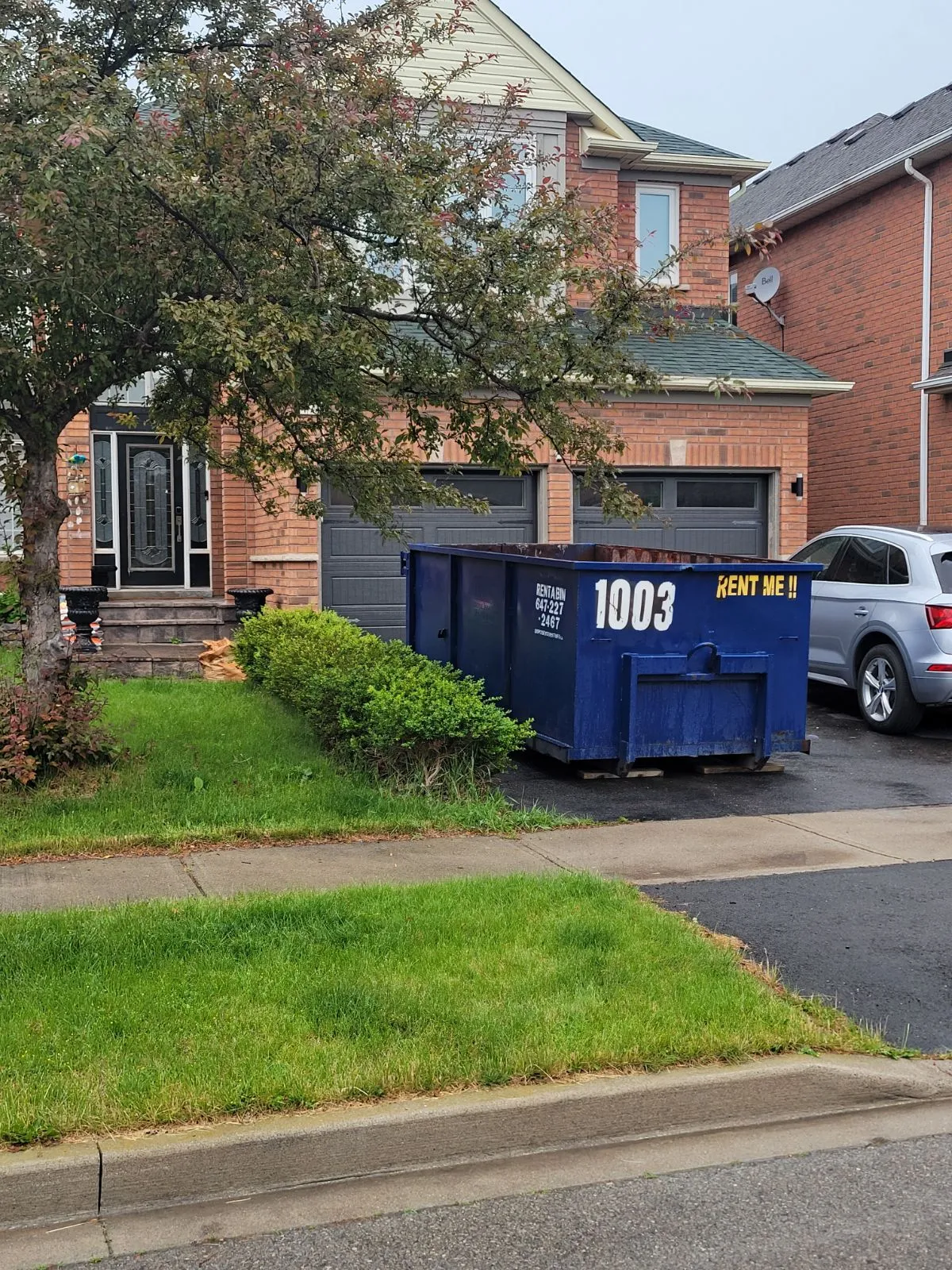
A waste hauler attempts to navigate a narrow Woodbridge driveway with a 20 yard bin, only to realize a street placement is the only physical option. Under By-law 126-2024, equipment cannot legally touch pavement without a pre-approved digital permit. Discovery of unpermitted bins triggers a mandatory retroactive fee of three hundred and fifty dollars in addition to standard fines.
Defining Permit Necessity for Private and Public Property
Encroachment Agreements and Property Boundaries
Does every bin rental in the Greater Toronto Area require municipal intervention? In Vaughan, the distinction rests entirely on the Right-of-way (ROW) boundary rather than the size of the container or the duration of the project. Precision in equipment placement is mandatory for legal compliance.
The City of Vaughan classifies the area between the curb and the property line as a public right-of-way, which includes the sidewalk. If any part of a 10 yard or 40 yard bin overhangs this boundary, the city requires a formal encroachment agreement. This protocol mitigates liability and ensures pedestrian access remains unobstructed during heavy renovation work.
While placement entirely on a private paved driveway avoids the Road Occupancy Permit, the weight of a loaded construction bin rental can still trigger property standards issues. Property owners must obtain Ontario One Call utility locates before placing heavy equipment near property lines. This step identifies underground infrastructure that could be damaged by extreme surface pressure.
The Step by Step Application for Road Occupancy
Digital Portal Requirements and Insurance Protocols
Vaughan requires a minimum of ten business days to process a standard Road Occupancy Permit for waste containers. Applications submitted fewer than forty-eight hours before the start date are consistently rejected, regardless of project urgency. Planning ahead prevents these administrative bottlenecks and unnecessary project delays.
The applicant must log into the ServiceVaughan application portal to upload a site plan and a valid Certificate of Insurance (COI). This digital workflow requires proof of two million dollars in general liability insurance. The policy must include an Additional Insured endorsement naming the City of Vaughan to protect the municipality from liability.
All commercial contractors must also provide a current WSIB clearance certificate during the digital application process. This document verifies that the contractor is in good standing with provincial safety and insurance regulations. Failure to provide this certificate results in immediate application rejection through the automated system.
Insurance certificates and clearance documents must be valid for the entire duration of the bin rental period.
Safety Standards and Regional Constraints in Woodbridge and Maple
Traffic Protection and Pedestrian Access
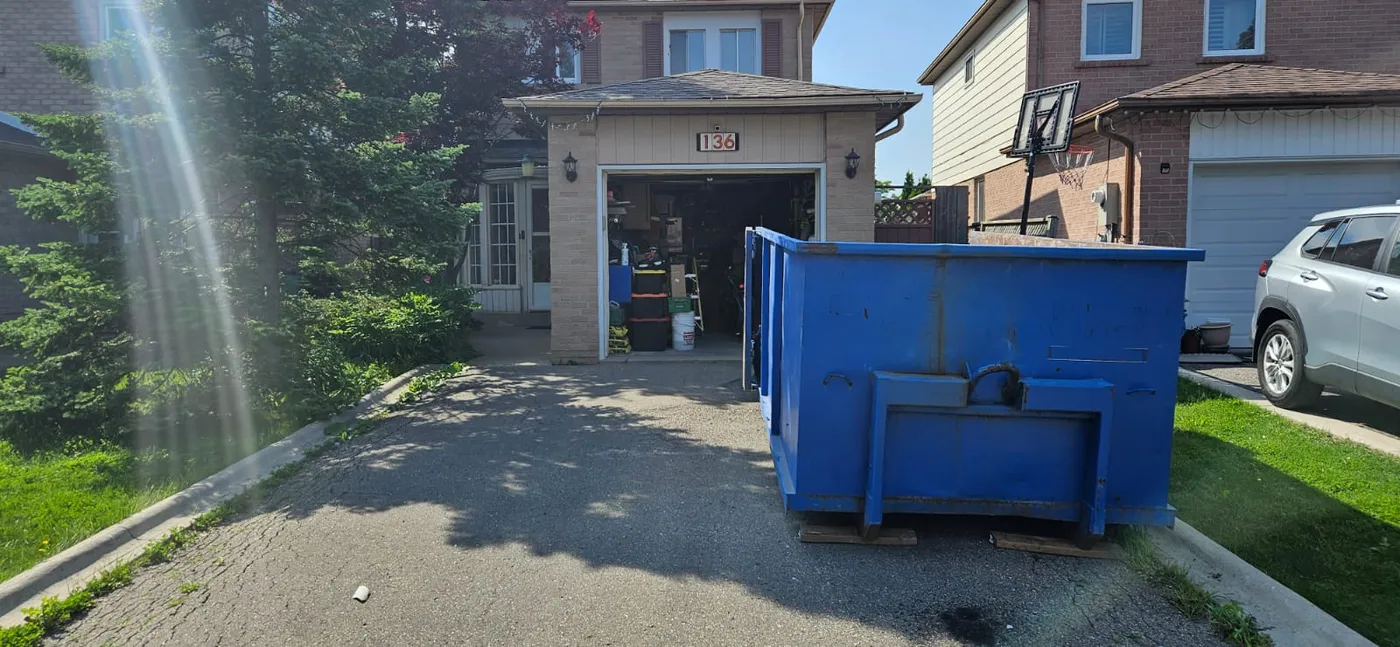
While wide industrial roads in Concord offer significant leeway, the narrow residential avenues of Woodbridge residential zoning constraints mandate strict safety measures. In these dense zones, the city requires a formal Traffic Protection Plan to ensure vehicle flow is not compromised. This plan must detail how the equipment interacts with local traffic patterns.
In newer Maple subdivisions, high-visibility reflective markers must be placed on all four corners of the bin to prevent collisions. The permit holder must maintain a minimum Pedestrian clearway width of 1.5 meters on all public sidewalks. If the bin obscures a fire hydrant or a York Region Transit clearance zone, the permit will be denied immediately.
Fee Structures and Security Deposit Protocols
Updated 2026 Fee Schedules and By-laws
The non-refundable application fee for a Vaughan Road Occupancy Permit is governed by By-law 051-2026. For short-duration projects, homeowners must pay the Simple ROP short duration fee, which covers the first thirty days of placement. These fees are separate from the actual rental cost of the dumpster and are mandatory for all street placements.
Security deposits are held to ensure that heavy 20 yard or 40 yard construction bins do not crack the municipal asphalt. If the site inspection following the bin's removal shows no damage to the curb or road, the city initiates the refund process. This financial return typically takes four to six weeks to clear the municipal finance department.
Pre Delivery Verification and Compliance Checklist
On Site Inspections and Local Utility Checks
Obtaining the permit does not grant the right to block the sidewalk or obstruct neighbor visibility at intersections. The permit holder remains legally responsible for maintaining clear passage for pedestrians and emergency vehicles. Inspectors from the Vaughan By-law Enforcement Division perform routine street patrols to verify these safety conditions.
Before the scheduled delivery, the property owner must verify that the permit is printed and clearly visible in a front-facing window. This prevents unnecessary work stoppages when municipal officers perform site audits in Woodbridge and Maple. The permit must match the exact dimensions of the 14 yard or 20 yard bin delivered to the site.
Open the Vaughan Map on the official city website to identify the exact location of underground utility shut-offs before finalizing your bin placement.
Final Compliance Checklist for Vaughan Residents
Following these municipal steps ensures your bin placement remains legal and your project avoids administrative delays. Residents must verify property lines to determine if a Road Occupancy Permit is legally required for your bin size. Confirming insurance coverage with the City of Vaughan listed as an additional insured party is non-negotiable for digital approval.
- Verify ROW boundaries to determine if the road allowance begins before your private driveway ends.
- Secure a valid COI naming the City of Vaughan as an additional insured party with two million dollars coverage.
- Submit applications ten days prior to bin delivery to avoid the mandatory retroactive fees and rush charges.
- Maintain a Traffic Protection Plan in high-density areas of Woodbridge and Maple to protect pedestrians.
- Review By-law 051-2026 for the most current fee schedule regarding short and long-term bin placements.